
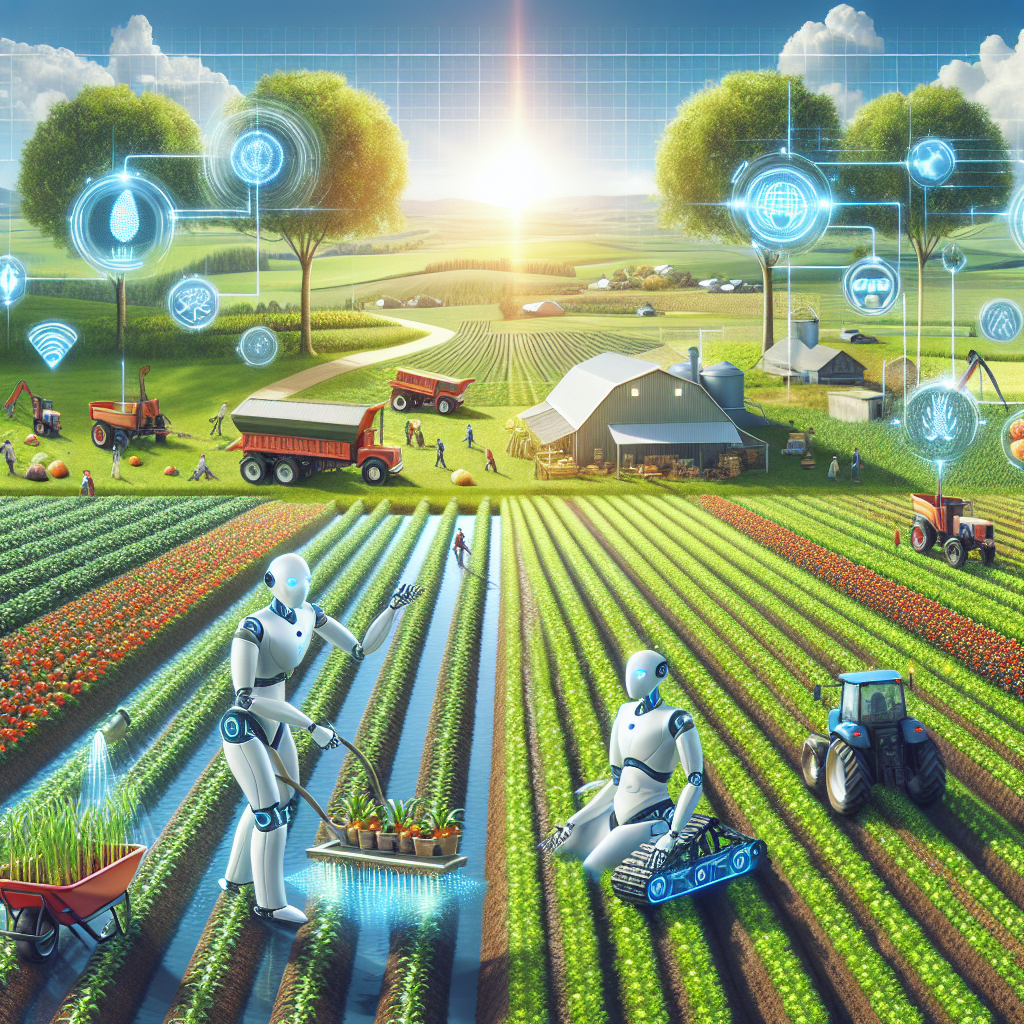
Agriculture has been an essential industry for human survival for thousands of years. With the advancement of technology, the agricultural sector has seen significant improvements in productivity and efficiency. One of the latest technological advancements that is revolutionizing the agricultural industry is artificial intelligence (AI) applications in agricultural robotics.
AI applications in agricultural robotics involve the use of intelligent machines that can perform tasks traditionally done by humans, such as planting, watering, and harvesting crops. These machines are equipped with AI algorithms that enable them to make decisions and adapt to changing conditions in real-time. This has the potential to significantly increase productivity, reduce labor costs, and minimize the environmental impact of agriculture.
There are various AI applications in agricultural robotics that are currently being developed and implemented in the industry. Some of the most common applications include:
1. Autonomous tractors: Autonomous tractors are self-driving vehicles that can perform tasks such as plowing, planting, and harvesting crops without the need for human intervention. These tractors are equipped with sensors and cameras that enable them to navigate fields and avoid obstacles. AI algorithms analyze data from these sensors to make decisions on when and where to perform tasks.
2. Drone technology: Drones are being used in agriculture to monitor crop health, detect pests and diseases, and optimize irrigation. AI algorithms process data collected by drones to provide farmers with real-time information on the condition of their crops. This allows farmers to make informed decisions on how to best manage their fields.
3. Robotic harvesters: Robotic harvesters are machines that can autonomously harvest crops such as fruits and vegetables. These machines are equipped with AI algorithms that enable them to identify ripe fruits and vegetables, pick them gently, and sort them based on size and quality. This reduces the need for manual labor and increases the efficiency of the harvesting process.
4. Weed detection and control: AI-powered robots are being developed to detect and remove weeds from fields without the need for herbicides. These robots use computer vision algorithms to identify weeds and apply targeted treatments to remove them. This reduces the reliance on chemical pesticides and promotes sustainable farming practices.
5. Soil analysis and management: AI algorithms are being used to analyze soil samples and provide recommendations on fertilization and irrigation. This helps farmers optimize their inputs and improve crop yields while minimizing the environmental impact of agriculture.
Overall, AI applications in agricultural robotics have the potential to transform the agricultural industry by increasing productivity, reducing labor costs, and promoting sustainable farming practices. However, there are still challenges that need to be addressed, such as data privacy and security concerns, regulatory hurdles, and the need for specialized training for farmers to use these technologies effectively.
FAQs:
Q: How are AI applications in agricultural robotics different from traditional farming methods?
A: AI applications in agricultural robotics use intelligent machines equipped with AI algorithms to perform tasks traditionally done by humans. These machines can make decisions and adapt to changing conditions in real-time, which increases productivity and efficiency compared to traditional farming methods.
Q: What are the benefits of using AI applications in agricultural robotics?
A: Some of the benefits of using AI applications in agricultural robotics include increased productivity, reduced labor costs, improved crop yields, and minimized environmental impact. These technologies also enable farmers to make informed decisions based on real-time data, leading to more efficient farming practices.
Q: Are AI applications in agricultural robotics affordable for small-scale farmers?
A: The cost of AI applications in agricultural robotics can vary depending on the technology and scale of the operation. While some technologies may be expensive for small-scale farmers, there are also affordable options available that can provide significant benefits in terms of productivity and efficiency.
Q: How can farmers benefit from using AI applications in agricultural robotics?
A: Farmers can benefit from using AI applications in agricultural robotics by increasing their productivity, reducing labor costs, improving crop yields, and promoting sustainable farming practices. These technologies also enable farmers to optimize their inputs and make informed decisions based on real-time data.
In conclusion, AI applications in agricultural robotics have the potential to revolutionize the agricultural industry by increasing productivity, reducing labor costs, and promoting sustainable farming practices. While there are still challenges that need to be addressed, such as data privacy and security concerns, the benefits of using these technologies far outweigh the drawbacks. With continued research and development, AI applications in agricultural robotics will play a crucial role in feeding a growing global population while minimizing the environmental impact of agriculture.