
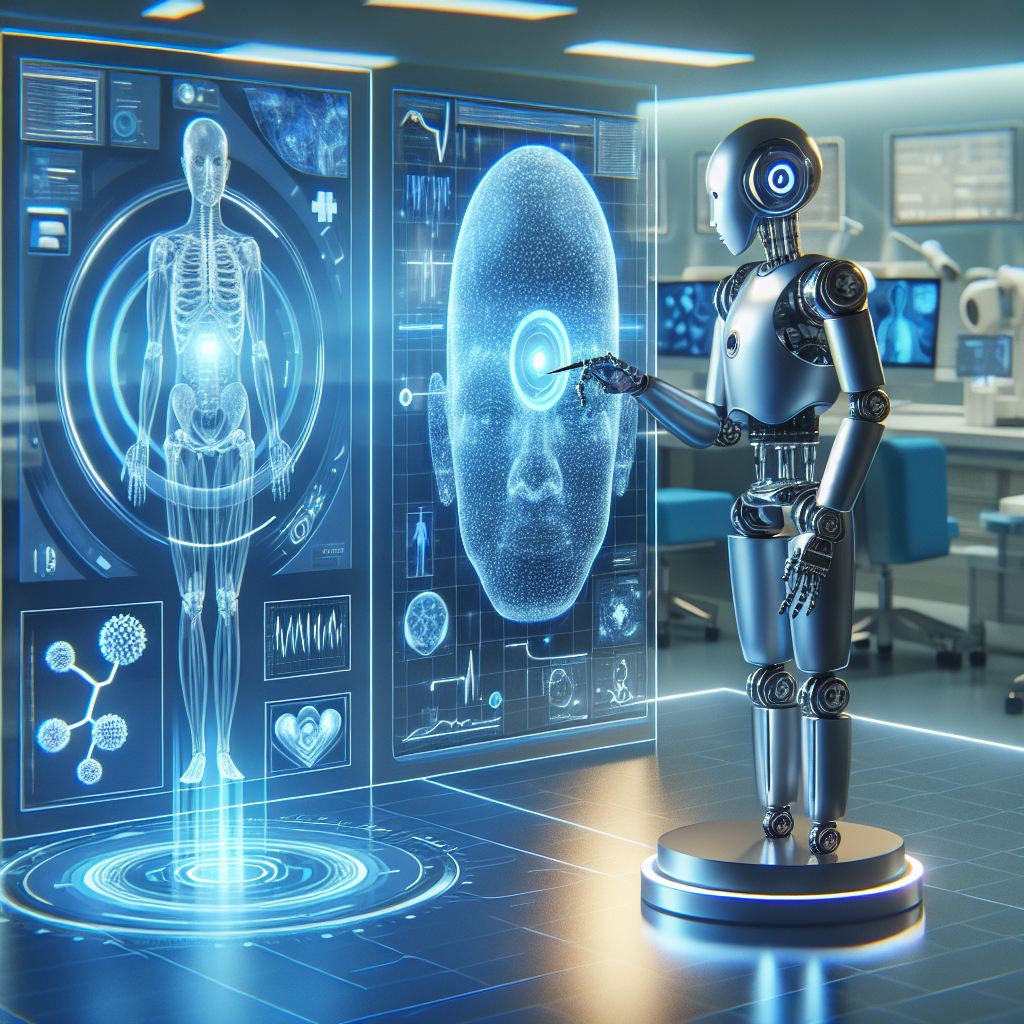
Artificial intelligence (AI) and machine learning are revolutionizing the healthcare industry by enabling researchers to analyze vast amounts of data and derive insights that were previously impossible to uncover. These technologies have the potential to transform healthcare research by improving diagnostic accuracy, predicting patient outcomes, and assisting in drug discovery and development. In this article, we will explore the applications of AI and machine learning in healthcare research and how they are shaping the future of medicine.
Applications of AI and Machine Learning in Healthcare Research
1. Diagnostic Imaging: AI and machine learning algorithms are being used to analyze medical images such as X-rays, CT scans, and MRIs to assist in the early detection of diseases. These algorithms can identify patterns and anomalies in the images that may be missed by human radiologists, leading to more accurate and timely diagnoses.
2. Predictive Analytics: Machine learning models can analyze patient data to predict the likelihood of developing certain diseases or conditions. This information can help healthcare providers intervene early and provide personalized treatment plans to improve patient outcomes.
3. Drug Discovery and Development: AI and machine learning are being used to analyze large datasets of molecular structures and biological data to identify potential drug candidates. These technologies can significantly speed up the drug discovery process by predicting how a drug will interact with the body and its effectiveness in treating a specific disease.
4. Personalized Medicine: AI and machine learning algorithms can analyze patient data, including genetic information, to develop personalized treatment plans tailored to an individual’s unique characteristics. This approach can improve treatment outcomes and reduce the risk of adverse reactions to medications.
5. Remote Monitoring: AI-powered devices and wearables can collect real-time data on patients’ health status and alert healthcare providers to any changes or abnormalities. This technology enables proactive intervention and continuous monitoring of patients, particularly those with chronic conditions.
6. Clinical Decision Support: Machine learning algorithms can analyze vast amounts of clinical data to provide healthcare providers with evidence-based recommendations for diagnosis and treatment. This technology can help reduce errors and improve the quality of care delivered to patients.
FAQs
Q: How is AI different from machine learning?
A: AI is a broad field of computer science that aims to create machines capable of intelligent behavior. Machine learning is a subset of AI that focuses on developing algorithms that can learn from data and make predictions or decisions without being explicitly programmed.
Q: How can AI and machine learning improve healthcare research?
A: AI and machine learning can improve healthcare research by analyzing large datasets of patient information, identifying patterns and trends, and predicting outcomes. These technologies can help researchers uncover new insights, develop personalized treatment plans, and accelerate the drug discovery process.
Q: Are there any ethical concerns related to the use of AI in healthcare research?
A: Yes, there are ethical concerns related to the use of AI in healthcare research, such as data privacy and security, bias in algorithms, and the potential for automation to replace human judgment. It is important for researchers to address these concerns and ensure that AI is used responsibly and ethically.
Q: What are the challenges of implementing AI in healthcare research?
A: Some of the challenges of implementing AI in healthcare research include the need for high-quality data, regulatory compliance, interoperability of systems, and the integration of AI into existing workflows. Overcoming these challenges requires collaboration between researchers, healthcare providers, and technology experts.
In conclusion, AI and machine learning are transforming healthcare research by enabling researchers to analyze vast amounts of data, improve diagnostic accuracy, predict patient outcomes, and accelerate the drug discovery process. These technologies have the potential to revolutionize medicine by providing personalized treatment plans, enhancing patient care, and advancing our understanding of diseases. As AI continues to evolve, it is crucial for researchers, healthcare providers, and policymakers to work together to ensure that these technologies are used ethically and responsibly for the benefit of patients and society as a whole.