
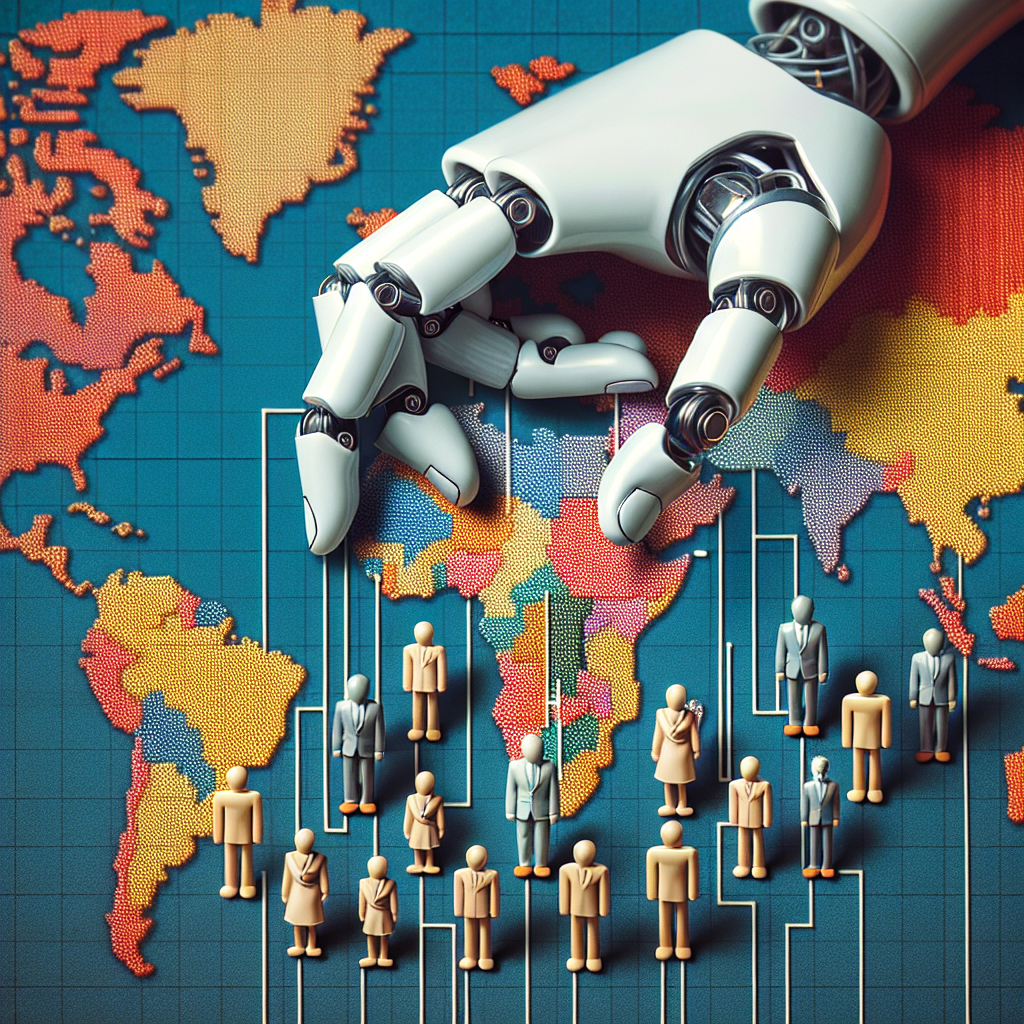
Artificial Intelligence (AI) has become an increasingly powerful tool in various aspects of society, including politics. While AI has the potential to revolutionize the way political campaigns are run and how governments make decisions, it also poses significant risks in terms of political manipulation. In this article, we will explore the risks of AI in political manipulation and how these risks can impact democracy and society.
One of the key risks of AI in political manipulation is the potential for the spread of misinformation and fake news. AI algorithms can be used to create and disseminate false information on a massive scale, making it difficult for users to distinguish between fact and fiction. This can have serious consequences for political campaigns, as false information can sway public opinion and influence election outcomes.
Another risk of AI in political manipulation is the use of targeted advertising and micro-targeting techniques. AI algorithms can analyze vast amounts of data on individual voters to create personalized political messages that are designed to appeal to specific demographics. This can lead to the creation of echo chambers, where individuals are only exposed to information that reinforces their existing beliefs and biases. This can further polarize society and undermine the democratic process.
AI can also be used to manipulate public opinion through the use of social media bots and fake accounts. These bots can be programmed to amplify certain messages and drown out dissenting voices, creating the illusion of widespread support for a particular political candidate or ideology. This can distort public discourse and create a false sense of consensus, making it difficult for individuals to make informed decisions based on accurate information.
Furthermore, AI algorithms can be biased in their decision-making processes, leading to discriminatory outcomes that disproportionately affect certain groups of people. For example, AI algorithms used to determine which political advertisements are shown to users on social media platforms may inadvertently target specific racial or ethnic groups, leading to the spread of harmful stereotypes and misinformation.
In addition, the use of AI in political manipulation can undermine the transparency and accountability of political processes. AI algorithms are often opaque and complex, making it difficult for individuals to understand how decisions are being made and who is behind them. This lack of transparency can erode trust in political institutions and lead to a sense of disenfranchisement among the public.
Overall, the risks of AI in political manipulation are significant and can have far-reaching consequences for democracy and society. It is important for policymakers, tech companies, and the public to be aware of these risks and work together to develop safeguards and regulations to mitigate them.
FAQs:
Q: How can individuals protect themselves from political manipulation using AI?
A: Individuals can protect themselves from political manipulation by being vigilant about the sources of information they consume and verifying the accuracy of the information they encounter. It is also important to be aware of one’s own biases and to seek out diverse perspectives on political issues.
Q: What role do tech companies play in preventing political manipulation using AI?
A: Tech companies have a responsibility to ensure that their platforms are not being used to spread misinformation or manipulate public opinion. They can do this by implementing measures to detect and remove fake accounts, bots, and false information. They can also be transparent about their algorithms and how they are used to curate content.
Q: What are some potential solutions to mitigate the risks of AI in political manipulation?
A: Some potential solutions to mitigate the risks of AI in political manipulation include implementing regulations that require transparency and accountability in the use of AI algorithms, promoting media literacy and critical thinking skills among the public, and fostering a culture of open debate and dialogue. It is also important for policymakers to work with tech companies to develop ethical guidelines for the use of AI in political campaigns.
In conclusion, the risks of AI in political manipulation are real and should not be underestimated. It is crucial for society to be aware of these risks and work together to address them in order to protect democracy and ensure the integrity of political processes. By taking proactive measures to mitigate the risks of AI in political manipulation, we can help safeguard the future of our democracy and society.