
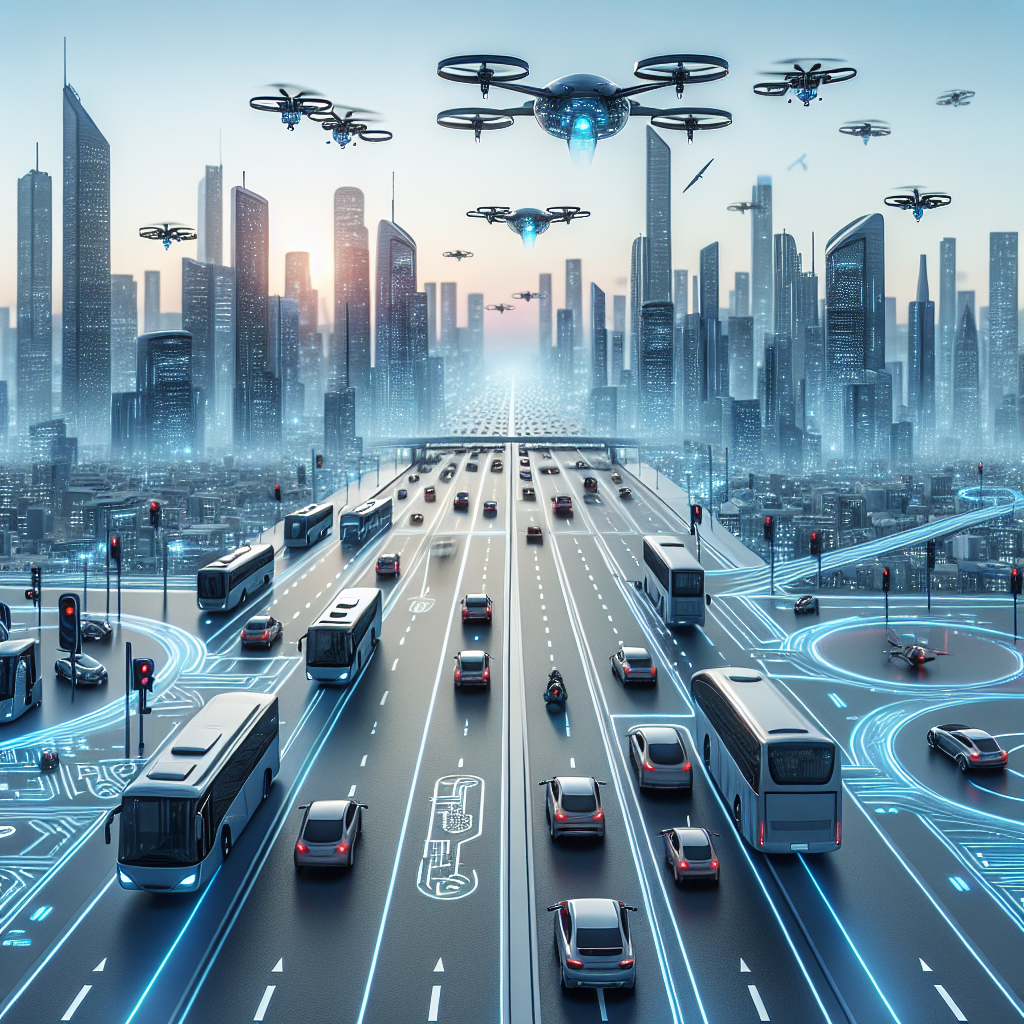
In recent years, the development of artificial intelligence (AI) technology has revolutionized the transportation industry. From autonomous vehicles to traffic management systems, AI has the potential to greatly improve the efficiency, safety, and sustainability of our transportation networks. In this article, we will explore some of the latest innovations in AI development in transportation and how they are shaping the future of mobility.
Autonomous Vehicles
One of the most exciting applications of AI in transportation is the development of autonomous vehicles. These self-driving cars, trucks, and buses have the potential to greatly reduce traffic congestion, accidents, and carbon emissions. Companies like Tesla, Google, and Uber have been leading the way in developing autonomous vehicle technology, with the goal of making transportation safer and more efficient.
Autonomous vehicles use a combination of sensors, cameras, radar, and AI algorithms to navigate the road and make decisions in real-time. These systems can detect other vehicles, pedestrians, and obstacles on the road, and adjust the vehicle’s speed and direction accordingly. AI-powered autonomous vehicles have the potential to greatly reduce the number of accidents on the road, as they are not prone to human error like distraction or fatigue.
In addition to safety benefits, autonomous vehicles also have the potential to greatly reduce traffic congestion. By using AI algorithms to optimize traffic flow and reduce bottlenecks, autonomous vehicles can help to smooth out traffic patterns and reduce the time spent in traffic jams. This will not only save time for commuters but also reduce fuel consumption and carbon emissions from idling vehicles.
Traffic Management
AI is also being used to improve traffic management systems in cities around the world. By analyzing real-time traffic data from sensors, cameras, and smartphones, AI algorithms can predict traffic patterns, optimize traffic signal timings, and alert drivers to potential congestion ahead. These smart traffic management systems can help to reduce traffic accidents, improve air quality, and make transportation more efficient.
One example of a smart traffic management system is the use of AI-powered traffic lights. These intelligent traffic lights can adjust their timings in real-time based on traffic flow, reducing the time spent waiting at red lights and improving the overall efficiency of the road network. By using AI to optimize traffic signal timings, cities can reduce congestion, improve safety, and reduce greenhouse gas emissions from idling vehicles.
Another example of AI in traffic management is the use of predictive analytics to anticipate traffic congestion before it happens. By analyzing historical traffic data, weather patterns, and special events, AI algorithms can predict where and when congestion is likely to occur and alert drivers to take alternative routes. This proactive approach to traffic management can help to reduce the impact of congestion on commuters and improve the overall efficiency of the transportation network.
FAQs
Q: Are autonomous vehicles safe?
A: Autonomous vehicles have the potential to be safer than human-driven vehicles, as they are not prone to human error like distraction or fatigue. However, there are still challenges to overcome, such as unpredictable road conditions and interactions with other drivers. Companies developing autonomous vehicles are conducting extensive testing and simulations to ensure their safety before they are deployed on public roads.
Q: Will autonomous vehicles replace human drivers?
A: While autonomous vehicles have the potential to greatly reduce the number of accidents on the road, it is unlikely that they will completely replace human drivers in the near future. There are still many technical, legal, and ethical challenges to overcome before autonomous vehicles can be widely adopted. In the meantime, autonomous vehicles are likely to coexist with human-driven vehicles on the road.
Q: How will AI improve traffic management in cities?
A: AI can greatly improve traffic management in cities by analyzing real-time traffic data, predicting traffic patterns, and optimizing traffic signal timings. By using AI algorithms to optimize traffic flow, cities can reduce congestion, improve safety, and reduce carbon emissions from idling vehicles. Smart traffic management systems are already being deployed in cities around the world, with promising results.
In conclusion, AI development in transportation is transforming the way we move people and goods around the world. From autonomous vehicles to smart traffic management systems, AI has the potential to greatly improve the efficiency, safety, and sustainability of our transportation networks. As companies continue to invest in AI technology, we can expect to see even more innovations in the future that will revolutionize the way we travel.