
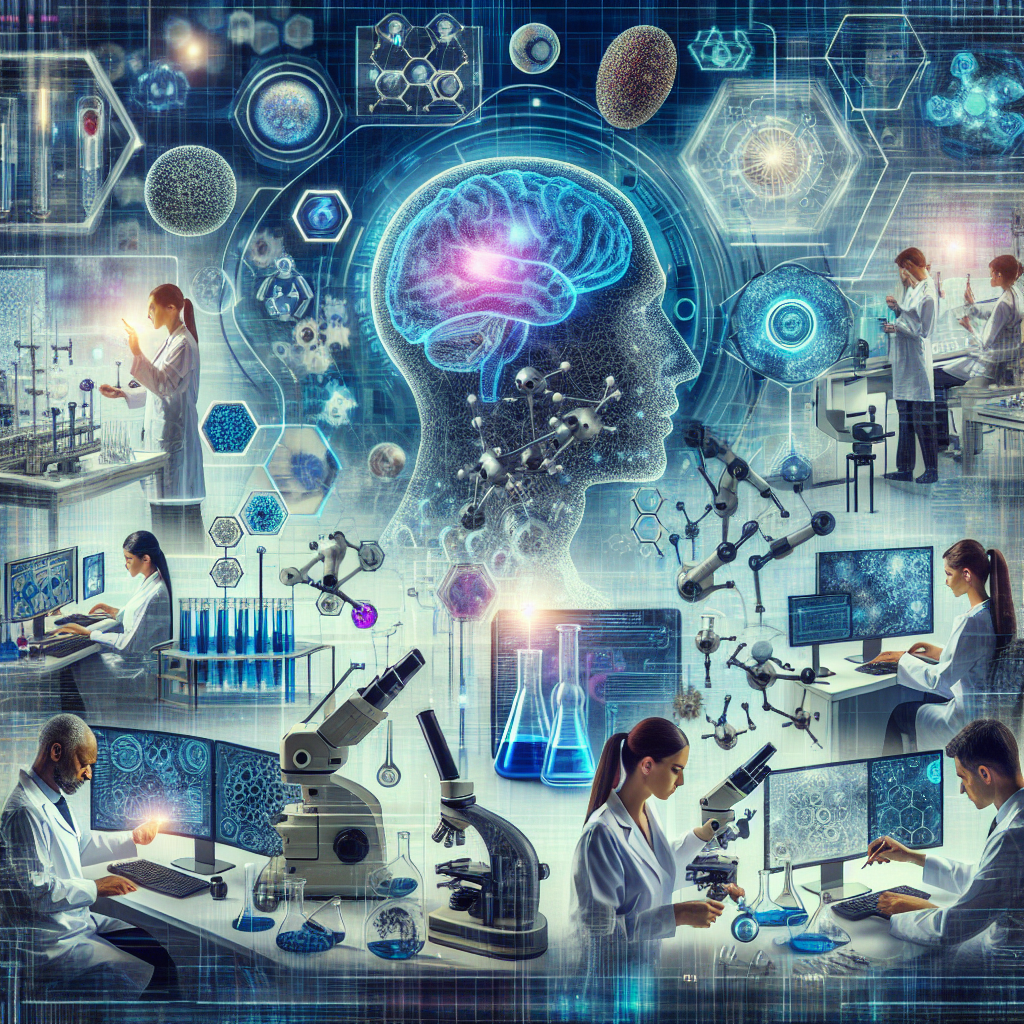
Artificial intelligence (AI) has revolutionized various industries by streamlining processes, improving efficiency, and enhancing decision-making. In the pharmaceutical industry, AI integration in research and development has the potential to accelerate drug discovery, optimize clinical trials, and personalize medicine. The use of AI in pharmaceutical research and development is rapidly expanding, with many companies investing in AI-driven technologies to stay competitive in the market.
AI Integration in Drug Discovery
Drug discovery is a complex and time-consuming process that involves identifying potential drug candidates, testing their efficacy, and conducting clinical trials. AI has the capability to analyze vast amounts of data and predict the properties of potential drug candidates, significantly reducing the time and cost of drug discovery. By utilizing machine learning algorithms, AI can identify patterns in biological data, predict drug-target interactions, and design molecules with specific properties.
One of the key applications of AI in drug discovery is virtual screening, where AI algorithms are used to analyze large databases of chemical compounds and predict their potential as drug candidates. This process can help researchers identify promising molecules for further testing, saving time and resources in the drug discovery process. AI can also be used to optimize lead compounds, predict drug toxicity, and design novel drug candidates with specific properties.
AI Integration in Clinical Trials
Clinical trials are a critical step in the drug development process, where new drugs are tested for safety and efficacy in human subjects. AI integration in clinical trials can help optimize trial design, patient recruitment, and data analysis, leading to faster and more efficient trials. By leveraging AI technologies, researchers can identify suitable patient populations, personalize treatment plans, and monitor patient outcomes in real-time.
AI can also be used to analyze clinical trial data and identify patterns that may not be apparent to human researchers. By utilizing machine learning algorithms, AI can predict patient responses to treatments, identify potential safety concerns, and optimize trial protocols. This can help researchers make data-driven decisions and improve the success rate of clinical trials.
Personalized Medicine
Personalized medicine is an emerging field in healthcare that aims to tailor medical treatments to individual patients based on their genetic makeup, lifestyle, and other factors. AI integration in pharmaceutical research and development can help accelerate the development of personalized medicine by analyzing patient data and predicting optimal treatment strategies. By leveraging AI technologies, researchers can identify biomarkers, predict treatment responses, and design personalized treatment plans for patients.
FAQs
Q: How is AI used in drug discovery?
A: AI is used in drug discovery to analyze vast amounts of data, predict drug-target interactions, design molecules, and optimize lead compounds. By utilizing machine learning algorithms, AI can accelerate the drug discovery process and reduce the time and cost of developing new drugs.
Q: How is AI integrated into clinical trials?
A: AI is integrated into clinical trials to optimize trial design, patient recruitment, and data analysis. By leveraging AI technologies, researchers can identify suitable patient populations, personalize treatment plans, and monitor patient outcomes in real-time, leading to faster and more efficient trials.
Q: How does AI contribute to personalized medicine?
A: AI contributes to personalized medicine by analyzing patient data, identifying biomarkers, predicting treatment responses, and designing personalized treatment plans. By leveraging AI technologies, researchers can tailor medical treatments to individual patients based on their genetic makeup, lifestyle, and other factors.
In conclusion, AI integration in pharmaceutical research and development has the potential to revolutionize the industry by accelerating drug discovery, optimizing clinical trials, and advancing personalized medicine. By leveraging AI technologies, researchers can analyze vast amounts of data, predict drug-target interactions, and design novel drug candidates with specific properties. As the field of AI continues to evolve, we can expect to see further advancements in pharmaceutical research and development that will ultimately benefit patients and improve healthcare outcomes.