
In today’s fast-paced and competitive business environment, companies are constantly looking for ways to improve efficiency and streamline operations. One area that has seen significant advancements in recent years is warehouse management. With the rise of e-commerce and the increasing demand for fast and accurate order fulfillment, warehouses are under pressure to deliver goods quickly and efficiently.
Artificial intelligence (AI) has emerged as a powerful tool for enhancing warehouse efficiency. By leveraging AI technologies such as machine learning, robotics, and data analytics, companies can optimize their warehouse operations, reduce costs, and improve overall productivity. In this article, we will explore how AI is being used to enhance warehouse efficiency and address common questions about this technology.
1. Inventory Management
One of the key challenges in warehouse management is maintaining accurate inventory levels. AI-powered systems can help companies track inventory in real-time, predict demand, and optimize stock levels. By analyzing historical data and patterns, AI algorithms can forecast future demand and suggest optimal reorder points. This can help reduce stockouts, minimize excess inventory, and improve overall inventory accuracy.
2. Order Picking and Fulfillment
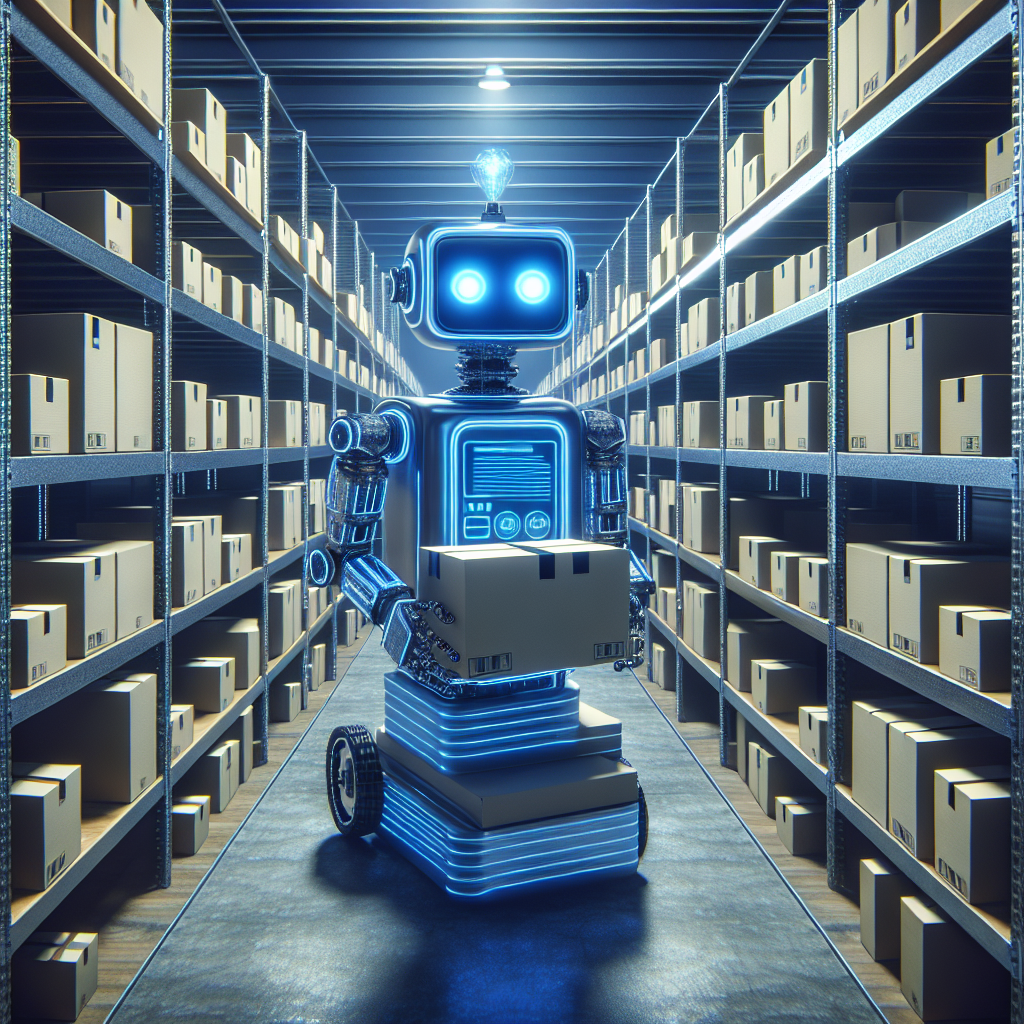
AI-powered robots are revolutionizing the way orders are picked and fulfilled in warehouses. Autonomous mobile robots equipped with AI algorithms can navigate through the warehouse, pick items from shelves, and deliver them to packing stations. These robots can work alongside human workers, increasing efficiency and reducing errors. AI algorithms can also optimize picking routes, prioritize orders based on urgency, and improve order accuracy.
3. Warehouse Layout Optimization
AI can help companies optimize their warehouse layout to maximize space utilization and improve operational efficiency. By analyzing historical data, AI algorithms can identify bottlenecks, inefficiencies, and layout constraints. This information can be used to redesign the warehouse layout, reorganize storage areas, and streamline workflow. AI-powered simulations can also help companies test different layout configurations and determine the most efficient setup.
4. Predictive Maintenance
AI algorithms can be used to predict equipment failures and schedule maintenance tasks proactively. By analyzing sensor data and historical maintenance records, AI systems can identify patterns and anomalies that indicate potential issues. This can help prevent costly downtimes, reduce repair costs, and extend the lifespan of warehouse equipment. Predictive maintenance can also improve worker safety by ensuring that equipment is functioning properly.
5. Demand Forecasting
AI-powered demand forecasting models can help companies predict future demand for products with a high degree of accuracy. By analyzing historical sales data, market trends, and external factors, AI algorithms can generate forecasts that guide inventory planning, production scheduling, and order fulfillment. Accurate demand forecasting can help companies avoid stockouts, reduce excess inventory, and improve customer satisfaction.
6. Quality Control
AI technologies such as computer vision and machine learning can be used to automate quality control processes in warehouses. By analyzing images and sensor data, AI systems can detect defects, anomalies, and deviations from quality standards. This can help companies identify and reject faulty products before they reach customers, reducing returns and improving overall product quality.
FAQs about Enhancing Warehouse Efficiency with Artificial Intelligence:
Q: How can AI help improve warehouse safety?
A: AI-powered systems can monitor worker activities, identify safety hazards, and alert supervisors to potential risks. AI algorithms can analyze video feeds, sensor data, and worker behavior to detect unsafe practices and prevent accidents. AI can also optimize workflows to reduce fatigue, minimize repetitive tasks, and improve ergonomics.
Q: What are the costs associated with implementing AI in warehouses?
A: The costs of implementing AI in warehouses can vary depending on the size of the warehouse, the complexity of the operations, and the specific AI technologies used. Companies may need to invest in hardware, software, training, and integration services. However, the long-term benefits of AI, such as increased efficiency, reduced costs, and improved productivity, can outweigh the initial investment.
Q: How can companies overcome resistance to AI adoption among warehouse workers?
A: Resistance to AI adoption among warehouse workers can be overcome by involving employees in the implementation process, providing training and support, and demonstrating the benefits of AI. Companies should communicate clearly about the goals and objectives of AI adoption, address concerns about job security, and involve employees in decision-making. Training programs can help workers develop the skills needed to work alongside AI technologies.
Q: What are the ethical considerations associated with AI in warehouses?
A: Ethical considerations associated with AI in warehouses include issues related to data privacy, algorithm bias, and job displacement. Companies must ensure that AI systems are transparent, accountable, and fair. Data collected by AI systems should be used responsibly and in compliance with regulations. Companies should also consider the social impact of AI adoption on workers and communities.
In conclusion, AI is transforming warehouse management by enhancing efficiency, improving accuracy, and streamlining operations. By leveraging AI technologies such as machine learning, robotics, and data analytics, companies can optimize their warehouse processes, reduce costs, and improve overall productivity. While there are challenges and considerations associated with AI adoption in warehouses, the benefits of this technology are clear. Companies that embrace AI are better positioned to meet the demands of today’s fast-paced and competitive business environment.