
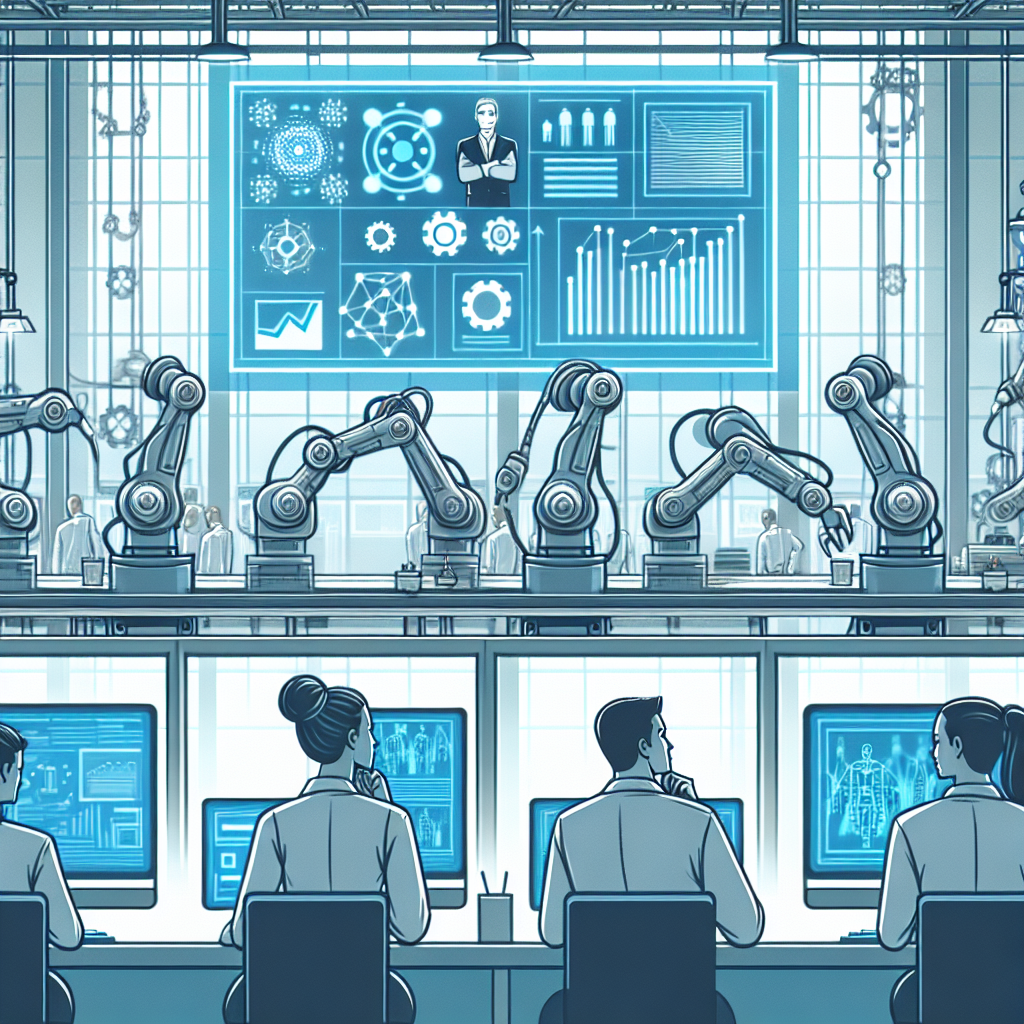
The Impact of AI on Workforce Automation
Artificial Intelligence (AI) has been a hot topic in recent years, with its potential to revolutionize various industries. One area where AI is making a significant impact is workforce automation. As AI technology continues to advance, more and more tasks that were once performed by humans are being automated. This has led to both excitement and concern as people consider how AI will shape the future of work.
AI-powered automation is already being used in a wide range of industries, from manufacturing to healthcare to finance. In manufacturing, for example, robots are being used to perform tasks that were once done by humans, such as assembly line work and quality control. In healthcare, AI algorithms are helping doctors diagnose diseases and develop treatment plans. In finance, AI is being used to automate trading and investment decisions.
While AI automation has the potential to increase efficiency and productivity, it also raises concerns about job displacement. As more tasks are automated, there is a fear that many workers will be left without jobs. However, proponents of AI automation argue that it will create new job opportunities in areas that require human creativity and problem-solving skills.
One of the key benefits of AI automation is its ability to handle repetitive tasks quickly and accurately. This allows businesses to streamline their operations and focus on more strategic activities. For example, in customer service, AI-powered chatbots can answer common customer queries, freeing up human agents to handle more complex issues.
Another advantage of AI automation is its ability to analyze vast amounts of data and extract valuable insights. This can help businesses make better decisions and improve their overall performance. For example, in marketing, AI algorithms can analyze customer behavior and preferences to create targeted advertising campaigns.
Despite the benefits of AI automation, there are also challenges that need to be addressed. One of the main concerns is the potential impact on jobs. As more tasks are automated, there is a risk that many workers will be displaced. This can lead to social and economic upheaval if adequate measures are not taken to retrain and reskill workers for new roles.
Another challenge is the ethical implications of AI automation. As AI technology becomes more advanced, there are concerns about the potential for bias and discrimination in automated decision-making processes. For example, AI algorithms used in hiring processes may inadvertently discriminate against certain demographic groups if the training data is biased.
Despite these challenges, there are opportunities for businesses to leverage AI automation to drive innovation and growth. By embracing AI technology, businesses can improve efficiency, reduce costs, and deliver better products and services to customers. However, it is important for businesses to approach AI automation with caution and consider the potential impact on their workforce.
FAQs:
Q: Will AI automation replace all human jobs?
A: While AI automation has the potential to automate many tasks currently performed by humans, it is unlikely to replace all human jobs. AI technology is best suited for tasks that are repetitive and rule-based, while humans excel at tasks that require creativity, empathy, and complex problem-solving skills.
Q: How can businesses prepare for the impact of AI automation on the workforce?
A: Businesses can prepare for the impact of AI automation by investing in workforce training and development programs. By upskilling their employees and preparing them for new roles, businesses can ensure a smooth transition to an automated workforce. Additionally, businesses can collaborate with policymakers and educators to create programs that support workers in transitioning to new roles.
Q: What are the ethical implications of AI automation?
A: The ethical implications of AI automation are a growing concern as AI technology becomes more advanced. Businesses need to be mindful of bias and discrimination in automated decision-making processes and ensure that AI algorithms are fair and transparent. Additionally, businesses should consider the impact of AI automation on their workforce and take steps to mitigate any negative consequences.
In conclusion, AI automation has the potential to transform the workforce and drive innovation in businesses. While there are challenges to overcome, such as job displacement and ethical concerns, there are also opportunities for businesses to leverage AI technology to improve efficiency and productivity. By approaching AI automation with caution and considering the impact on their workforce, businesses can navigate the changing landscape of work in the age of AI.