
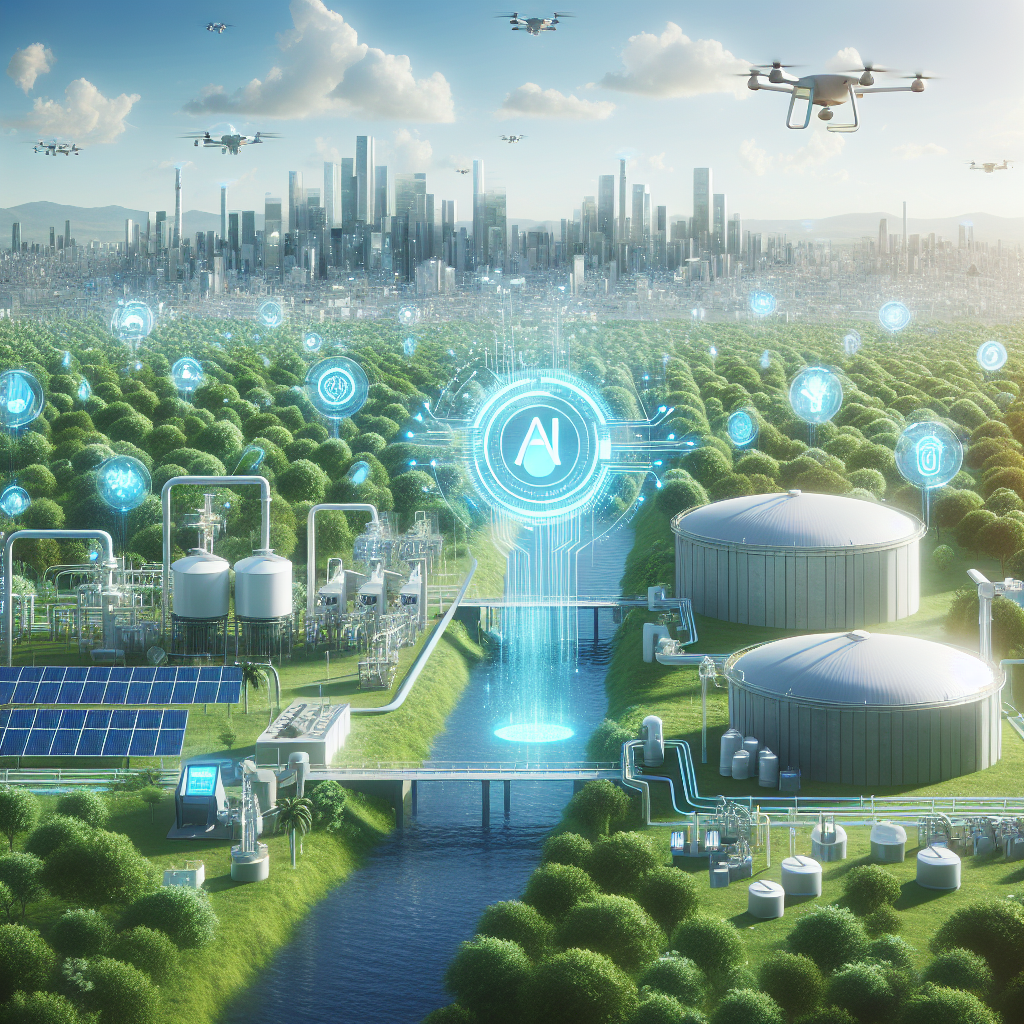
In recent years, the use of artificial intelligence (AI) in various industries has been on the rise. One area where AI is making a significant impact is in the management of sustainable water and sanitation systems. With the increasing global population and the growing demand for clean water, the need for effective and efficient water management practices is more critical than ever. AI technologies offer innovative solutions to help address the challenges faced by water and sanitation providers around the world.
AI applications in water and sanitation management
AI technologies can be used in various ways to improve water and sanitation management practices. Some of the key applications include:
1. Predictive maintenance: AI algorithms can analyze data from sensors and other sources to predict when equipment in water and sanitation systems is likely to fail. This allows maintenance teams to proactively address issues before they become critical, reducing downtime and improving system reliability.
2. Leak detection: AI-powered systems can analyze data from water distribution networks to identify leaks and other issues that may be causing water loss. By pinpointing the location of leaks more accurately, water providers can reduce water waste and save money on repairs.
3. Water quality monitoring: AI technologies can be used to analyze water quality data in real-time, allowing water providers to quickly detect contaminants and other issues that may affect water safety. This enables timely interventions to ensure that water meets regulatory standards and is safe for consumption.
4. Demand forecasting: AI algorithms can analyze historical water usage data and other factors to predict future demand for water services. This information can help water providers optimize their operations and infrastructure to meet changing needs more effectively.
5. Optimization of treatment processes: AI technologies can be used to optimize the operation of water treatment plants, helping to improve efficiency and reduce energy consumption. By analyzing data in real-time and adjusting treatment processes accordingly, water providers can enhance the quality of water while minimizing costs.
Benefits of using AI in water and sanitation management
The use of AI technologies in water and sanitation management offers several benefits, including:
1. Improved efficiency: AI-powered systems can analyze large amounts of data quickly and accurately, allowing water providers to make more informed decisions and optimize their operations. This can lead to increased efficiency, reduced costs, and improved service delivery.
2. Enhanced reliability: By implementing predictive maintenance and other AI applications, water providers can reduce the risk of equipment failures and other issues that may disrupt service delivery. This can help ensure that water and sanitation systems remain operational and reliable.
3. Increased sustainability: AI technologies can help water providers reduce water waste, energy consumption, and other resources, leading to more sustainable water and sanitation practices. This can help protect the environment and conserve valuable resources for future generations.
4. Improved water quality: AI-powered systems can help water providers monitor water quality more effectively and respond quickly to potential contaminants. This can help ensure that water is safe for consumption and meets regulatory standards.
5. Enhanced decision-making: AI technologies can provide valuable insights and recommendations to help water providers make better decisions about managing their systems. By leveraging AI algorithms, water providers can optimize their operations, plan for future needs, and address emerging challenges more effectively.
FAQs about AI in sustainable water and sanitation management
Q: How can AI help water providers detect leaks in their distribution networks?
A: AI-powered systems can analyze data from sensors and other sources to identify patterns that may indicate the presence of leaks in water distribution networks. By analyzing pressure, flow, and other variables, AI algorithms can pinpoint the location of leaks more accurately, allowing water providers to address issues quickly and reduce water loss.
Q: How does AI technology optimize water treatment processes?
A: AI algorithms can analyze data from water treatment plants in real-time to optimize the operation of treatment processes. By adjusting parameters such as chemical dosing, filtration rates, and other variables based on incoming data, AI technologies can help improve the efficiency of water treatment processes and enhance the quality of water produced.
Q: Can AI technologies help water providers forecast future water demand?
A: Yes, AI algorithms can analyze historical water usage data, weather patterns, population growth, and other factors to predict future demand for water services. By leveraging this information, water providers can optimize their operations, plan for infrastructure upgrades, and meet changing needs more effectively.
Q: How can water providers use AI to monitor water quality?
A: AI technologies can analyze water quality data in real-time to detect contaminants, pollutants, and other issues that may affect water safety. By monitoring parameters such as pH levels, turbidity, and microbial content, AI-powered systems can provide early warnings of potential water quality problems, allowing water providers to take timely action.
Q: What are the challenges of implementing AI in water and sanitation management?
A: While AI technologies offer many benefits for water and sanitation management, there are some challenges to consider. These may include the high initial costs of implementing AI systems, the need for specialized expertise to develop and maintain AI algorithms, data privacy and security concerns, and potential resistance to change from stakeholders. However, with proper planning and support, these challenges can be overcome to realize the full potential of AI in sustainable water and sanitation management.
In conclusion, AI technologies are transforming sustainable water and sanitation management by providing innovative solutions to improve efficiency, reliability, and sustainability in water systems. By leveraging AI algorithms for predictive maintenance, leak detection, water quality monitoring, demand forecasting, and treatment process optimization, water providers can enhance their operations and deliver high-quality services to communities around the world. As AI continues to evolve and become more accessible, its potential to revolutionize water and sanitation management will only grow, leading to a more sustainable future for all.