
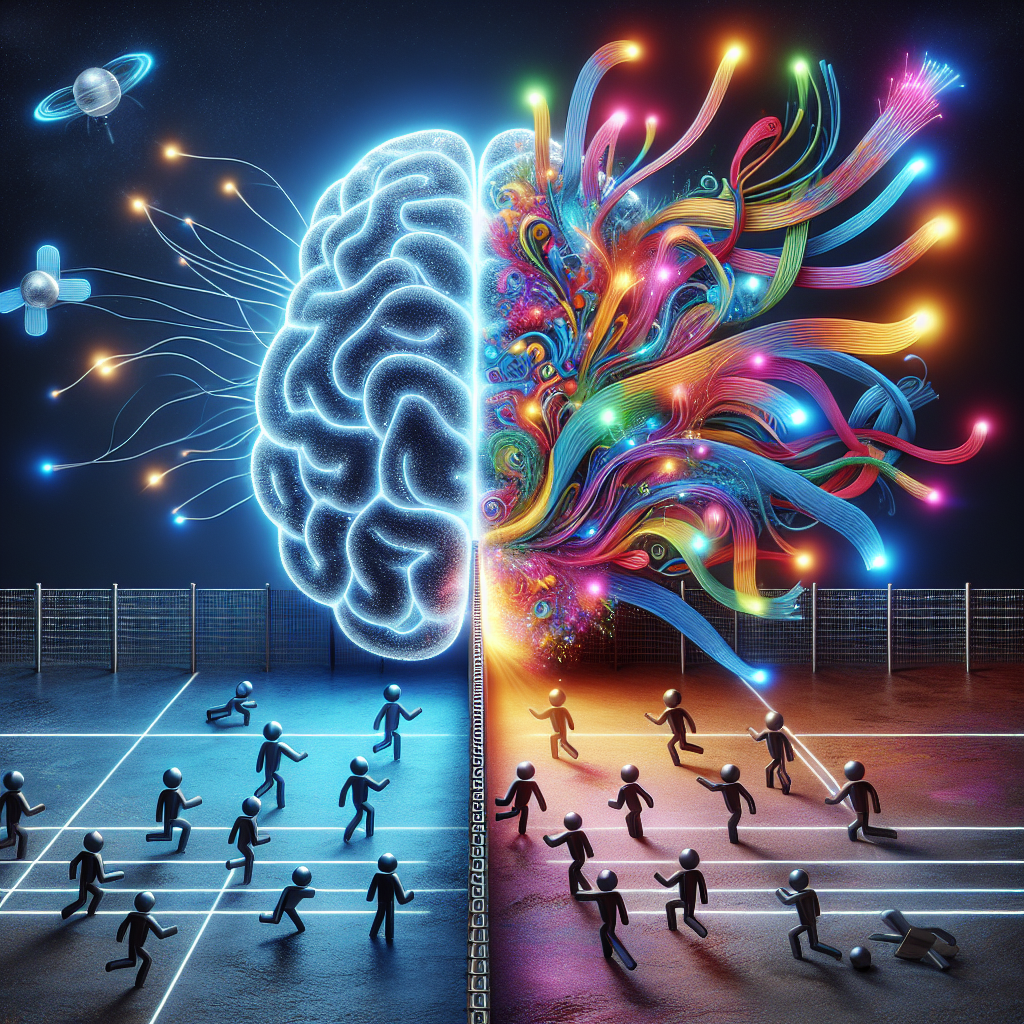
AI and Creative Freedom: Exploring Boundaries of Expression
Artificial Intelligence (AI) has revolutionized many aspects of our lives, from healthcare to transportation to entertainment. One area where AI is making a significant impact is in the creative industry. AI is being used to assist and enhance the creative process in fields such as music, art, literature, and design. However, as AI becomes more integrated into the creative process, questions arise about the boundaries of expression and the role of human creativity in a world increasingly influenced by AI.
AI in the Creative Process
AI is being used in a variety of ways in the creative process. In music, AI algorithms can analyze existing songs and create new compositions based on patterns and trends in the data. AI can also assist musicians in writing lyrics, generating melodies, and even mastering tracks. In visual arts, AI can generate images, animations, and even entire virtual worlds based on input from human artists. AI can also assist in graphic design, helping to create logos, advertisements, and other visual content.
In literature, AI can generate text based on a given prompt or style, allowing writers to explore new ideas or overcome writer’s block. AI can also assist in editing and proofreading, helping writers improve their work and catch errors. In design, AI can help create new products, buildings, and landscapes, using algorithms to optimize for efficiency, aesthetics, and functionality.
The Role of Human Creativity
While AI can assist and enhance the creative process, questions arise about the role of human creativity in a world increasingly influenced by AI. Some argue that AI can never truly replace human creativity, as it lacks the emotional depth, intuition, and lived experience that humans bring to the creative process. Others argue that AI can expand the boundaries of creativity, allowing artists to explore new ideas, styles, and techniques that would be impossible without the assistance of AI.
One of the key challenges in integrating AI into the creative process is maintaining the authenticity and originality of the work. When AI algorithms generate music, art, or literature, who owns the rights to the work? Can AI be considered a co-creator, or is it simply a tool used by the human artist? These questions raise complex legal and ethical issues that will need to be addressed as AI becomes more prevalent in the creative industry.
Exploring Boundaries of Expression
As AI becomes more integrated into the creative process, artists are exploring new boundaries of expression and pushing the limits of what is possible. Some artists are using AI to create immersive experiences that blur the lines between reality and virtuality. Others are using AI to challenge traditional notions of authorship, ownership, and creativity.
One example of AI pushing the boundaries of expression is the use of generative adversarial networks (GANs) in art. GANs are a type of AI algorithm that can generate images, animations, and other visual content by learning from a dataset of existing images. Artists can use GANs to create new artworks that combine elements of different styles, genres, and techniques, resulting in truly unique and innovative pieces.
Another example of AI pushing the boundaries of expression is the use of natural language processing (NLP) algorithms in literature. NLP algorithms can generate text based on a given prompt or style, allowing writers to explore new ideas, genres, and voices. Some writers are using NLP algorithms to create collaborative works, where AI generates the initial text and human writers edit and refine the final product.
FAQs
Q: Can AI truly be creative?
A: While AI can generate music, art, literature, and other creative works, some argue that AI lacks the emotional depth, intuition, and lived experience that humans bring to the creative process. Others argue that AI can expand the boundaries of creativity, allowing artists to explore new ideas, styles, and techniques that would be impossible without the assistance of AI.
Q: Who owns the rights to AI-generated works?
A: The question of ownership of AI-generated works is a complex legal and ethical issue that has yet to be fully resolved. In some cases, AI algorithms are considered tools used by human artists, and the human artist retains the rights to the work. In other cases, AI algorithms are considered co-creators, and the rights to the work are shared between the human artist and the AI algorithm.
Q: How can artists maintain the authenticity and originality of their work when using AI?
A: One way artists can maintain the authenticity and originality of their work when using AI is by clearly delineating the roles of the human artist and the AI algorithm in the creative process. Artists can also experiment with different styles, genres, and techniques to create truly unique and innovative pieces that reflect their own vision and voice.
In conclusion, AI is transforming the creative industry in exciting and innovative ways. As AI becomes more integrated into the creative process, questions arise about the boundaries of expression and the role of human creativity in a world increasingly influenced by AI. By exploring new boundaries of expression and pushing the limits of what is possible, artists can harness the power of AI to create truly unique and groundbreaking works that challenge traditional notions of creativity and authorship.