
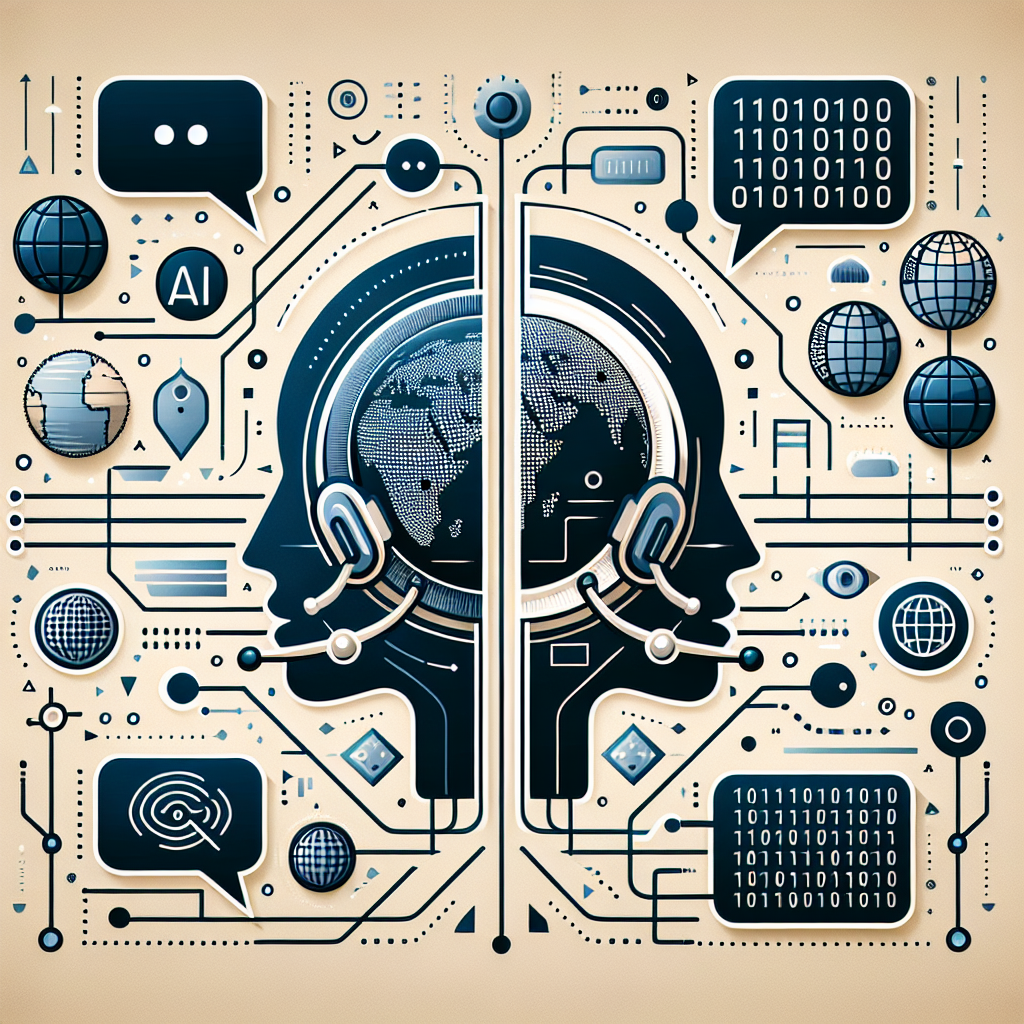
The Use of AI in Language Translation and Communication: Breaking Barriers
Language barriers have always been a significant hindrance when it comes to global communication and collaboration. With the rise of globalization and the increasing interconnectedness of the world, the ability to effectively communicate across different languages has become more important than ever. This is where artificial intelligence (AI) has played a crucial role in breaking down these barriers and facilitating seamless communication between individuals and organizations from different linguistic backgrounds.
AI-powered language translation technology has made significant advancements in recent years, revolutionizing the way we communicate across languages. From machine translation services like Google Translate to sophisticated language processing algorithms, AI has made it easier than ever to bridge the gap between different languages and cultures. In this article, we will explore the use of AI in language translation and communication, the benefits it offers, and the challenges it faces.
How AI is used in Language Translation
AI-powered language translation systems work by analyzing and processing large amounts of text data in different languages to identify patterns and generate accurate translations. These systems use machine learning algorithms to continuously improve their translation accuracy by learning from the vast amounts of data they are exposed to. There are several ways in which AI is used in language translation:
1. Rule-based translation: This approach involves creating a set of rules and grammar structures to translate text from one language to another. While this method can be effective for simple translations, it often lacks the nuance and context needed for accurate translations.
2. Statistical machine translation: This method uses statistical models to analyze large corpora of text in different languages to generate translations. While this approach can produce more accurate translations than rule-based systems, it still has limitations in capturing the nuances of language.
3. Neural machine translation: This is the most advanced form of AI-powered translation, which uses deep learning algorithms to process text data and generate translations. Neural machine translation systems are able to capture the context and nuances of language more effectively, resulting in more accurate translations.
Benefits of AI in Language Translation
The use of AI in language translation offers several benefits that have revolutionized the way we communicate across languages:
1. Accuracy: AI-powered translation systems are able to generate more accurate translations compared to traditional methods. Neural machine translation systems, in particular, have significantly improved the accuracy of translations by capturing the context and nuances of language.
2. Efficiency: AI-powered translation systems are able to process large amounts of text data quickly and generate translations in real-time. This has made it easier for individuals and organizations to communicate across languages without the need for human translators.
3. Cost-effective: AI-powered translation systems are more cost-effective compared to traditional translation services, which can be expensive and time-consuming. By automating the translation process, organizations can save time and money while still achieving accurate translations.
Challenges of AI in Language Translation
While AI-powered language translation technology has made significant advancements in recent years, there are still several challenges that it faces:
1. Context and nuance: While neural machine translation systems are able to capture the context and nuances of language more effectively, there are still limitations in accurately translating idiomatic expressions, cultural references, and slang.
2. Language diversity: AI-powered translation systems are often trained on large corpora of text data in popular languages, which can result in less accurate translations for less commonly spoken languages. This can pose challenges for individuals and organizations looking to communicate across a diverse range of languages.
3. Privacy and security: AI-powered translation systems often process large amounts of text data, which can raise concerns about privacy and data security. Organizations must ensure that their data is protected and that sensitive information is not compromised during the translation process.
FAQs
Q: Is AI-powered translation better than human translators?
A: AI-powered translation systems have made significant advancements in recent years and are able to generate accurate translations quickly and efficiently. While they may not always capture the nuances of language as effectively as human translators, they offer a cost-effective and convenient solution for communicating across languages.
Q: Can AI-powered translation systems translate any language?
A: AI-powered translation systems are typically trained on large corpora of text data in popular languages, which can result in less accurate translations for less commonly spoken languages. However, with advancements in AI technology, these systems are becoming more adept at translating a wider range of languages.
Q: How secure is AI-powered translation technology?
A: AI-powered translation systems process large amounts of text data, which can raise concerns about privacy and data security. Organizations must ensure that their data is protected and that sensitive information is not compromised during the translation process. It is important to work with reputable providers who prioritize data security and privacy.
In conclusion, the use of AI in language translation and communication has revolutionized the way we communicate across languages, breaking down barriers and facilitating seamless communication between individuals and organizations from different linguistic backgrounds. While AI-powered translation systems offer numerous benefits, they also face challenges in accurately capturing the context and nuances of language. As technology continues to advance, we can expect AI-powered translation systems to become even more sophisticated and effective in bridging the gap between languages and cultures.