
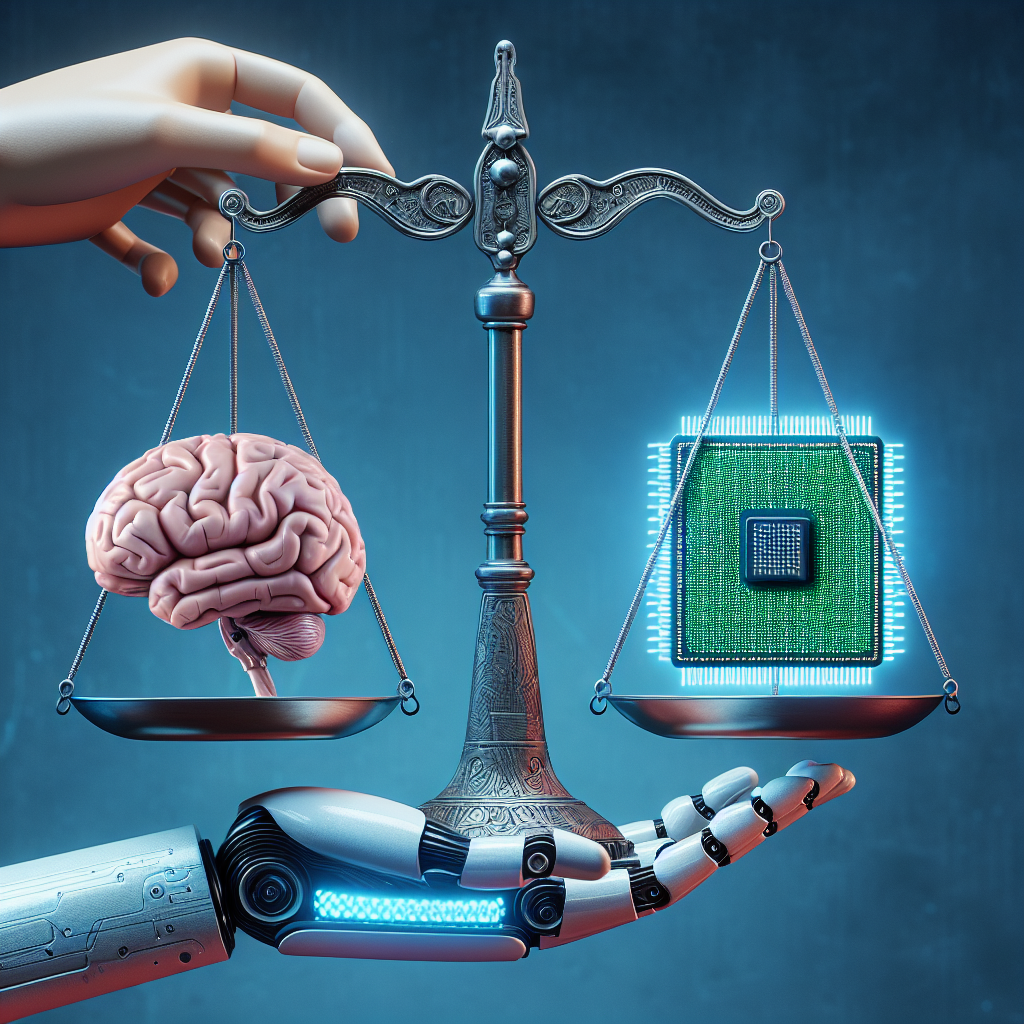
In recent years, artificial intelligence (AI) has made significant advancements in various industries, including healthcare, finance, and transportation. One area where AI has been increasingly used is in autonomous decision-making, where machines are able to make decisions without human intervention. While AI has the potential to improve efficiency and productivity, there are also risks associated with relying on AI for autonomous decision-making. In this article, we will explore some of the risks of AI in autonomous decision-making and discuss how these risks can be mitigated.
One of the primary risks of AI in autonomous decision-making is the potential for bias in decision-making algorithms. AI systems are trained on large datasets, which can contain biases that are present in the data. This can result in AI systems making decisions that are discriminatory or unfair. For example, a study by researchers at MIT found that facial recognition systems had higher error rates when identifying darker-skinned individuals compared to lighter-skinned individuals. This bias can have serious consequences, especially in applications such as criminal justice or hiring, where decisions made by AI systems can impact people’s lives.
Another risk of AI in autonomous decision-making is the lack of transparency in how AI systems make decisions. AI algorithms are often complex and opaque, making it difficult for users to understand how decisions are being made. This lack of transparency can lead to distrust in AI systems and can make it challenging to identify and correct errors or biases in the system. Additionally, the black-box nature of AI systems can make it difficult to hold AI systems accountable for their decisions, especially in cases where decisions have negative consequences.
Furthermore, AI systems can also be vulnerable to attacks and manipulation. Hackers can exploit vulnerabilities in AI systems to manipulate decision-making processes for malicious purposes. For example, attackers could tamper with data used to train AI systems or manipulate input data to trick AI systems into making incorrect decisions. This can have serious consequences, especially in critical applications such as autonomous vehicles or healthcare, where a manipulated decision by an AI system could result in harm or loss of life.
In addition to bias, lack of transparency, and vulnerability to attacks, another risk of AI in autonomous decision-making is the potential for unintended consequences. AI systems are designed to optimize specific objectives or functions, but they may not always consider the broader context or long-term consequences of their decisions. This can lead to unintended outcomes that are harmful or undesirable. For example, an AI system designed to maximize profits for a company may inadvertently harm the environment or exploit workers in the pursuit of its objective.
Despite these risks, there are ways to mitigate the potential negative impacts of AI in autonomous decision-making. One approach is to develop AI systems that are designed to be fair, transparent, and accountable. This can be achieved through techniques such as algorithmic auditing, where AI systems are regularly audited for biases and errors, and explainable AI, where AI systems are designed to provide explanations for their decisions in a transparent and understandable manner. By incorporating fairness, transparency, and accountability into the design of AI systems, the risks of bias, lack of transparency, and unintended consequences can be reduced.
Another way to mitigate the risks of AI in autonomous decision-making is to implement robust security measures to protect AI systems from attacks and manipulation. This includes techniques such as encryption, authentication, and secure coding practices to prevent unauthorized access to AI systems and to ensure the integrity and confidentiality of data used by AI systems. By prioritizing cybersecurity and implementing best practices for securing AI systems, the risks of attacks and manipulation can be minimized.
Furthermore, it is essential to involve human oversight and intervention in autonomous decision-making processes. While AI systems can automate decision-making and improve efficiency, human judgment and oversight are still necessary to ensure that decisions are ethical, fair, and aligned with human values. By incorporating human oversight into AI systems, errors and biases can be identified and corrected before they result in negative consequences.
In conclusion, while AI has the potential to revolutionize autonomous decision-making and improve efficiency in various industries, there are risks associated with relying on AI for decision-making. These risks include bias, lack of transparency, vulnerability to attacks, and unintended consequences. However, by incorporating fairness, transparency, accountability, cybersecurity, and human oversight into the design and implementation of AI systems, these risks can be mitigated. It is essential to balance the benefits of AI with the potential risks to ensure that AI systems are used responsibly and ethically in autonomous decision-making processes.
FAQs:
Q: What are some examples of bias in AI systems?
A: Some examples of bias in AI systems include facial recognition systems with higher error rates for darker-skinned individuals, hiring algorithms that discriminate against certain demographics, and predictive policing systems that target specific communities disproportionately.
Q: How can bias in AI systems be mitigated?
A: Bias in AI systems can be mitigated by ensuring that training data is diverse and representative, conducting algorithmic audits to identify and correct biases, and incorporating fairness and transparency into the design of AI systems.
Q: How can transparency in AI systems be improved?
A: Transparency in AI systems can be improved by using techniques such as explainable AI, where AI systems provide explanations for their decisions in a transparent and understandable manner, and by conducting regular audits to ensure that AI systems are making decisions in a fair and ethical manner.
Q: What are some best practices for securing AI systems from attacks?
A: Some best practices for securing AI systems from attacks include using encryption to protect data, implementing authentication mechanisms to prevent unauthorized access, and following secure coding practices to ensure the integrity and confidentiality of AI systems.
Q: Why is human oversight important in autonomous decision-making processes?
A: Human oversight is important in autonomous decision-making processes to ensure that decisions are ethical, fair, and aligned with human values. Human judgment and intervention are necessary to identify and correct errors and biases in AI systems before they result in negative consequences.