
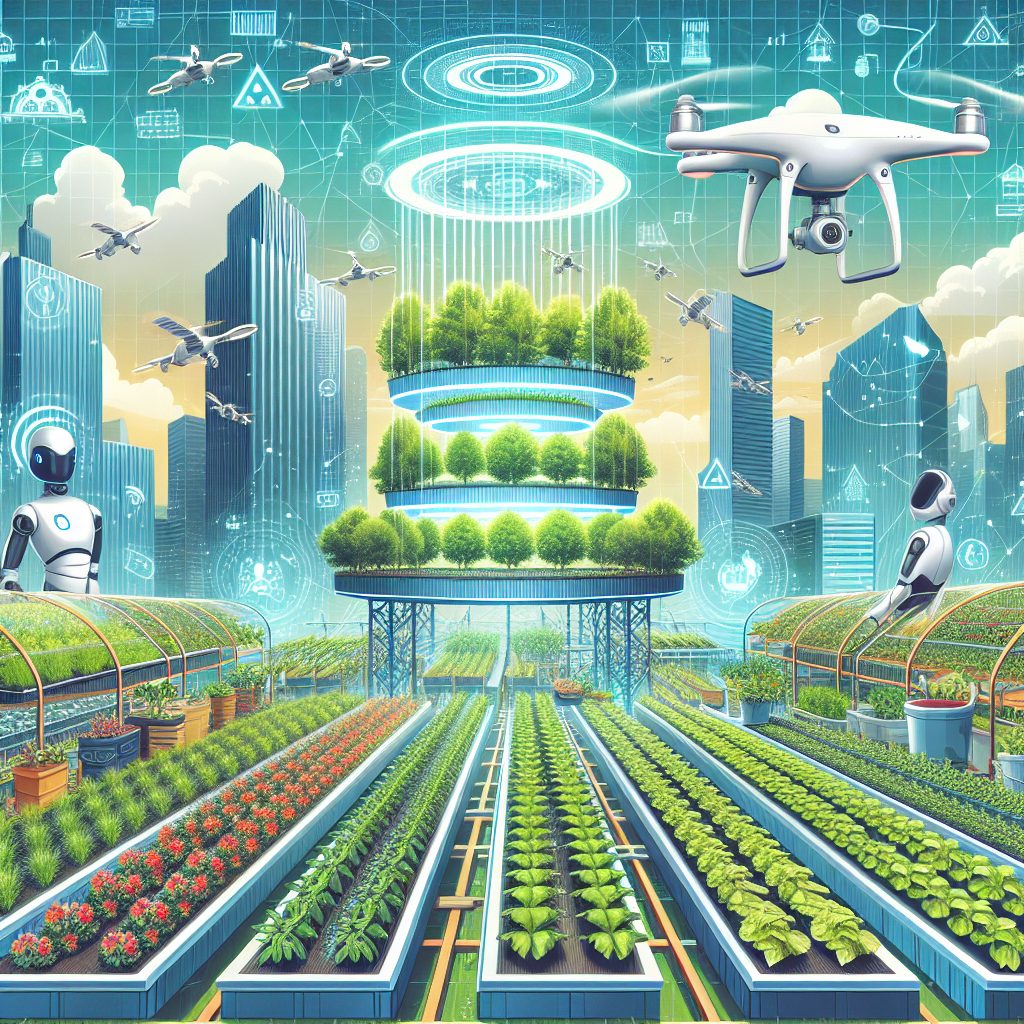
Artificial intelligence (AI) is revolutionizing various industries, and vertical farming and urban agriculture are no exceptions. Vertical farming refers to the practice of growing crops in vertically stacked layers, typically in controlled environments such as urban warehouses or skyscrapers. Urban agriculture, on the other hand, involves growing crops and raising animals within urban areas. The integration of AI technology into vertical farming and urban agriculture has the potential to increase efficiency, reduce costs, and improve sustainability.
AI Applications in Vertical Farming and Urban Agriculture
1. Monitoring and Control Systems
AI-powered monitoring and control systems can help optimize growing conditions in vertical farms and urban agriculture settings. These systems can collect data on temperature, humidity, light levels, and nutrient levels, and adjust these conditions in real-time to maximize plant growth. By continuously monitoring environmental conditions and plant health, AI can help farmers make informed decisions to improve crop yields.
2. Predictive Analytics
AI algorithms can analyze data collected from monitoring systems to predict plant growth patterns and optimize crop production. By using historical data and machine learning algorithms, AI can forecast plant growth rates, predict potential crop diseases, and recommend the best time to harvest crops. This predictive analytics can help farmers plan crop cycles more effectively and reduce the risk of crop failure.
3. Robotics and Automation
AI-powered robots are increasingly being used in vertical farming and urban agriculture to automate tasks such as planting, watering, and harvesting. These robots can perform repetitive tasks more efficiently than human labor, leading to increased productivity and reduced labor costs. By using computer vision and machine learning algorithms, AI-powered robots can also identify and remove weeds, pests, and diseases, reducing the need for chemical pesticides.
4. Energy Efficiency
AI can help optimize energy usage in vertical farms and urban agriculture settings by analyzing data on energy consumption and recommending ways to reduce energy costs. AI algorithms can adjust lighting schedules, heating, and cooling systems based on real-time data to minimize energy waste. By optimizing energy usage, AI can help reduce the environmental impact of vertical farming and urban agriculture operations.
5. Crop Quality and Nutrient Management
AI technology can help monitor plant health and nutrient levels in vertical farms and urban agriculture settings. By analyzing data on plant growth patterns, nutrient levels, and environmental conditions, AI algorithms can recommend the optimal nutrient mix for different crops. This can help improve crop quality, increase nutritional value, and reduce the use of chemical fertilizers.
6. Crop Planning and Optimization
AI can help farmers optimize crop planning by analyzing data on market demand, weather conditions, and crop growth patterns. By using predictive analytics and machine learning algorithms, AI can recommend the best crops to grow, the optimal planting schedule, and the most efficient use of resources. This can help farmers maximize crop yields, reduce waste, and increase profitability.
Frequently Asked Questions (FAQs)
1. How can AI technology improve crop yields in vertical farming and urban agriculture?
AI technology can improve crop yields by optimizing growing conditions, predicting plant growth patterns, and recommending the best crop management practices. By using AI-powered monitoring and control systems, farmers can adjust environmental conditions to maximize plant growth. AI algorithms can also analyze data to predict plant growth rates, detect potential crop diseases, and recommend the best time to harvest crops, leading to increased crop yields.
2. How can AI-powered robots benefit vertical farming and urban agriculture?
AI-powered robots can automate tasks such as planting, watering, and harvesting, leading to increased productivity and reduced labor costs. These robots can perform repetitive tasks more efficiently than human labor, helping farmers save time and resources. AI-powered robots can also identify and remove weeds, pests, and diseases using computer vision and machine learning algorithms, reducing the need for chemical pesticides.
3. How can AI technology help reduce energy costs in vertical farming and urban agriculture?
AI technology can help optimize energy usage by analyzing data on energy consumption and recommending ways to reduce energy costs. By adjusting lighting schedules, heating, and cooling systems based on real-time data, AI algorithms can minimize energy waste. This can help farmers reduce their environmental impact and lower their energy bills.
4. How can AI technology improve crop quality and nutrient management in vertical farming and urban agriculture?
AI technology can help monitor plant health and nutrient levels by analyzing data on plant growth patterns, nutrient levels, and environmental conditions. By recommending the optimal nutrient mix for different crops, AI algorithms can improve crop quality, increase nutritional value, and reduce the use of chemical fertilizers. This can help farmers grow healthier crops and produce higher-quality food.
5. How can AI technology help farmers optimize crop planning and increase profitability?
AI technology can help farmers optimize crop planning by analyzing data on market demand, weather conditions, and crop growth patterns. By using predictive analytics and machine learning algorithms, AI can recommend the best crops to grow, the optimal planting schedule, and the most efficient use of resources. This can help farmers maximize crop yields, reduce waste, and increase profitability.
In conclusion, AI technology has the potential to revolutionize vertical farming and urban agriculture by improving efficiency, reducing costs, and enhancing sustainability. By using AI-powered monitoring and control systems, predictive analytics, robotics and automation, energy efficiency solutions, crop quality and nutrient management tools, and crop planning optimization, farmers can optimize their operations and increase their productivity. With the integration of AI technology, vertical farming and urban agriculture can help address the challenges of food security, environmental sustainability, and urbanization in the 21st century.