
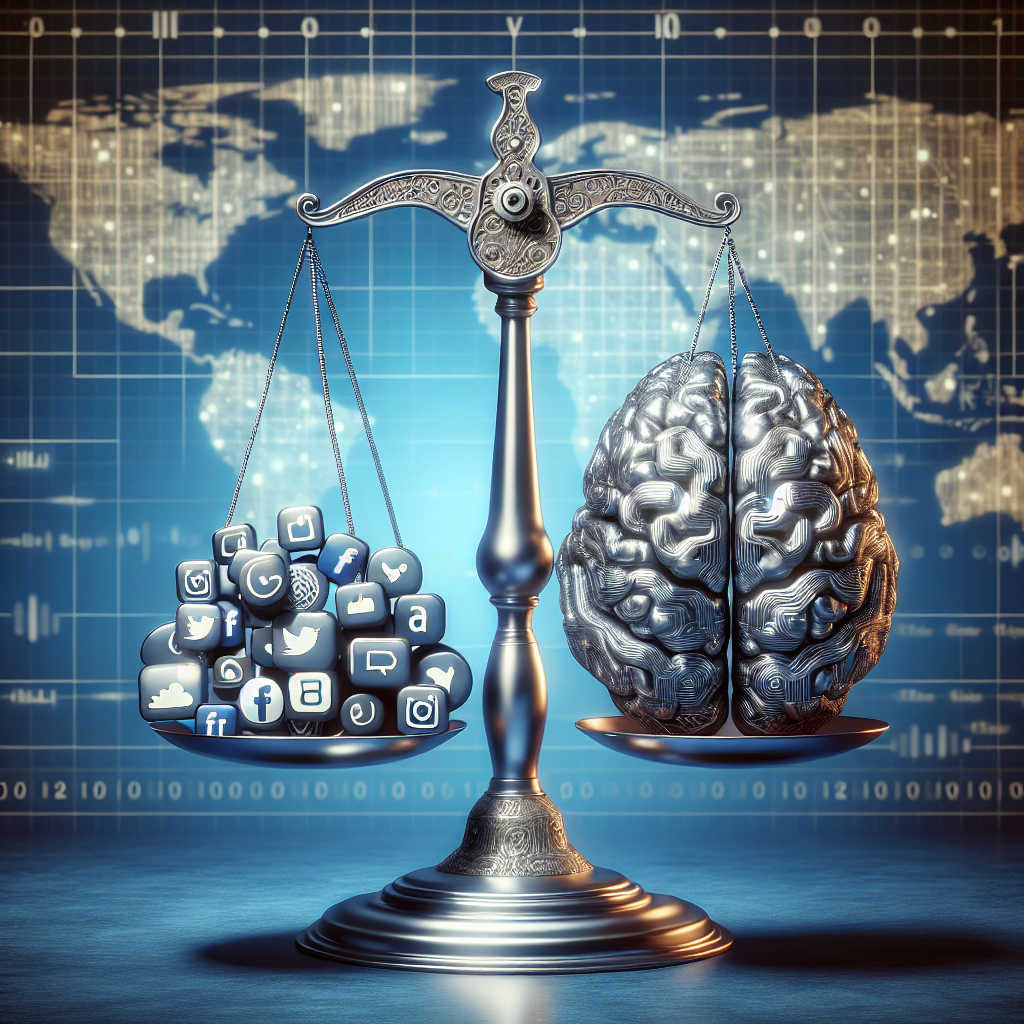
The Ethics of AI in Social Media
Social media has become an integral part of our daily lives, providing us with a platform to connect with others, share our thoughts and experiences, and stay informed about the world around us. With the rise of artificial intelligence (AI) technology, social media platforms are increasingly using AI algorithms to personalize content, target advertisements, and moderate user behavior. While AI has the potential to enhance the user experience and improve the efficiency of social media platforms, it also raises important ethical questions about privacy, bias, and the impact on society as a whole.
One of the key ethical concerns surrounding AI in social media is the issue of privacy. AI algorithms are constantly collecting and analyzing vast amounts of user data to personalize content and target advertisements. While this can make the user experience more engaging and relevant, it also raises concerns about the potential misuse of personal data. For example, social media platforms may use AI algorithms to track users’ online behavior and preferences, leading to targeted advertisements that may infringe on users’ privacy and autonomy. Additionally, AI algorithms may also be used to predict users’ behavior and preferences, raising concerns about the potential manipulation of users’ decisions and choices.
Another ethical issue related to AI in social media is the issue of bias. AI algorithms are trained on large datasets that may contain biases and stereotypes, leading to discriminatory outcomes. For example, AI algorithms used to moderate user content on social media platforms may inadvertently censor or suppress certain voices or perspectives based on race, gender, or other factors. This can have serious implications for freedom of speech and expression, as well as for the diversity and inclusivity of online discourse. It is important for social media platforms to address these biases and ensure that their AI algorithms are fair and transparent in their decision-making processes.
Furthermore, the use of AI in social media raises concerns about the impact on society as a whole. AI algorithms have the power to shape and influence public opinion, as well as to amplify and spread misinformation and fake news. For example, AI algorithms used to curate news feeds on social media platforms may prioritize sensationalist or polarizing content, leading to the spread of misinformation and the proliferation of echo chambers. This can have far-reaching consequences for democratic societies, as well as for the integrity of public discourse and debate. It is crucial for social media platforms to take responsibility for the ethical implications of their AI algorithms and to ensure that they are used in a way that promotes the public good.
In light of these ethical concerns, it is important for social media platforms to adopt ethical guidelines and principles for the use of AI technology. This includes ensuring transparency and accountability in the development and deployment of AI algorithms, as well as prioritizing user privacy and data protection. Social media platforms should also strive to address biases and discrimination in their AI algorithms, and to promote diversity and inclusivity in their online communities. By taking these ethical considerations into account, social media platforms can harness the power of AI technology in a way that benefits society as a whole.
FAQs:
Q: How do social media platforms use AI technology?
A: Social media platforms use AI technology for a variety of purposes, including personalizing content, targeting advertisements, moderating user behavior, and detecting fake news and misinformation. AI algorithms analyze vast amounts of user data to make predictions and recommendations, as well as to automate tasks and processes.
Q: What are some ethical concerns related to the use of AI in social media?
A: Some of the key ethical concerns related to the use of AI in social media include issues of privacy, bias, and the impact on society. AI algorithms may infringe on user privacy by collecting and analyzing personal data without consent, as well as perpetuate biases and discrimination in their decision-making processes. Furthermore, AI algorithms have the power to shape public opinion and influence democratic societies, raising concerns about the spread of misinformation and the integrity of public discourse.
Q: How can social media platforms address ethical concerns related to AI technology?
A: Social media platforms can address ethical concerns related to AI technology by adopting ethical guidelines and principles for the development and deployment of AI algorithms. This includes ensuring transparency and accountability in the use of AI technology, as well as prioritizing user privacy and data protection. Social media platforms should also strive to address biases and discrimination in their AI algorithms, and to promote diversity and inclusivity in their online communities. By taking these ethical considerations into account, social media platforms can harness the power of AI technology in a way that benefits society as a whole.