
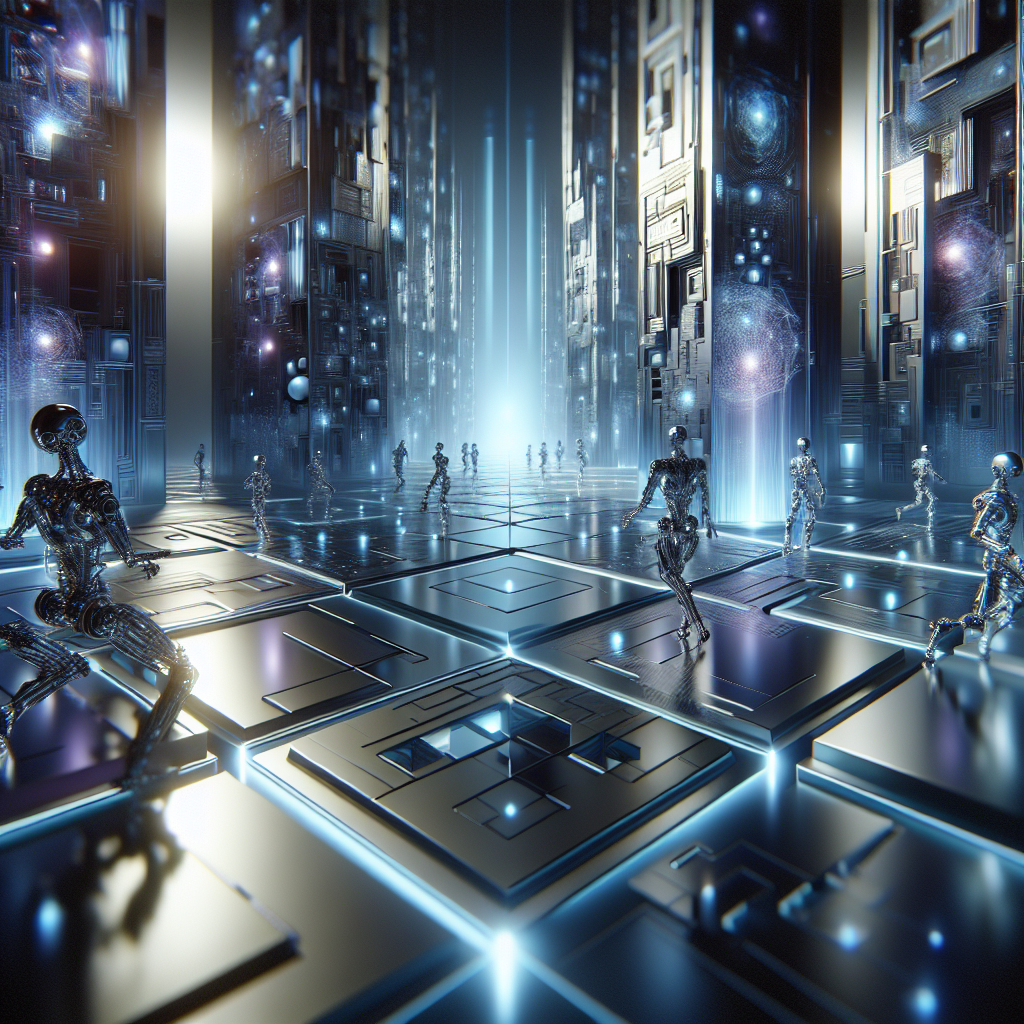
Artificial Intelligence (AI) has revolutionized many industries, including the gaming industry. One area where AI has made significant advancements is in game lighting effects. Lighting effects play a crucial role in creating realistic and immersive gaming environments, and AI has enabled developers to take these effects to the next level.
AI-powered lighting effects can enhance the visual quality of games by dynamically adjusting lighting based on various factors such as time of day, weather conditions, and the movement of characters and objects in the game world. This level of realism can greatly enhance the player’s gaming experience, making the game world feel more alive and dynamic.
One of the key benefits of using AI for game lighting effects is the ability to create more realistic and dynamic lighting scenarios. Traditional lighting systems in games are often static and predetermined, meaning that the lighting in a game world remains the same regardless of the circumstances. With AI-powered lighting effects, developers can create lighting that reacts to changes in the game environment in real-time, such as the movement of clouds casting shadows, or the changing position of the sun as it moves across the sky.
AI can also be used to create more natural and realistic lighting effects, such as dynamic shadows and reflections. These effects can greatly enhance the visual quality of a game, making it feel more immersive and lifelike. AI algorithms can analyze the game world and make decisions about how to best light a scene in order to create the most realistic and visually pleasing result.
Another benefit of using AI for game lighting effects is the ability to optimize performance. Lighting effects can be computationally expensive, especially in large and complex game worlds. AI algorithms can help optimize lighting calculations to ensure that the game runs smoothly and efficiently, even on lower-end hardware. This can help developers create visually stunning games without sacrificing performance.
AI-powered lighting effects can also help streamline the game development process. By automating the process of creating lighting effects, developers can save time and resources, allowing them to focus on other aspects of game development. This can help speed up the development cycle and bring games to market faster.
Overall, AI-powered lighting effects have the potential to transform the gaming industry by creating more immersive and visually stunning gaming experiences. As AI technology continues to advance, we can expect to see even more realistic and dynamic lighting effects in games in the future.
FAQs:
Q: How does AI improve game lighting effects?
A: AI can improve game lighting effects by dynamically adjusting lighting based on various factors such as time of day, weather conditions, and the movement of characters and objects in the game world. This level of realism can greatly enhance the player’s gaming experience.
Q: Are AI-powered lighting effects computationally expensive?
A: Lighting effects can be computationally expensive, especially in large and complex game worlds. However, AI algorithms can help optimize lighting calculations to ensure that the game runs smoothly and efficiently, even on lower-end hardware.
Q: How can AI streamline the game development process?
A: By automating the process of creating lighting effects, AI can help save time and resources, allowing developers to focus on other aspects of game development. This can help speed up the development cycle and bring games to market faster.
Q: What are some examples of AI-powered lighting effects in games?
A: Some examples of AI-powered lighting effects in games include dynamic shadows and reflections, realistic day-night cycles, and dynamic weather effects. These effects can greatly enhance the visual quality of a game and create a more immersive gaming experience.