
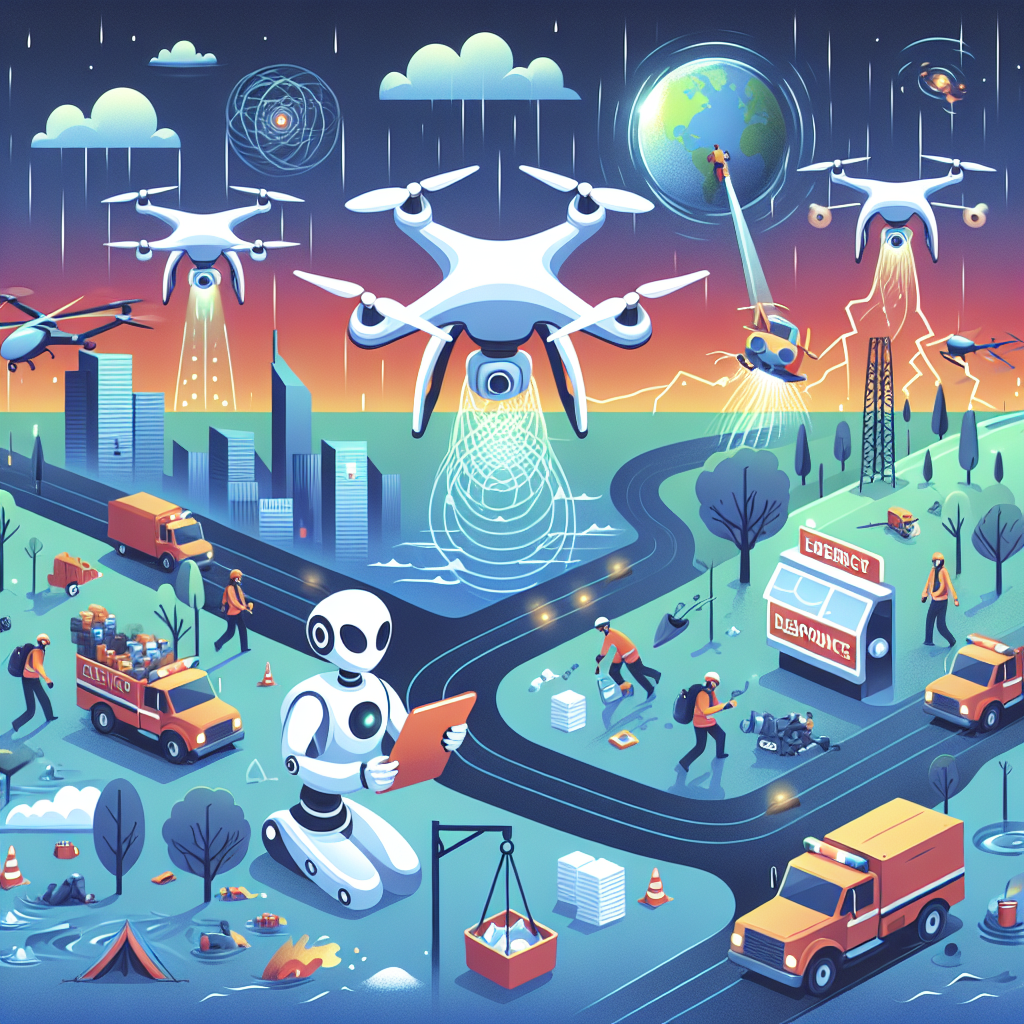
The Role of AI in Disaster Response and Emergency Management: Improving Resilience
In recent years, the use of artificial intelligence (AI) in disaster response and emergency management has become increasingly important. AI technologies have the potential to improve the efficiency and effectiveness of disaster response efforts, enhance decision-making processes, and ultimately save lives. With the increasing frequency and severity of natural disasters around the world, the role of AI in disaster response and emergency management is more critical than ever.
AI technologies can assist in various aspects of disaster response and emergency management, including predicting and detecting disasters, coordinating response efforts, assessing damage, and providing real-time information to emergency responders. By harnessing the power of AI, organizations and governments can improve their resilience in the face of disasters and better protect their communities.
Predicting and Detecting Disasters
One of the key ways in which AI can improve disaster response is by predicting and detecting disasters before they occur. AI algorithms can analyze a wide range of data sources, such as weather patterns, seismic activity, and social media trends, to identify potential risks and issue early warnings to at-risk populations. By using AI to predict disasters, emergency management agencies can better prepare for and mitigate the impact of these events.
For example, researchers at Stanford University have developed an AI system that can predict the location and severity of wildfires by analyzing satellite imagery and weather data. This system can help firefighters and emergency responders prepare for and respond to wildfires more effectively, potentially saving lives and reducing property damage.
Coordinating Response Efforts
During a disaster, coordination and communication among emergency responders are crucial for an effective response. AI technologies can help streamline these efforts by providing real-time data on the location of resources, the status of affected areas, and the needs of impacted communities. AI algorithms can also optimize the allocation of resources and personnel, ensuring that emergency responders are deployed where they are most needed.
For example, the Federal Emergency Management Agency (FEMA) has used AI-powered chatbots to streamline communication with disaster survivors and provide them with information on available resources and assistance programs. These chatbots can handle a high volume of inquiries quickly and efficiently, freeing up FEMA staff to focus on more complex tasks.
Assessing Damage
After a disaster has occurred, AI technologies can assist in assessing the extent of damage to infrastructure, buildings, and natural resources. AI-powered drones and satellite imagery can provide high-resolution images of affected areas, allowing emergency responders to evaluate the impact of the disaster and prioritize their response efforts. AI algorithms can also analyze these images to identify areas that require immediate attention, such as collapsed buildings or flooded roads.
For example, following the devastating earthquake in Haiti in 2010, researchers used AI algorithms to analyze satellite imagery and assess the extent of the damage to buildings and infrastructure. This information helped aid organizations and governments prioritize their response efforts and allocate resources more effectively.
Providing Real-Time Information
During a disaster, access to accurate and timely information is crucial for decision-making and response coordination. AI technologies can provide real-time updates on the status of affected areas, the movement of populations, and the availability of resources, helping emergency responders make informed decisions quickly. AI-powered systems can also analyze social media posts and news reports to identify emerging trends and prioritize response efforts accordingly.
For example, during the COVID-19 pandemic, researchers at the University of California, Irvine, developed an AI system that can track the spread of the virus in real-time by analyzing social media posts and news articles. This system can help public health officials identify hotspots of infection and allocate resources to areas with the greatest need.
FAQs
Q: How can AI improve disaster response and emergency management?
A: AI technologies can improve disaster response and emergency management by predicting and detecting disasters, coordinating response efforts, assessing damage, and providing real-time information to emergency responders. By harnessing the power of AI, organizations and governments can improve their resilience in the face of disasters and better protect their communities.
Q: What are some examples of AI technologies used in disaster response?
A: Some examples of AI technologies used in disaster response include predictive analytics algorithms, chatbots for communication with disaster survivors, drones and satellite imagery for damage assessment, and social media analysis for real-time information gathering.
Q: How can AI help in coordinating response efforts during a disaster?
A: AI technologies can help coordinate response efforts during a disaster by providing real-time data on the location of resources, the status of affected areas, and the needs of impacted communities. AI algorithms can optimize the allocation of resources and personnel, ensuring that emergency responders are deployed where they are most needed.
Q: What are the challenges of using AI in disaster response and emergency management?
A: Some of the challenges of using AI in disaster response and emergency management include data privacy and security concerns, the need for specialized training for personnel, and the potential for bias in AI algorithms. It is important for organizations and governments to address these challenges and ensure that AI technologies are used ethically and responsibly.
In conclusion, the role of AI in disaster response and emergency management is crucial for improving resilience and protecting communities in the face of disasters. By harnessing the power of AI technologies, organizations and governments can better predict and detect disasters, coordinate response efforts, assess damage, and provide real-time information to emergency responders. As the frequency and severity of natural disasters continue to increase, the use of AI in disaster response will become even more important in ensuring the safety and well-being of communities around the world.