
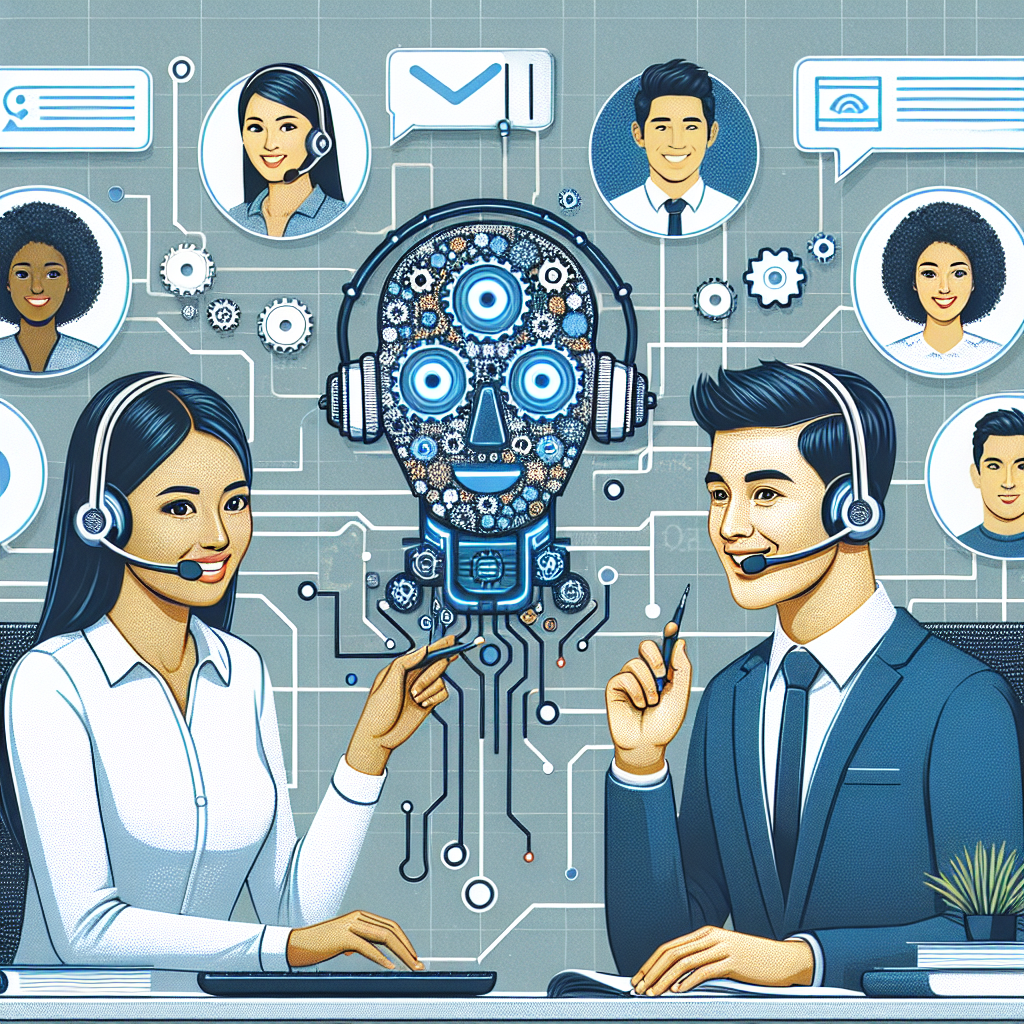
Artificial Intelligence (AI) has revolutionized the way businesses interact with their customers. AI-powered customer service solutions have become increasingly popular, especially among startups looking to provide efficient and personalized support to their clients. In this article, we will explore the best practices for implementing AI customer service for startups, and address some common questions that arise when considering this technology.
Best Practices for AI Customer Service in Startups:
1. Understand your customer’s needs and preferences: Before implementing AI customer service, startups must have a clear understanding of their customer’s needs and preferences. This includes identifying common queries, pain points, and communication channels preferred by customers. By leveraging AI technology, startups can analyze customer data to gain insights into their behavior and preferences, enabling them to tailor their customer service strategy accordingly.
2. Choose the right AI platform: There are several AI platforms available in the market, each offering different features and capabilities. Startups must carefully evaluate their options and choose a platform that aligns with their business goals and customer service requirements. Factors to consider include scalability, integration capabilities, customization options, and ease of use.
3. Implement chatbots for instant support: Chatbots are AI-powered virtual assistants that can handle customer queries in real-time, providing instant support to customers. Startups can integrate chatbots into their website or messaging platforms to assist customers with common questions, order tracking, or product recommendations. Chatbots can significantly reduce response times, improve customer satisfaction, and free up human agents to focus on more complex issues.
4. Personalize customer interactions: AI technology allows startups to personalize customer interactions by analyzing customer data and behavior. By leveraging AI algorithms, startups can deliver customized product recommendations, personalized offers, and targeted marketing campaigns to enhance the customer experience. Personalization is key to building customer loyalty and driving repeat business.
5. Provide omnichannel support: Customers today expect seamless support across multiple channels, including email, chat, social media, and phone. Startups can leverage AI technology to provide omnichannel support, ensuring a consistent and personalized experience for customers regardless of the communication channel. AI-powered solutions can help startups manage customer inquiries across different channels, track customer interactions, and provide a unified view of customer data.
6. Continuously optimize and improve: AI technology is constantly evolving, and startups must continuously optimize and improve their AI customer service strategy to stay ahead of the competition. Startups should regularly analyze customer feedback, monitor key performance metrics, and make data-driven decisions to enhance their AI-powered customer service. By continuously optimizing their AI strategy, startups can improve efficiency, reduce costs, and drive customer satisfaction.
Common FAQs about AI Customer Service for Startups:
1. What are the benefits of implementing AI customer service for startups?
– AI customer service can help startups improve efficiency, reduce costs, and enhance the customer experience. By automating routine tasks, startups can free up human agents to focus on more complex issues, leading to faster response times and higher customer satisfaction. AI technology can also provide valuable insights into customer behavior, enabling startups to personalize their interactions and drive repeat business.
2. How can startups ensure data privacy and security when using AI customer service?
– Data privacy and security are paramount when implementing AI customer service. Startups must ensure that customer data is protected and comply with relevant data protection regulations. By choosing a reputable AI platform with robust security features, startups can safeguard customer data and build trust with their customers. Additionally, startups should regularly audit their AI systems and implement encryption, access controls, and other security measures to protect sensitive information.
3. How can startups measure the success of their AI customer service strategy?
– Startups can measure the success of their AI customer service strategy by tracking key performance metrics such as response times, customer satisfaction scores, resolution rates, and customer retention. By analyzing these metrics, startups can identify areas for improvement, optimize their AI strategy, and drive better outcomes for their business. Additionally, startups can gather feedback from customers through surveys, reviews, and social media to gauge the effectiveness of their AI-powered customer service.
4. What are some common challenges startups may face when implementing AI customer service?
– Startups may face challenges such as integrating AI technology with existing systems, training employees to use AI tools effectively, and managing customer expectations. Additionally, startups may encounter technical issues, data quality issues, or resistance from customers who prefer human interaction. To overcome these challenges, startups should invest in proper training, seek expert guidance, and communicate transparently with customers about the benefits of AI technology.
In conclusion, AI customer service offers significant benefits for startups looking to provide efficient, personalized support to their customers. By implementing best practices such as understanding customer needs, choosing the right AI platform, using chatbots for instant support, personalizing interactions, providing omnichannel support, and continuously optimizing their strategy, startups can enhance the customer experience and drive business growth. By addressing common FAQs about AI customer service, startups can make informed decisions and effectively leverage AI technology to improve their customer service capabilities.