
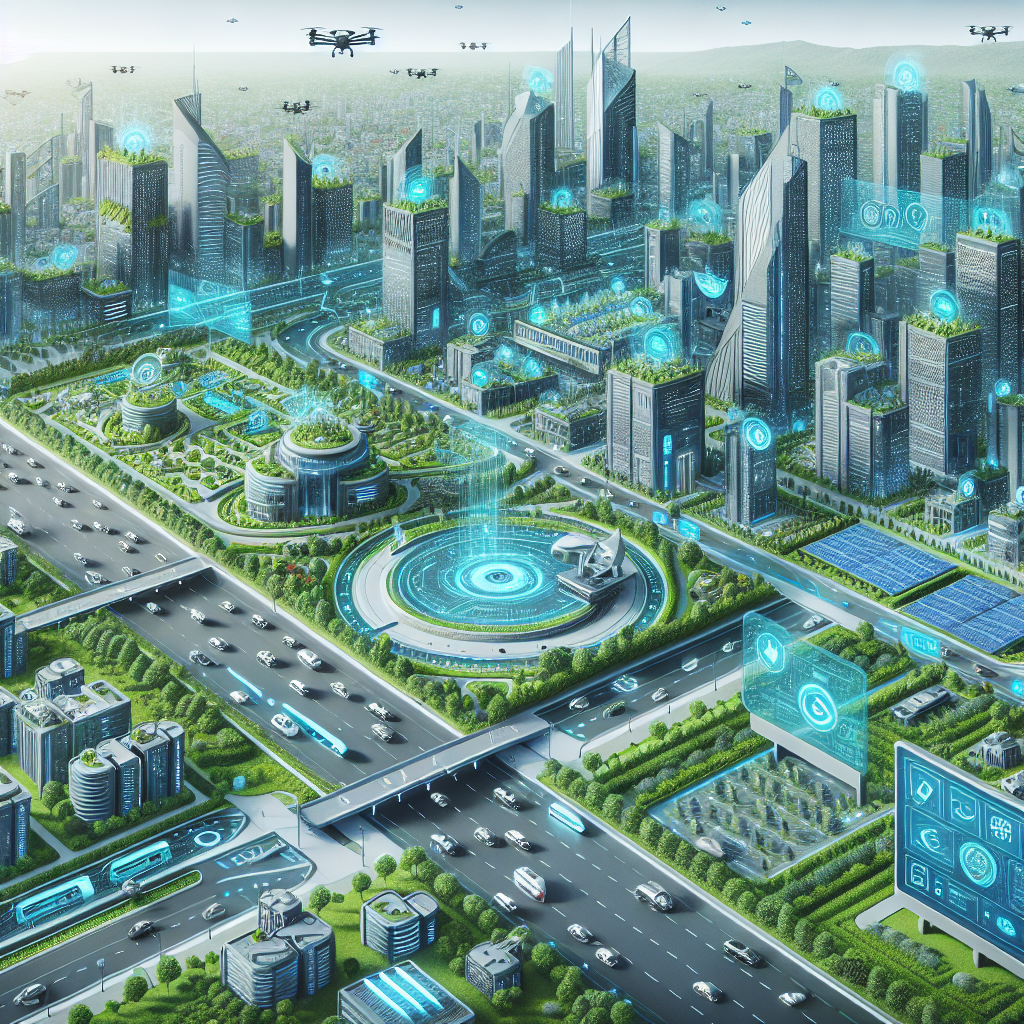
Artificial Intelligence (AI) is rapidly transforming urban planning and paving the way for the creation of smart cities of the future. With the increasing urbanization and population growth in cities around the world, the need for innovative solutions to address urban challenges has never been greater. AI has the potential to revolutionize the way cities are designed, managed, and operated, leading to more efficient, sustainable, and livable urban environments.
AI in urban planning involves the use of advanced technologies such as machine learning, data analytics, and predictive modeling to analyze and optimize various aspects of urban development. By harnessing the power of AI, city planners can make more informed decisions, improve infrastructure, and enhance the quality of life for residents. From traffic management and energy efficiency to waste management and public safety, AI is already being used in a wide range of applications to make cities smarter and more responsive to the needs of their inhabitants.
One of the key areas where AI is making a significant impact in urban planning is transportation. With the rise of ride-sharing services, autonomous vehicles, and smart traffic management systems, cities are facing new challenges in managing mobility and reducing congestion. AI technologies are being used to analyze traffic patterns, optimize transportation routes, and improve public transit services. By leveraging real-time data and predictive analytics, city planners can develop more efficient and sustainable transportation solutions that benefit both residents and the environment.
AI is also being used to optimize energy consumption and reduce carbon emissions in cities. By analyzing energy usage data and weather patterns, AI systems can help city officials identify opportunities for energy savings and implement more sustainable energy solutions. For example, AI-powered smart grids can dynamically adjust energy production and distribution to match demand, leading to lower costs and reduced environmental impact. Additionally, AI can be used to optimize building energy management systems, monitor air quality, and promote renewable energy sources, helping cities achieve their sustainability goals.
In addition to transportation and energy, AI is playing a crucial role in urban planning by improving public safety and security. By analyzing crime data, social media feeds, and surveillance footage, AI systems can help law enforcement agencies identify crime hotspots, predict criminal activity, and deploy resources more effectively. AI-powered surveillance cameras can detect suspicious behavior and alert authorities in real-time, enhancing the overall security of public spaces. Furthermore, AI can be used to optimize emergency response systems, coordinate disaster relief efforts, and ensure the safety of residents during natural disasters or other emergencies.
The integration of AI in urban planning is not without challenges, however. Privacy concerns, data security issues, and ethical considerations must be carefully addressed to ensure that AI technologies are used responsibly and transparently. City officials must also consider the potential social and economic impacts of AI adoption, such as job displacement and inequality, and develop strategies to mitigate these risks. Despite these challenges, the benefits of AI in urban planning far outweigh the drawbacks, and cities around the world are increasingly embracing AI as a key enabler of smart and sustainable urban development.
FAQs:
1. What are smart cities and how does AI play a role in their development?
Smart cities are urban environments that leverage technology and data to improve the quality of life for residents, enhance sustainability, and optimize resources. AI plays a key role in the development of smart cities by enabling the analysis of vast amounts of data, predicting future trends, and optimizing various urban systems such as transportation, energy, and public safety.
2. How is AI being used in transportation planning in smart cities?
AI is being used in transportation planning in smart cities to analyze traffic patterns, optimize transportation routes, improve public transit services, and reduce congestion. By leveraging real-time data and predictive analytics, city planners can develop more efficient and sustainable transportation solutions that benefit both residents and the environment.
3. What are some examples of AI applications in energy management in smart cities?
Some examples of AI applications in energy management in smart cities include smart grids that dynamically adjust energy production and distribution, building energy management systems that optimize energy usage, and monitoring air quality to promote sustainability. AI technologies help cities reduce energy consumption, lower costs, and achieve their sustainability goals.
4. How does AI enhance public safety and security in smart cities?
AI enhances public safety and security in smart cities by analyzing crime data, social media feeds, and surveillance footage to identify crime hotspots, predict criminal activity, and deploy resources more effectively. AI-powered surveillance cameras can detect suspicious behavior and alert authorities in real-time, improving the overall security of public spaces.
5. What are some of the challenges and considerations in integrating AI in urban planning?
Some of the challenges and considerations in integrating AI in urban planning include privacy concerns, data security issues, ethical considerations, job displacement, and inequality. City officials must address these challenges responsibly and transparently to ensure that AI technologies are used in a way that benefits all residents and communities.