
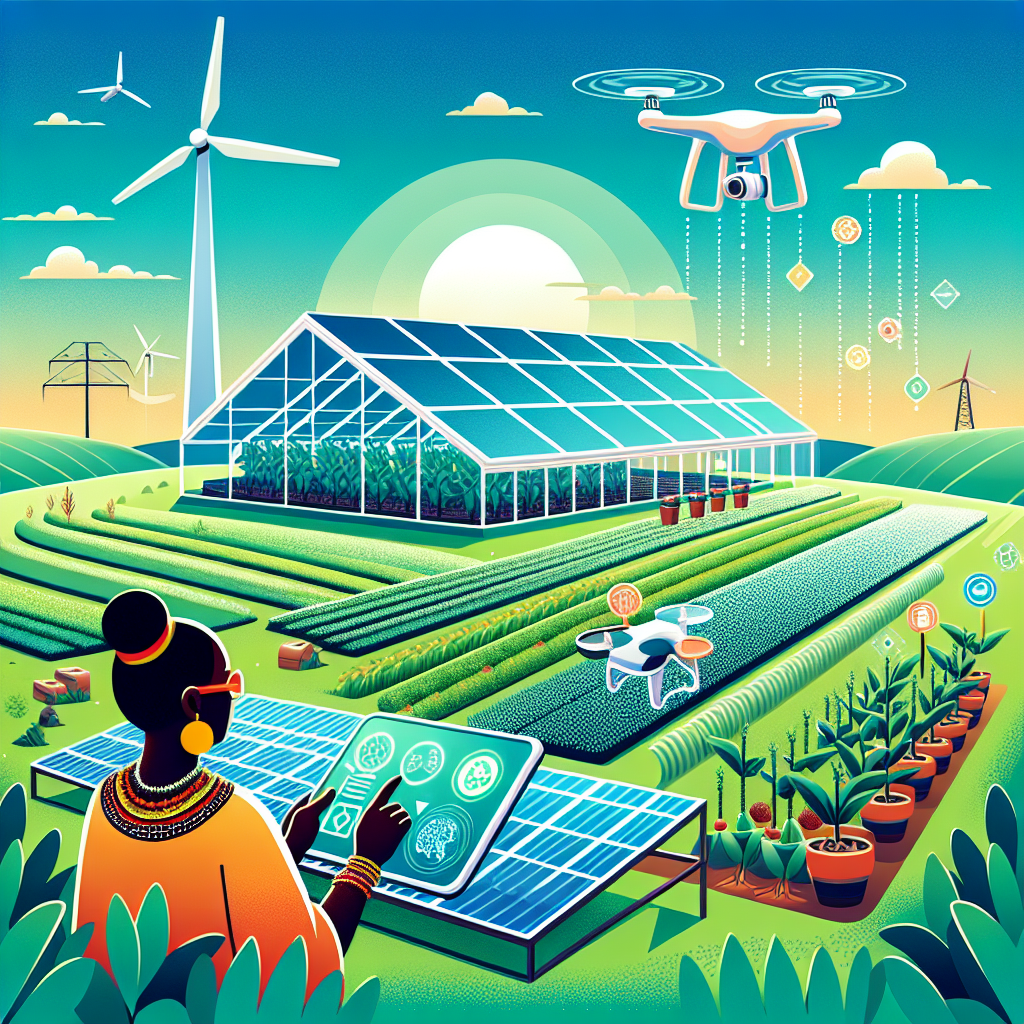
Climate change is one of the biggest challenges facing the world today, and agriculture plays a significant role in both contributing to and being impacted by climate change. As the global population continues to grow, there is an increasing demand for food production, which puts pressure on agricultural systems to become more efficient and sustainable. One way to address this challenge is by harnessing the power of artificial intelligence (AI) to create climate-smart agriculture practices.
AI refers to the simulation of human intelligence in machines that are programmed to think and act like humans. In the context of agriculture, AI can be used to collect and analyze data, make predictions, and automate tasks to improve productivity and sustainability. By leveraging AI technology, farmers and agricultural producers can make more informed decisions, optimize resource use, and reduce the environmental impact of agriculture.
There are several ways in which AI can be harnessed for climate-smart agriculture:
1. Precision agriculture: AI can be used to analyze data from sensors, satellites, and drones to create detailed maps of fields and monitor crop health. This information can help farmers optimize inputs such as water, fertilizers, and pesticides, reducing waste and environmental impact. Precision agriculture can also help farmers detect pest and disease outbreaks early, leading to more targeted and sustainable pest management strategies.
2. Climate modeling: AI can be used to analyze climate data and predict future weather patterns, allowing farmers to better anticipate and adapt to changing growing conditions. By incorporating climate modeling into decision-making processes, farmers can adjust planting schedules, crop choices, and irrigation practices to mitigate the impacts of climate change on agriculture.
3. Crop breeding: AI can accelerate the process of crop breeding by analyzing genetic data and identifying traits that are resistant to drought, pests, and diseases. By using AI algorithms to predict the most promising genetic combinations, breeders can develop new crop varieties that are better suited to changing climate conditions.
4. Supply chain optimization: AI can be used to optimize supply chains and reduce food waste. By analyzing data on production, transportation, and storage, AI algorithms can help farmers and food companies streamline operations and minimize losses. This can have a significant impact on reducing greenhouse gas emissions associated with food production and distribution.
5. Monitoring and evaluation: AI can be used to monitor and evaluate the impact of climate-smart agriculture practices on the environment. By collecting data on soil health, water quality, and biodiversity, AI can help farmers assess the sustainability of their farming practices and make adjustments as needed.
FAQs:
Q: How can AI help farmers reduce the environmental impact of agriculture?
A: AI can help farmers reduce the environmental impact of agriculture by optimizing resource use, improving efficiency, and promoting sustainable practices. By analyzing data and making predictions, AI can help farmers make informed decisions about inputs such as water, fertilizers, and pesticides, leading to reduced waste and pollution.
Q: What are some examples of AI applications in agriculture?
A: Some examples of AI applications in agriculture include precision agriculture, climate modeling, crop breeding, supply chain optimization, and monitoring and evaluation. These applications use AI technology to collect and analyze data, make predictions, and automate tasks to improve productivity and sustainability in agriculture.
Q: How can AI help farmers adapt to climate change?
A: AI can help farmers adapt to climate change by providing tools and information to help them anticipate and respond to changing growing conditions. By analyzing climate data and making predictions, AI can help farmers adjust planting schedules, crop choices, and irrigation practices to mitigate the impacts of climate change on agriculture.
In conclusion, harnessing AI for climate-smart agriculture has the potential to revolutionize the way food is produced and distributed, making agriculture more efficient, sustainable, and resilient to climate change. By leveraging AI technology, farmers and agricultural producers can make better decisions, optimize resource use, and reduce the environmental impact of agriculture. With continued investment in AI research and development, the future of agriculture looks promising in the face of climate change.