
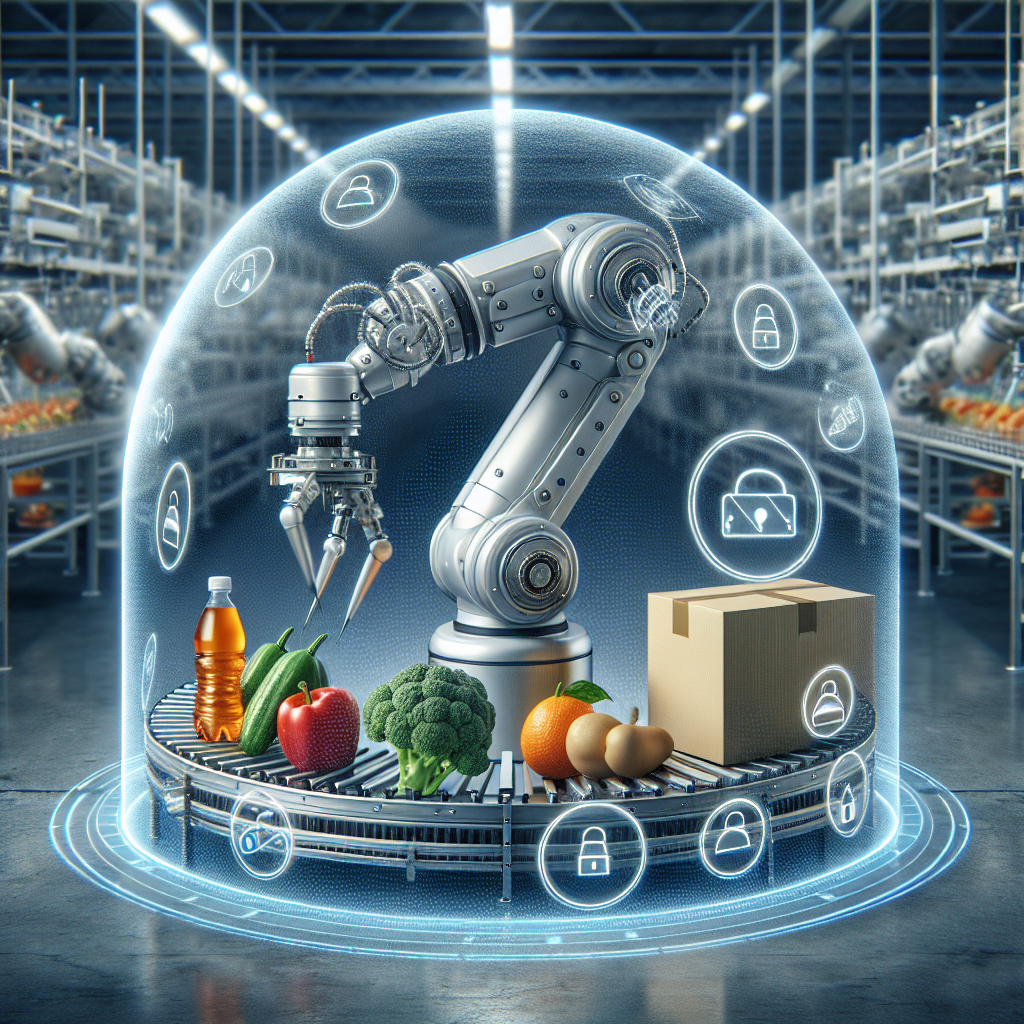
In today’s digital age, privacy protection is a top concern for consumers, especially in the food and beverage industry. With the increasing use of technology in this sector, such as online ordering, loyalty programs, and personalized marketing, there has been a growing need for enhanced privacy protection measures to safeguard sensitive data.
One potential solution that has been gaining traction is the use of Artificial Intelligence (AI) to enhance privacy protection in the food and beverage industry. AI has the potential to revolutionize the way companies handle and secure customer data, making it harder for cybercriminals to access it. In this article, we will explore how AI can be used to enhance privacy protection in the food and beverage industry, as well as the challenges and benefits of implementing this technology.
AI in Privacy Protection
AI has the ability to analyze vast amounts of data in real-time, making it an ideal tool for enhancing privacy protection in the food and beverage industry. By using AI algorithms, companies can detect and prevent potential data breaches before they occur, ensuring that customer information remains secure.
One way AI can enhance privacy protection is through the use of predictive analytics. By analyzing patterns in customer behavior and identifying potential threats, AI can help companies anticipate and prevent data breaches. For example, AI can detect unusual login attempts or suspicious activity on a customer’s account, alerting the company to take action before any sensitive data is compromised.
AI can also be used to encrypt and secure customer data, making it more difficult for cybercriminals to access. By using advanced encryption techniques, AI can ensure that customer information is protected at all times, whether it’s stored on company servers or transmitted over the internet.
Another way AI can enhance privacy protection is through the use of biometric authentication. By using facial recognition or fingerprint scanning technology, companies can verify the identity of customers before granting access to sensitive information. This not only enhances security but also provides a more convenient and seamless experience for customers.
Challenges and Benefits of Using AI for Privacy Protection
While AI has the potential to enhance privacy protection in the food and beverage industry, there are also challenges that companies must overcome when implementing this technology.
One of the main challenges is the cost of implementing AI systems. Building and maintaining AI algorithms can be expensive, especially for smaller companies with limited resources. Additionally, companies may need to invest in training employees to use and manage AI systems effectively, further adding to the cost.
Another challenge is the potential for AI bias. AI algorithms are only as good as the data they are trained on, and if the data is biased or incomplete, it can lead to inaccurate results. This can pose a significant risk to privacy protection, as AI may not be able to accurately identify and prevent data breaches.
Despite these challenges, there are many benefits to using AI for privacy protection in the food and beverage industry. One of the main benefits is the ability to detect and prevent data breaches in real-time, reducing the risk of sensitive information being compromised. Additionally, AI can help companies comply with data protection regulations, such as the General Data Protection Regulation (GDPR), by automatically flagging potential violations and ensuring that customer data is handled securely.
FAQs
Q: How can AI help companies comply with data protection regulations?
A: AI can help companies comply with data protection regulations by automatically flagging potential violations and ensuring that customer data is handled securely. By analyzing patterns in customer behavior and identifying potential threats, AI can help companies anticipate and prevent data breaches.
Q: What are some of the challenges of using AI for privacy protection?
A: Some of the challenges of using AI for privacy protection include the cost of implementing AI systems, the potential for AI bias, and the need to invest in training employees to use and manage AI systems effectively.
Q: How can AI enhance privacy protection in the food and beverage industry?
A: AI can enhance privacy protection in the food and beverage industry by analyzing vast amounts of data in real-time, detecting and preventing potential data breaches, encrypting and securing customer data, and using biometric authentication to verify the identity of customers.
In conclusion, AI has the potential to revolutionize privacy protection in the food and beverage industry by enhancing security, detecting and preventing data breaches, and ensuring compliance with data protection regulations. While there are challenges to overcome, the benefits of using AI for privacy protection far outweigh the risks, making it a valuable tool for companies looking to safeguard sensitive customer information.