
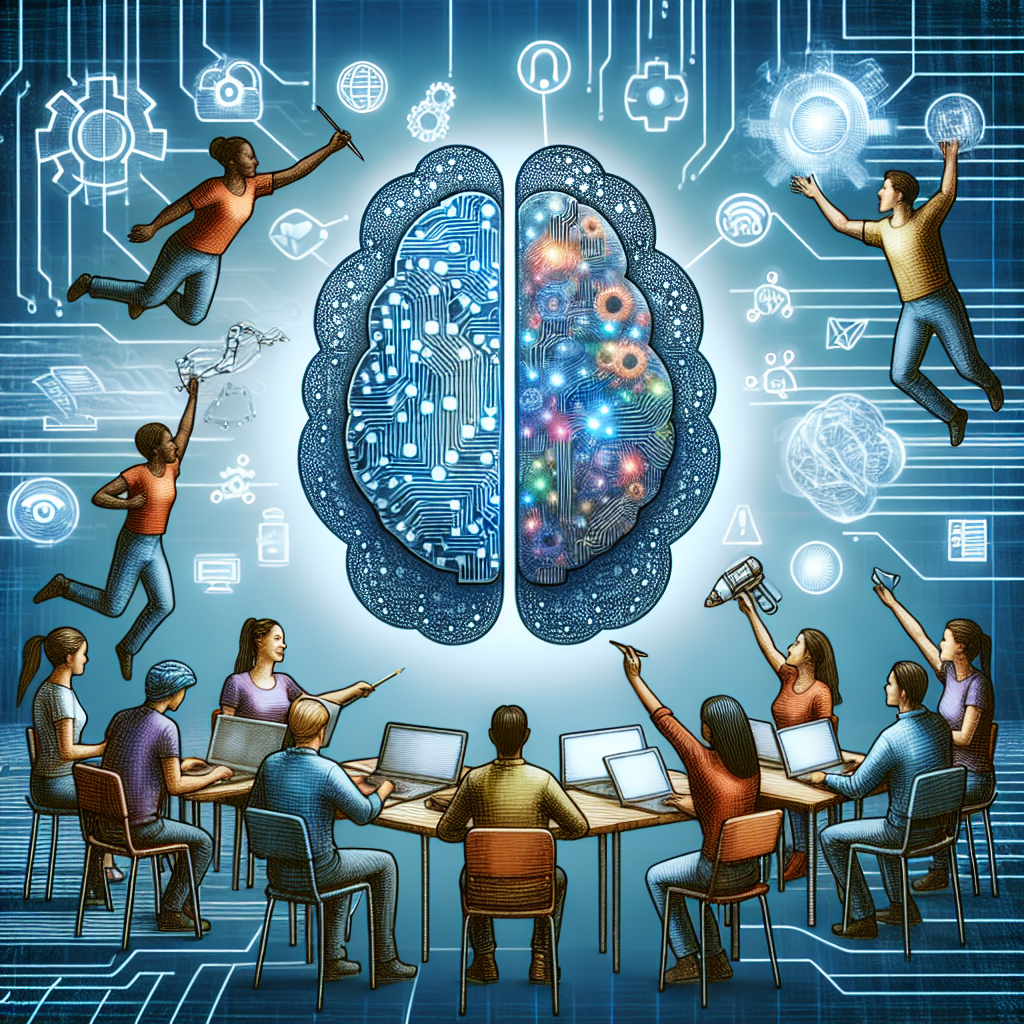
In recent years, artificial intelligence (AI) has become a powerful tool that has the potential to transform industries and improve the way we live and work. However, as AI continues to advance, there is a growing concern that the technology is becoming increasingly centralized in the hands of a few large tech companies. This has led to calls for democratizing AI, in order to ensure that the benefits of this technology are accessible to all.
One of the key ways in which AI can be democratized is through the use of open source software and collaboration. Open source software refers to software that is freely available for anyone to use, modify, and distribute. By making AI tools and algorithms open source, developers from around the world can contribute to their improvement and innovation, leading to a more diverse and inclusive AI ecosystem.
Collaboration is also essential for democratizing AI, as it allows researchers, developers, and organizations to work together to solve complex problems and drive innovation. By sharing knowledge, resources, and expertise, collaboration can help to accelerate the development and adoption of AI technologies, making them more accessible and beneficial to a wider range of users.
One of the key benefits of democratizing AI through open source and collaboration is that it can help to address the bias and ethical concerns that are inherent in AI technology. By involving a diverse range of stakeholders in the development process, we can ensure that AI algorithms are fair, transparent, and accountable. This can help to build trust in AI systems and promote their responsible use in society.
Furthermore, democratizing AI can help to empower individuals and communities to harness the potential of this technology for their own purposes. By providing access to AI tools and resources, we can enable people to develop innovative solutions to the challenges they face, whether in healthcare, education, business, or other areas. This can help to level the playing field and create new opportunities for economic and social advancement.
Overall, democratizing AI through open source and collaboration is essential for ensuring that the benefits of this technology are shared by all. By working together to build a more inclusive and diverse AI ecosystem, we can create a future where AI is used to empower individuals, enhance creativity, and drive positive social change.
FAQs:
Q: What is open source software and how does it relate to AI?
A: Open source software refers to software that is freely available for anyone to use, modify, and distribute. In the context of AI, open source software allows developers to access and contribute to AI tools and algorithms, leading to a more collaborative and diverse AI ecosystem.
Q: How can collaboration help to democratize AI?
A: Collaboration allows researchers, developers, and organizations to work together to solve complex problems and drive innovation in AI. By sharing knowledge, resources, and expertise, collaboration can help to accelerate the development and adoption of AI technologies, making them more accessible and beneficial to a wider range of users.
Q: What are some examples of open source AI projects?
A: Some examples of open source AI projects include TensorFlow, an open source machine learning framework developed by Google, and PyTorch, an open source deep learning platform developed by Facebook. These projects allow developers to access and contribute to cutting-edge AI algorithms and tools.
Q: How can individuals and communities benefit from democratizing AI?
A: By democratizing AI, individuals and communities can access AI tools and resources to develop innovative solutions to the challenges they face. This can help to empower people to create new opportunities for economic and social advancement, and to harness the potential of AI for their own purposes.