
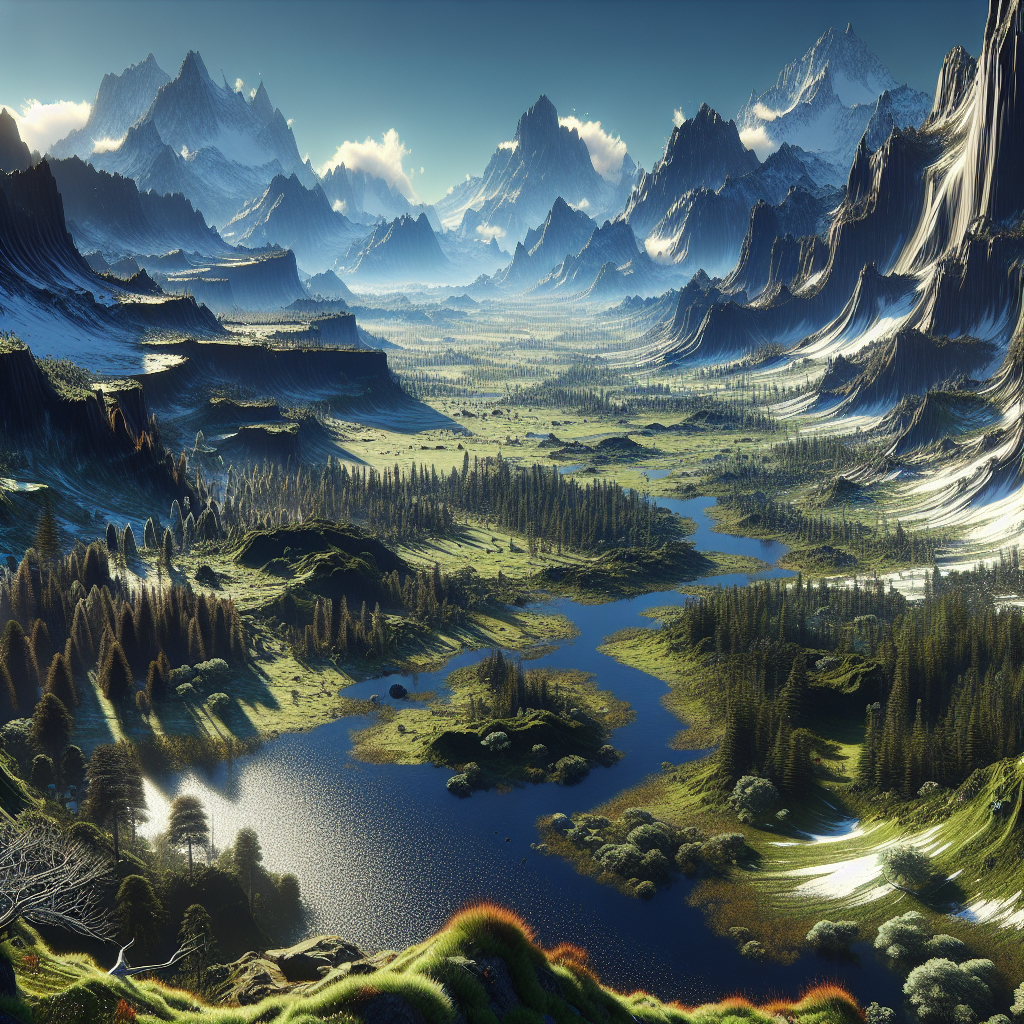
AI-Generated Game Terrain: A Revolution in Game Development
In recent years, artificial intelligence has made significant advancements in various fields, including game development. One area where AI has had a profound impact is in the generation of game terrain. Traditionally, game developers would spend countless hours manually creating the terrain for their games, but with the help of AI, this process has been revolutionized. AI-generated game terrain not only speeds up the development process but also allows for more dynamic and realistic environments to be created. In this article, we will explore the benefits of AI-generated game terrain and how it is changing the landscape of game development.
Benefits of AI-Generated Game Terrain
1. Time-saving: One of the biggest advantages of using AI to generate game terrain is the time saved in the development process. Manually creating intricate and realistic terrain can be a time-consuming task, but AI can generate terrain much faster, allowing developers to focus on other aspects of the game.
2. Dynamic environments: AI-generated game terrain allows for more dynamic and realistic environments to be created. With AI, developers can create terrain that changes and adapts to player actions, creating a more immersive gaming experience.
3. Cost-effective: Using AI to generate game terrain can be a cost-effective solution for game developers. Instead of hiring a team of artists to manually create terrain, developers can use AI to generate terrain quickly and efficiently.
4. Customization: AI-generated game terrain can be easily customized to fit the specific needs of a game. Developers can adjust parameters such as terrain height, texture, and complexity to create unique and engaging environments.
5. Realism: AI-generated game terrain can create highly realistic environments that mimic real-world landscapes. From lush forests to barren deserts, AI can generate terrain that is indistinguishable from the real thing.
How AI Generates Game Terrain
AI-generated game terrain is created using a technique known as procedural generation. Procedural generation is a method of creating content algorithmically rather than manually. In the case of game terrain, AI uses algorithms to generate terrain based on predefined rules and parameters set by the developer.
There are several different types of algorithms that can be used to generate game terrain, including Perlin noise, fractal noise, and cellular automata. These algorithms work by creating patterns and structures that mimic natural landscapes, such as mountains, valleys, and rivers.
Once the terrain is generated, developers can further customize it by adjusting parameters such as terrain height, texture, and complexity. This allows for a high level of control over the final result, ensuring that the terrain fits the specific needs of the game.
FAQs
1. Is AI-generated game terrain as realistic as manually created terrain?
While AI-generated game terrain can create highly realistic environments, it may not be as detailed or nuanced as terrain created manually by an artist. However, AI-generated terrain is constantly improving, and with advancements in AI technology, it is becoming increasingly difficult to distinguish between AI-generated and manually created terrain.
2. Can AI-generated game terrain be used in all types of games?
AI-generated game terrain can be used in a wide variety of games, from open-world RPGs to first-person shooters. However, some games may require more detailed and customized terrain that AI may struggle to create. In these cases, a combination of AI-generated and manually created terrain may be the best solution.
3. How does AI-generated game terrain affect game performance?
AI-generated game terrain can have a significant impact on game performance, depending on the complexity of the terrain and the algorithms used to generate it. In some cases, AI-generated terrain may require more processing power and memory, which can affect game performance. Developers must optimize their games to ensure that AI-generated terrain does not negatively impact performance.
4. Can AI-generated game terrain be modified by the player?
In some games, players may have the ability to modify AI-generated terrain, such as digging tunnels or building structures. Developers can implement systems that allow players to interact with the terrain, adding a new level of interactivity and immersion to the game.
5. Will AI-generated game terrain replace manual terrain creation?
While AI-generated game terrain offers many benefits, it is unlikely to completely replace manual terrain creation. There are still cases where manually created terrain is necessary, such as in highly detailed or stylized games. However, AI-generated terrain can be a valuable tool for developers, allowing them to create vast and realistic environments quickly and efficiently.
In conclusion, AI-generated game terrain is a game-changer in the world of game development. With its ability to create dynamic, realistic, and customizable environments, AI-generated terrain is revolutionizing the way games are created. While there are still challenges and limitations to consider, the future of AI-generated game terrain looks promising, and we can expect to see even more innovative and immersive games in the years to come.