
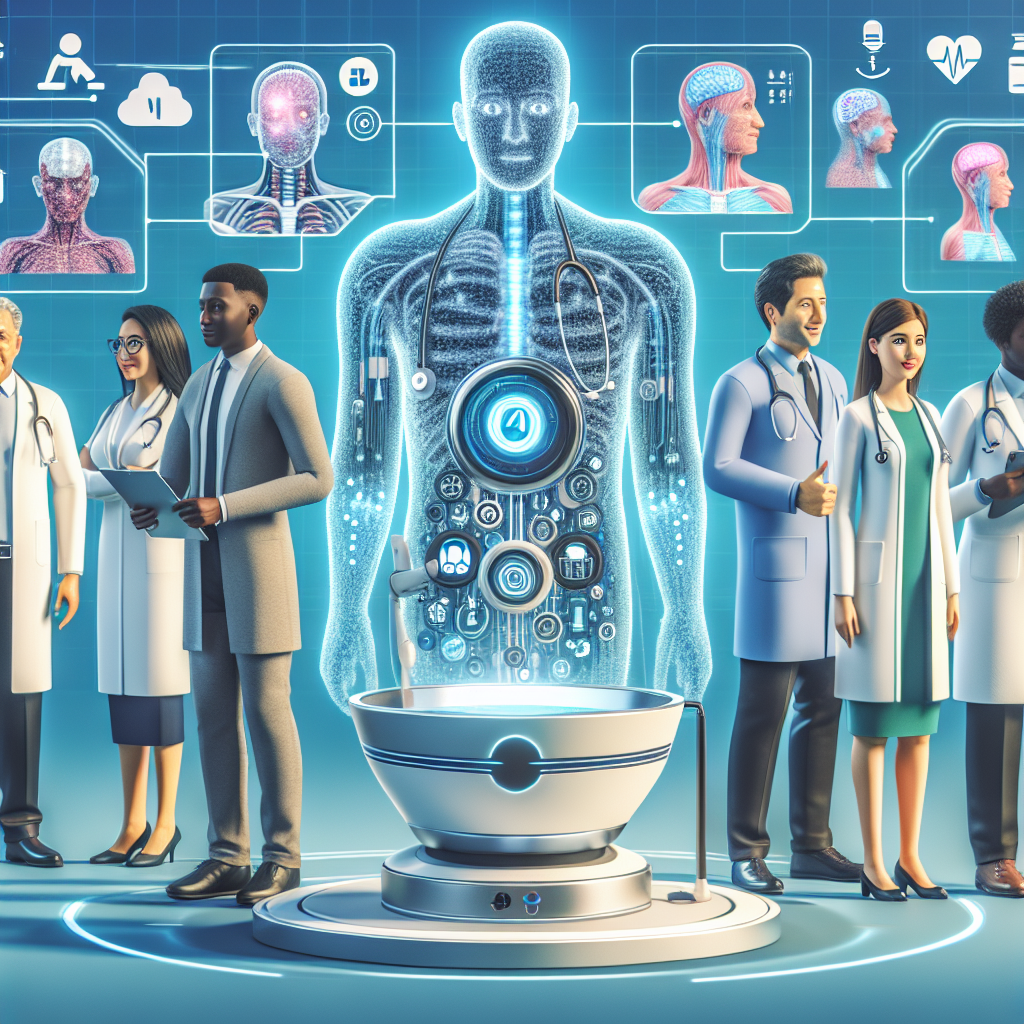
Artificial Intelligence (AI) has revolutionized various industries, and healthcare is no exception. AI in healthcare has the potential to significantly enhance patient satisfaction by improving the quality of care, increasing efficiency, and reducing costs. From diagnostic tools to personalized treatment plans, AI is transforming the way healthcare services are delivered, making it more patient-centric and effective.
One of the key ways in which AI is enhancing patient satisfaction in healthcare is through improved diagnostic accuracy. AI-powered diagnostic tools can analyze vast amounts of patient data, including medical images, lab results, and genetic information, to help healthcare providers make more accurate and timely diagnoses. This not only reduces the risk of misdiagnosis but also ensures that patients receive the right treatment at the right time, leading to better outcomes and higher levels of satisfaction.
Another way in which AI is improving patient satisfaction is by enabling personalized treatment plans. By analyzing patient data and medical records, AI algorithms can identify patterns and trends that can help healthcare providers customize treatment plans to meet the unique needs of each patient. This personalized approach not only improves the effectiveness of treatment but also enhances patient engagement and satisfaction by showing that their care is tailored to their individual needs and preferences.
AI is also streamlining administrative processes in healthcare, which can lead to a more seamless and efficient patient experience. Chatbots and virtual assistants powered by AI technology can help patients schedule appointments, access medical records, and receive personalized health information without the need to speak to a human operator. This not only saves time for both patients and healthcare providers but also reduces the risk of errors and miscommunications, leading to a more satisfying patient experience.
Moreover, AI is helping healthcare providers improve patient outcomes by predicting and preventing potential health issues before they arise. By analyzing patient data and identifying risk factors, AI algorithms can help healthcare providers intervene early and provide preventive care to patients, reducing the likelihood of hospital readmissions and complications. This proactive approach to healthcare not only improves patient outcomes but also enhances patient satisfaction by demonstrating that healthcare providers are taking a proactive stance in managing their health.
Despite the numerous benefits of AI in healthcare, there are also concerns about privacy and security. Patients may be hesitant to share their personal health information with AI-powered systems due to fears of data breaches or misuse of their data. However, healthcare providers can address these concerns by implementing robust data protection measures, such as encryption and secure data storage, to ensure that patient information remains confidential and secure.
Overall, AI has the potential to significantly enhance patient satisfaction in healthcare by improving diagnostic accuracy, enabling personalized treatment plans, streamlining administrative processes, and predicting and preventing potential health issues. By harnessing the power of AI technology, healthcare providers can deliver more personalized, efficient, and effective care to their patients, leading to higher levels of satisfaction and better health outcomes.
FAQs:
1. How is AI used in healthcare?
AI is used in healthcare for a wide range of applications, including diagnostic tools, personalized treatment plans, administrative processes, and predictive analytics. AI-powered systems can analyze patient data to help healthcare providers make more accurate diagnoses, customize treatment plans, streamline administrative processes, and predict and prevent potential health issues.
2. Is AI in healthcare secure?
Healthcare providers must implement robust data protection measures to ensure that patient information remains confidential and secure when using AI-powered systems. Encryption, secure data storage, and access controls are some of the measures that can be implemented to protect patient data from unauthorized access or misuse.
3. How does AI improve patient satisfaction in healthcare?
AI improves patient satisfaction in healthcare by enhancing diagnostic accuracy, enabling personalized treatment plans, streamlining administrative processes, and predicting and preventing potential health issues. By delivering more personalized, efficient, and effective care, AI technology can help healthcare providers improve patient outcomes and satisfaction.
4. What are the concerns about AI in healthcare?
Some concerns about AI in healthcare include privacy and security issues, potential biases in AI algorithms, and the impact on the doctor-patient relationship. Healthcare providers must address these concerns by implementing robust data protection measures, ensuring transparency and accountability in AI algorithms, and maintaining open communication with patients about the use of AI technology in their care.