
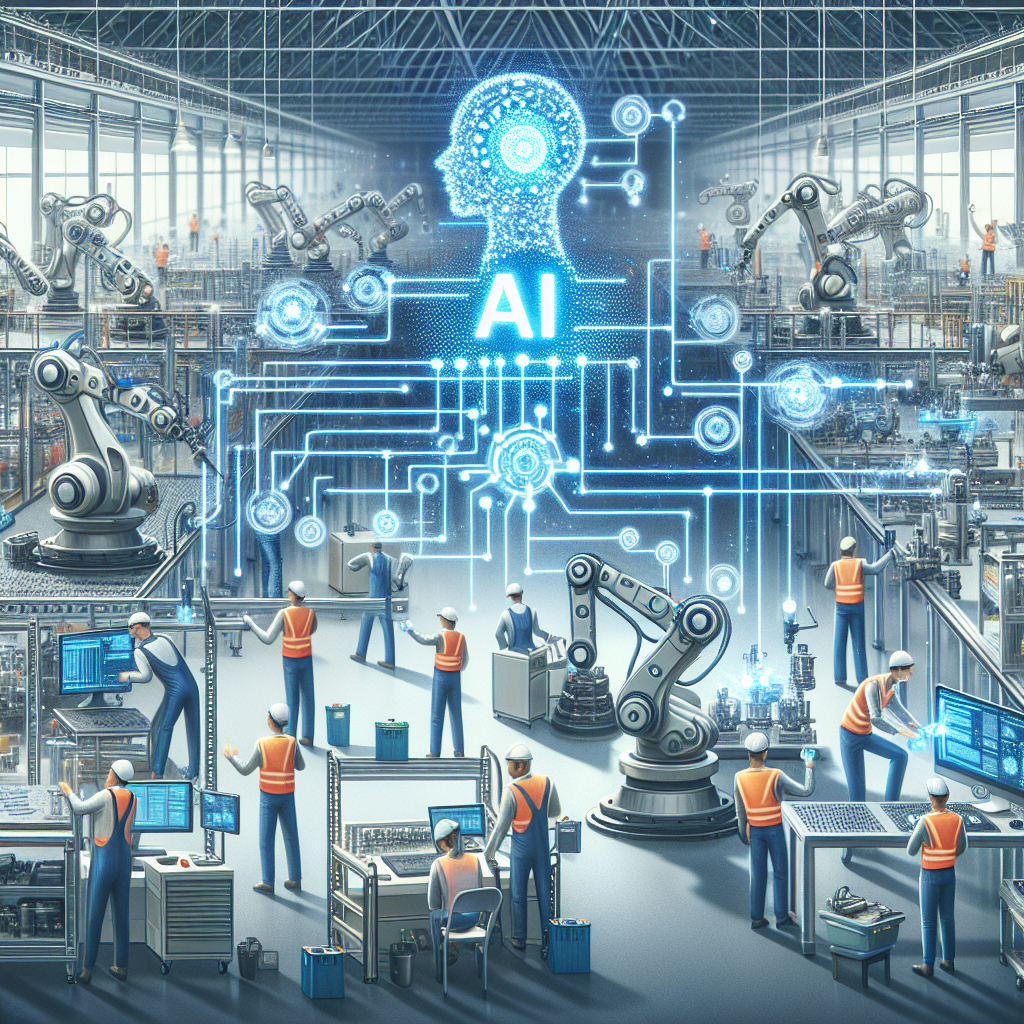
Artificial intelligence (AI) is revolutionizing the way we manufacture goods, making production processes more efficient and cost-effective. With advancements in AI technology, we are witnessing a shift towards democratizing production, allowing smaller companies to compete with industry giants on a level playing field. This trend is reshaping the future of manufacturing, as AI becomes more accessible and affordable for businesses of all sizes.
One of the key benefits of AI in manufacturing is its ability to optimize production processes. By analyzing large volumes of data, AI algorithms can identify inefficiencies and areas for improvement in manufacturing operations. This allows companies to streamline their processes, reduce waste, and increase productivity. For example, AI-powered predictive maintenance systems can help companies identify when machines are likely to break down, allowing them to schedule repairs before a costly breakdown occurs.
Another advantage of AI in manufacturing is its ability to improve product quality. AI algorithms can analyze data from sensors and cameras to identify defects in real-time, allowing companies to catch quality issues before they escalate. This not only saves time and money on rework but also improves customer satisfaction by delivering higher-quality products.
AI is also revolutionizing the way companies design and produce products. With AI-powered design tools, companies can create more innovative and efficient products, reducing time-to-market and increasing competitiveness. For example, Generative Design is a technology that uses AI algorithms to generate thousands of design options based on specified parameters, allowing designers to explore new possibilities and find the best solution quickly.
In addition to optimizing production processes and improving product quality, AI is also enabling companies to personalize products for individual customers. With AI-powered customization tools, companies can tailor products to meet the unique needs and preferences of each customer, creating a more personalized and engaging customer experience. This level of customization was previously only available to luxury brands but is now becoming more accessible to a wider range of companies.
AI is also driving the trend towards smart manufacturing, where machines and systems are interconnected and communicate with each other in real-time. This allows companies to monitor and control their production processes remotely, optimize energy consumption, and improve overall efficiency. Smart manufacturing is enabling companies to achieve higher levels of automation and flexibility, allowing them to respond quickly to changing market demands.
One of the key drivers of the democratization of production is the increasing affordability of AI technology. As AI algorithms become more powerful and efficient, the cost of implementing AI solutions in manufacturing is decreasing. This is opening up opportunities for small and medium-sized enterprises (SMEs) to leverage AI technology to improve their production processes and compete with larger companies.
Another factor driving the democratization of production is the availability of AI-as-a-Service (AIaaS) solutions. These cloud-based services allow companies to access AI algorithms and tools on a pay-as-you-go basis, eliminating the need for large upfront investments in AI infrastructure. This makes AI technology more accessible to companies with limited resources, leveling the playing field in the manufacturing industry.
Despite the many benefits of AI in manufacturing, there are also challenges that companies need to address. One of the key challenges is the lack of skilled workers with AI expertise. Companies need to invest in training their workforce to understand and use AI technology effectively. This requires a cultural shift towards embracing AI as a tool to enhance human capabilities rather than replace them.
Another challenge is data security and privacy concerns. As companies collect and analyze large amounts of data to train AI algorithms, they need to ensure that this data is secure and protected from cyber threats. Companies also need to be transparent with customers about how their data is being used and ensure compliance with data privacy regulations.
In conclusion, AI is transforming the future of manufacturing by democratizing production and empowering companies of all sizes to compete in the global market. By optimizing production processes, improving product quality, and enabling customization, AI is revolutionizing the way we design and produce goods. With the increasing availability and affordability of AI technology, the democratization of production is set to accelerate, driving innovation and growth in the manufacturing industry.
FAQs:
1. How can AI help companies improve production processes?
AI can help companies improve production processes by analyzing data to identify inefficiencies, optimize workflows, and reduce waste. AI-powered systems can also predict maintenance needs and prevent costly breakdowns, increasing overall productivity.
2. What are some of the benefits of AI in manufacturing?
Some benefits of AI in manufacturing include improved product quality, faster time-to-market, increased customization options, and higher levels of automation. AI also enables companies to monitor and control production processes in real-time, improving overall efficiency.
3. How can small and medium-sized enterprises (SMEs) leverage AI in manufacturing?
SMEs can leverage AI in manufacturing by investing in AIaaS solutions, which offer cloud-based AI tools on a pay-as-you-go basis. This eliminates the need for large upfront investments in AI infrastructure, making AI technology more accessible to smaller companies.
4. What are some challenges companies need to address when implementing AI in manufacturing?
Some challenges companies need to address when implementing AI in manufacturing include the lack of skilled workers with AI expertise, data security and privacy concerns, and the need for cultural shifts towards embracing AI technology. Companies need to invest in training their workforce, secure data, and ensure compliance with regulations.
5. How is AI driving the trend towards smart manufacturing?
AI is driving the trend towards smart manufacturing by enabling machines and systems to communicate with each other in real-time. This allows companies to monitor and control production processes remotely, optimize energy consumption, and improve overall efficiency. Smart manufacturing is enabling companies to achieve higher levels of automation and flexibility.