
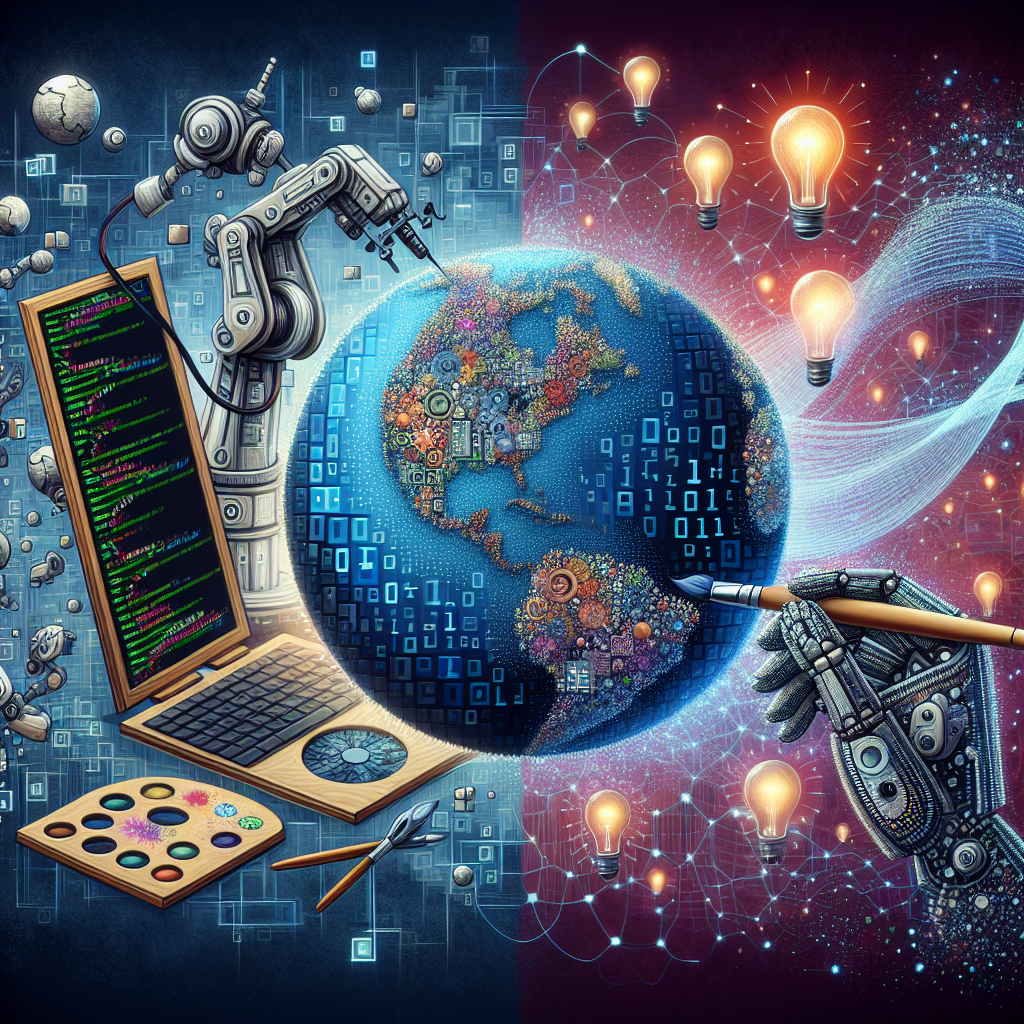
In recent years, advances in artificial intelligence (AI) have revolutionized many aspects of our lives, from the way we shop online to how we communicate with friends and family. One area where AI is making a significant impact is in the creative industries, including fields such as design, music, film, and advertising. As AI continues to evolve and become more sophisticated, it is changing the way creative professionals work and creating new opportunities for innovation and collaboration.
The Future of Work in a Tech-Driven World
The rise of AI in the creative industries has led to a shift in the way work is done and the skills that are required to succeed in these fields. Traditional roles in design, music, film, and advertising are being transformed by AI, with machines taking on tasks that were previously done by humans. For example, AI algorithms can now generate music, design logos, and even write copy for advertisements.
While some may fear that AI will replace human creativity and lead to job losses in the creative industries, many experts believe that the opposite is true. AI has the potential to enhance human creativity by automating repetitive tasks and providing new tools for artists and designers to experiment with. By taking care of mundane tasks, AI can free up creative professionals to focus on more innovative and strategic work.
One of the key ways that AI is changing the creative industries is through the use of generative design. Generative design is a process in which AI algorithms are used to generate a wide range of design options based on a set of input parameters. This can help designers explore new ideas and possibilities that they may not have considered on their own. For example, architects can use generative design to create buildings that are not only aesthetically pleasing but also optimized for energy efficiency and structural integrity.
In the music industry, AI is being used to create new compositions and even entire albums. AI algorithms can analyze vast amounts of music data to identify patterns and trends, which can then be used to generate new melodies and harmonies. Some musicians are even collaborating with AI systems to create music that blends human creativity with machine intelligence.
In the film industry, AI is being used to streamline the production process and improve the quality of visual effects. For example, AI algorithms can analyze footage and automatically generate rough cuts of a film, saving time and reducing the need for manual editing. AI can also be used to create realistic digital characters and environments, enhancing the visual appeal of films.
In advertising, AI is being used to personalize marketing campaigns and target consumers more effectively. By analyzing data on consumer behavior and preferences, AI algorithms can create customized ads that are more likely to resonate with target audiences. This can lead to higher engagement rates and increased sales for businesses.
Overall, the future of work in the creative industries is likely to be characterized by a greater integration of AI technologies into the creative process. Creative professionals will need to adapt to these changes by developing new skills in AI and machine learning, as well as by embracing new tools and technologies that can enhance their creativity and productivity.
FAQs
Q: Will AI replace human creativity in the creative industries?
A: While AI has the potential to automate certain tasks in the creative process, many experts believe that it will enhance human creativity rather than replace it. By taking care of repetitive tasks, AI can free up creative professionals to focus on more innovative and strategic work.
Q: What skills will creative professionals need to succeed in a tech-driven world?
A: Creative professionals will need to develop new skills in AI and machine learning in order to succeed in a tech-driven world. They will also need to embrace new tools and technologies that can enhance their creativity and productivity.
Q: How can AI be used to enhance creativity in the creative industries?
A: AI can be used to enhance creativity in the creative industries by automating repetitive tasks, providing new tools for experimentation, and generating new ideas and possibilities. By working collaboratively with AI systems, creative professionals can push the boundaries of what is possible in their respective fields.
Q: How will AI impact job opportunities in the creative industries?
A: While AI may lead to job losses in some areas of the creative industries, it is also creating new opportunities for innovation and collaboration. Creative professionals who are able to adapt to the changes brought about by AI will be well-positioned to succeed in the future.