
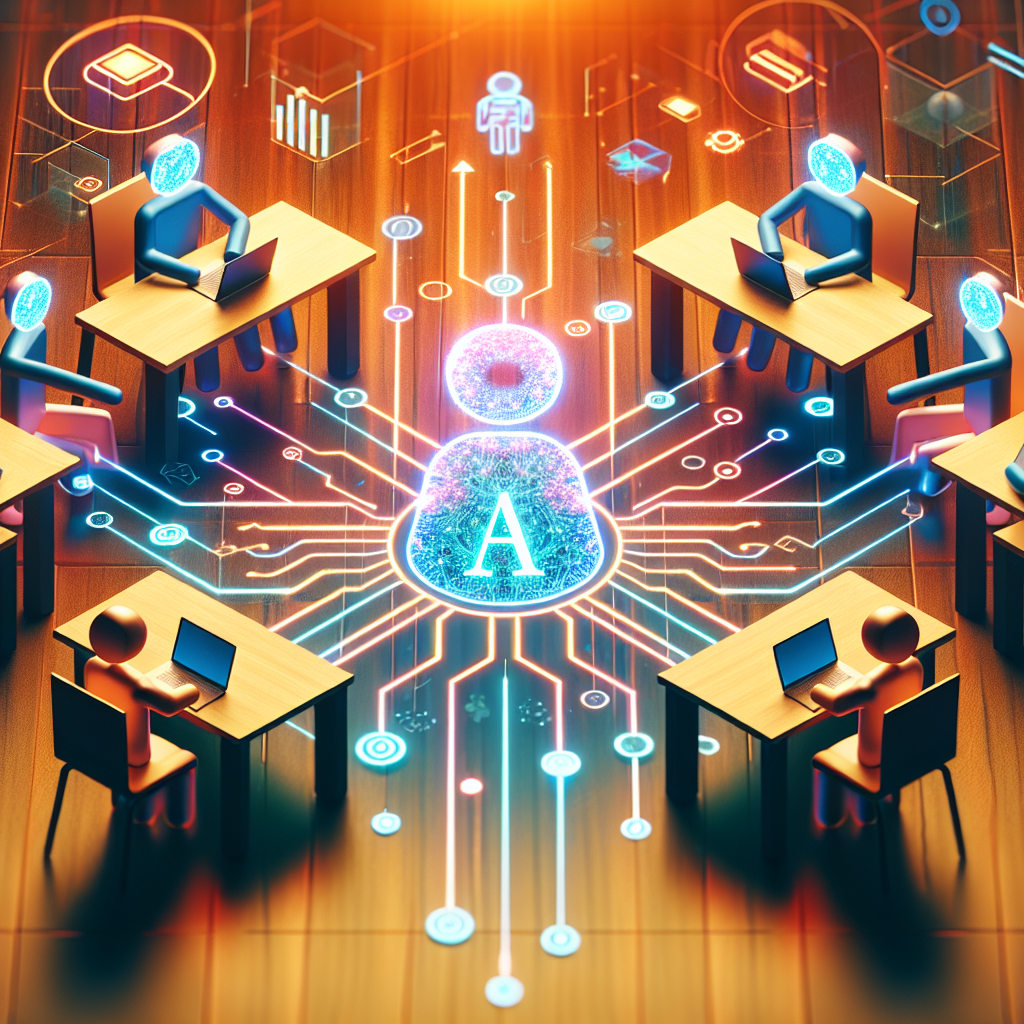
Artificial Intelligence (AI) has been rapidly transforming the way we live, work, and learn. In education, AI has the potential to revolutionize the way students learn and teachers teach. One of the most exciting applications of AI in education is collaborative learning. Collaborative learning is a pedagogical approach in which students work together in groups to achieve a common goal. AI can enhance collaborative learning by providing personalized feedback, facilitating communication between students, and offering insights into student performance.
AI can provide personalized feedback to students based on their individual learning styles and abilities. By analyzing data on student performance, AI algorithms can identify areas where a student may be struggling and provide targeted feedback to help them improve. This personalized feedback can help students stay engaged and motivated, as they receive immediate and relevant feedback on their progress.
In addition to providing personalized feedback, AI can also facilitate communication between students in collaborative learning environments. AI-powered chatbots can help students communicate with each other, ask questions, and collaborate on projects. These chatbots can provide real-time support and guidance to students, helping them work together more effectively and efficiently.
Furthermore, AI can offer insights into student performance in collaborative learning settings. By analyzing data on student interactions, engagement, and contributions to group projects, AI algorithms can provide teachers with valuable information on how students are working together and where they may need additional support. This data-driven approach to collaborative learning can help teachers identify students who may be struggling, intervene early, and provide targeted support to help them succeed.
Overall, AI has the potential to enhance collaborative learning in education by providing personalized feedback, facilitating communication between students, and offering insights into student performance. By leveraging the power of AI, educators can create more engaging and effective learning experiences for students, helping them develop the critical thinking, communication, and collaboration skills they need to succeed in the 21st century.
FAQs:
1. How can AI enhance collaborative learning in education?
AI can enhance collaborative learning in education by providing personalized feedback to students, facilitating communication between students, and offering insights into student performance. By leveraging the power of AI, educators can create more engaging and effective learning experiences for students, helping them develop the critical thinking, communication, and collaboration skills they need to succeed in the 21st century.
2. What are some examples of AI-powered tools that can support collaborative learning?
Some examples of AI-powered tools that can support collaborative learning include chatbots that facilitate communication between students, personalized learning platforms that provide targeted feedback to students, and data analytics tools that offer insights into student performance. These tools can help educators create more engaging and effective learning experiences for students, promoting collaboration and critical thinking skills.
3. How can teachers integrate AI into collaborative learning environments?
Teachers can integrate AI into collaborative learning environments by incorporating AI-powered tools and platforms into their teaching practice. By leveraging the power of AI, teachers can provide personalized feedback to students, facilitate communication between students, and gain insights into student performance. This data-driven approach to collaborative learning can help teachers identify students who may be struggling, intervene early, and provide targeted support to help them succeed.
4. What are some challenges of using AI in collaborative learning?
Some challenges of using AI in collaborative learning include concerns about data privacy and security, the potential for bias in AI algorithms, and the need for ongoing training and support for educators. It is important for educators to carefully consider these challenges and work to address them in order to effectively leverage the power of AI in collaborative learning environments.
In conclusion, AI has the potential to revolutionize collaborative learning in education by providing personalized feedback, facilitating communication between students, and offering insights into student performance. By integrating AI-powered tools and platforms into their teaching practice, educators can create more engaging and effective learning experiences for students, helping them develop the critical thinking, communication, and collaboration skills they need to succeed in the 21st century.