
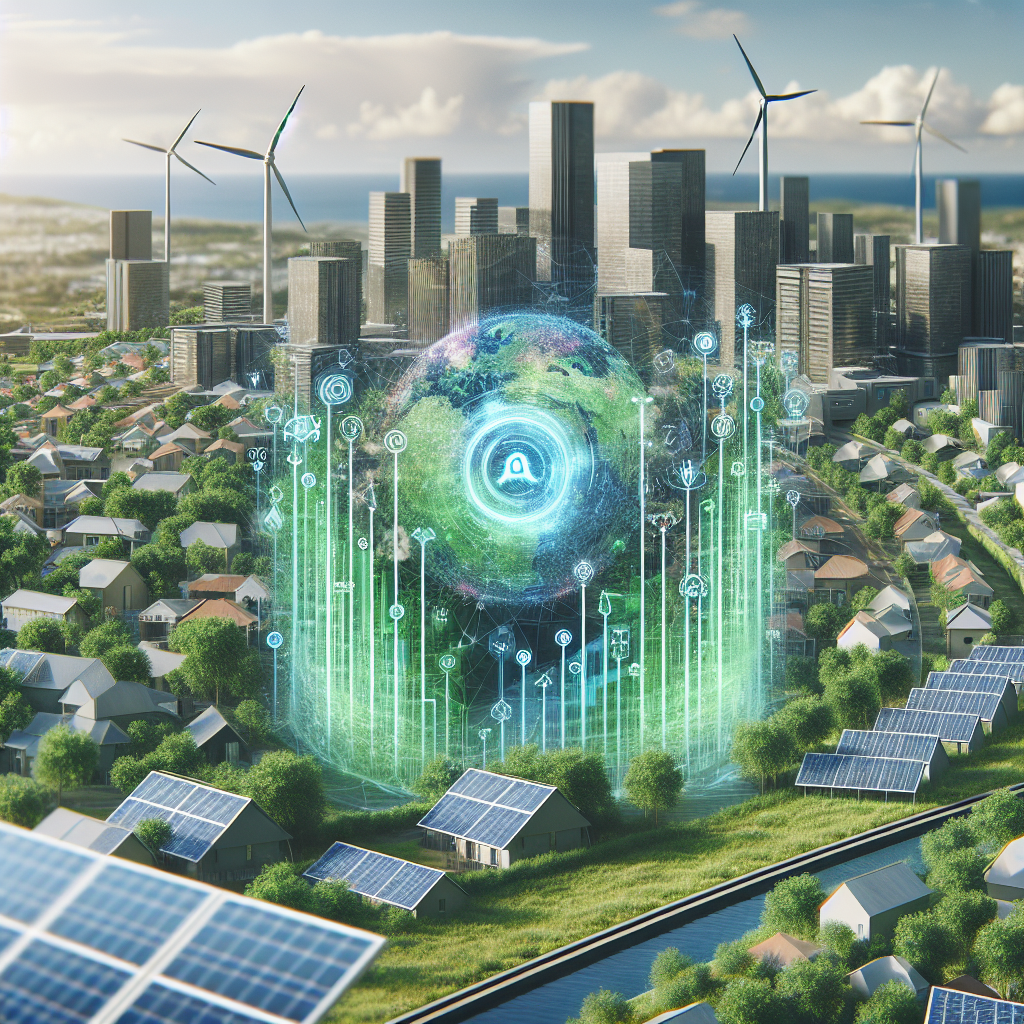
The Role of AI in Designing Resilient Cities
In recent years, the concept of resilience has become increasingly important in urban planning and design. With the rise of natural disasters, climate change, and other potential threats to urban areas, there is a growing need to create cities that are able to withstand and recover from these challenges. Artificial intelligence (AI) is playing a crucial role in this process, offering innovative solutions to help design and build resilient cities.
AI technology has the ability to analyze vast amounts of data and predict potential risks and vulnerabilities in urban areas. By using machine learning algorithms, AI can identify patterns and trends that may indicate areas of weakness in a city’s infrastructure or planning. This information can then be used to develop strategies and solutions to address these vulnerabilities and enhance the resilience of the city.
One of the key ways in which AI is being used to design resilient cities is through the development of smart infrastructure. By incorporating sensors and other IoT devices into urban systems, AI can monitor and analyze real-time data on things like traffic flow, air quality, and energy usage. This information can be used to optimize city operations, improve efficiency, and respond quickly to emergencies or disasters.
AI can also be used to simulate and model different scenarios to test the resilience of a city’s infrastructure. By running simulations and analyzing the results, planners and designers can identify potential weaknesses and develop strategies to address them. This proactive approach can help cities better prepare for and respond to disasters, reducing the impact on residents and infrastructure.
Furthermore, AI can help cities manage their resources more effectively. By analyzing data on things like water usage, waste management, and energy consumption, AI can identify opportunities for efficiency improvements and cost savings. This can help cities become more sustainable and resilient in the face of future challenges.
Additionally, AI can be used to enhance communication and coordination among different stakeholders in a city. By analyzing data from various sources, AI can provide valuable insights and recommendations to help decision-makers make informed choices. This can improve collaboration and ensure that resources are allocated effectively to address resilience issues.
Overall, AI has the potential to revolutionize the way cities are designed and built, making them more resilient, sustainable, and efficient. By harnessing the power of AI technology, urban planners and designers can create cities that are better prepared to face the challenges of the future.
FAQs:
1. How does AI help in designing resilient cities?
AI technology can analyze data, predict risks, simulate scenarios, optimize infrastructure, and enhance communication among stakeholders to design and build resilient cities.
2. What are some examples of AI applications in urban planning?
AI is used in smart infrastructure, resource management, simulation modeling, and stakeholder coordination to improve the resilience of cities.
3. How can AI help cities become more sustainable?
By analyzing data on resource usage and identifying opportunities for efficiency improvements, AI can help cities manage their resources more effectively and become more sustainable.
4. What are the benefits of using AI in designing resilient cities?
AI can help cities prepare for and respond to disasters, optimize infrastructure operations, improve resource management, and enhance collaboration among stakeholders.
5. What are the challenges of implementing AI in urban planning?
Challenges include data privacy concerns, regulatory barriers, technical limitations, and the need for skilled professionals to implement and manage AI technologies.