
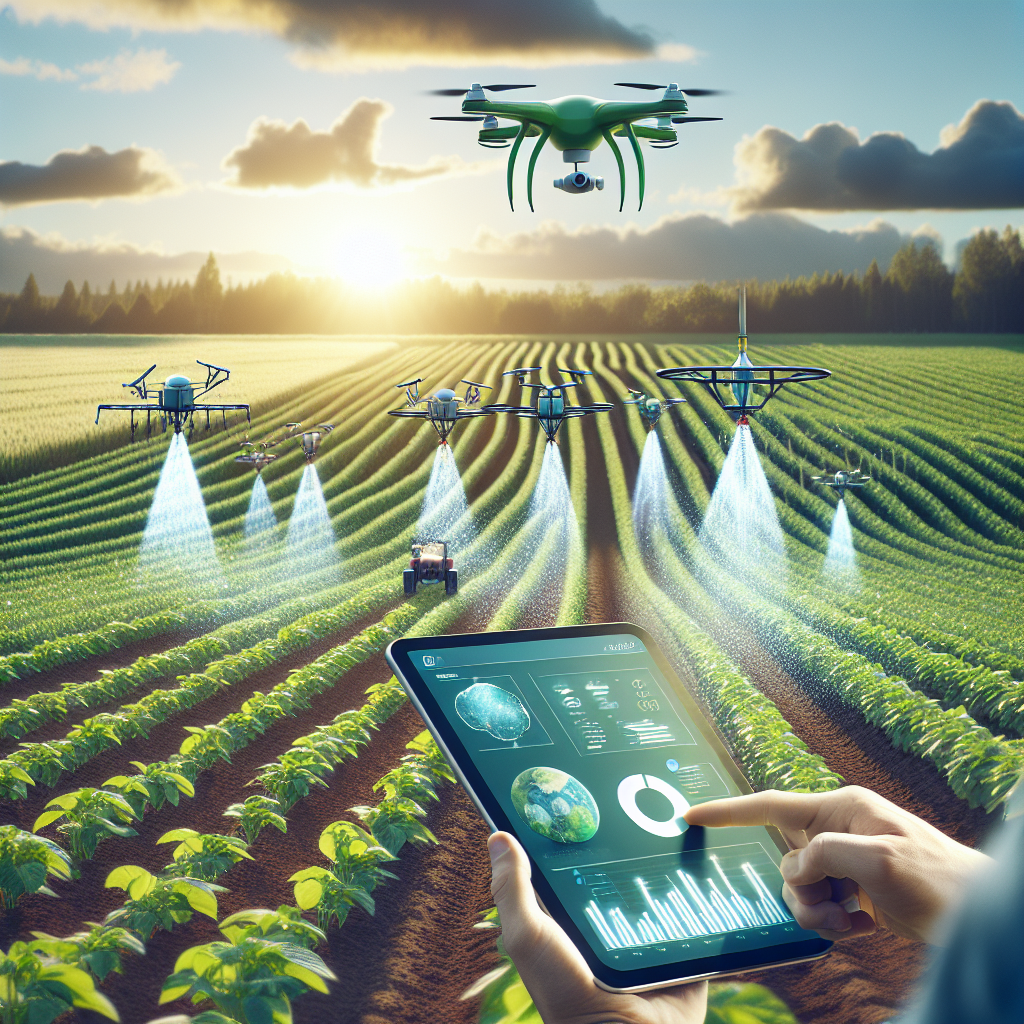
Agriculture has always been a labor-intensive industry, requiring farmers to put in long hours of hard work to ensure a successful harvest. However, with the help of artificial intelligence (AI), farmers can now use advanced tools and technologies to enhance their productivity and improve their overall efficiency.
AI-driven tools have the potential to revolutionize the way we approach agriculture, making it more sustainable, efficient, and profitable. These tools can help farmers make better decisions, optimize resources, and increase yields while reducing costs and minimizing environmental impact.
One of the key benefits of AI-driven tools in agriculture is their ability to analyze vast amounts of data quickly and accurately. By using machine learning algorithms, these tools can process data from sensors, satellites, drones, and other sources to provide farmers with valuable insights and recommendations.
For example, AI-powered tools can analyze soil samples to determine the optimal planting density for a specific crop, recommend the best timing for irrigation or fertilization, or predict potential pest outbreaks based on weather patterns and historical data.
Furthermore, AI-driven tools can also help farmers monitor their crops in real-time, alerting them to any issues such as disease outbreaks, nutrient deficiencies, or water stress. This proactive approach allows farmers to take immediate action to address these issues before they escalate and negatively impact their yields.
Another advantage of AI-driven tools is their ability to automate repetitive tasks and streamline operations. For example, autonomous tractors equipped with AI algorithms can navigate fields, plant seeds, apply fertilizers, and harvest crops without human intervention. This not only saves time and labor costs but also ensures precise and consistent results.
Furthermore, AI-driven tools can also help farmers optimize their use of resources such as water, fertilizers, and pesticides. By analyzing data on soil moisture levels, weather forecasts, and crop health, these tools can recommend the most efficient irrigation schedule, dosage of fertilizers, or timing of pesticide applications to maximize yields while minimizing waste.
Overall, AI-driven tools have the potential to transform agriculture into a more sustainable, efficient, and profitable industry. By harnessing the power of AI, farmers can make smarter decisions, optimize their resources, and increase their productivity while reducing their environmental impact.
FAQs:
Q: How can AI-driven tools help farmers increase their productivity?
A: AI-driven tools can help farmers increase their productivity by providing valuable insights and recommendations based on data analysis. These tools can optimize planting density, irrigation schedules, fertilization, and pesticide applications to maximize yields while minimizing costs and environmental impact.
Q: Are AI-driven tools expensive to implement?
A: While initial investments in AI-driven tools may be significant, the long-term benefits outweigh the costs. By increasing productivity, reducing waste, and minimizing risks, these tools can help farmers improve their profitability and sustainability in the long run.
Q: Can AI-driven tools replace human labor in agriculture?
A: While AI-driven tools can automate repetitive tasks and streamline operations, human labor will still be essential in agriculture for tasks that require creativity, problem-solving, and decision-making. AI can complement human labor by providing valuable insights and recommendations to help farmers make better decisions.
Q: Are AI-driven tools accessible to small-scale farmers?
A: While some AI-driven tools may be more suitable for large-scale farms with advanced technology infrastructure, there are also AI solutions that are tailored for small-scale farmers. These tools are designed to be user-friendly, affordable, and scalable, allowing small-scale farmers to benefit from the advantages of AI technology.