
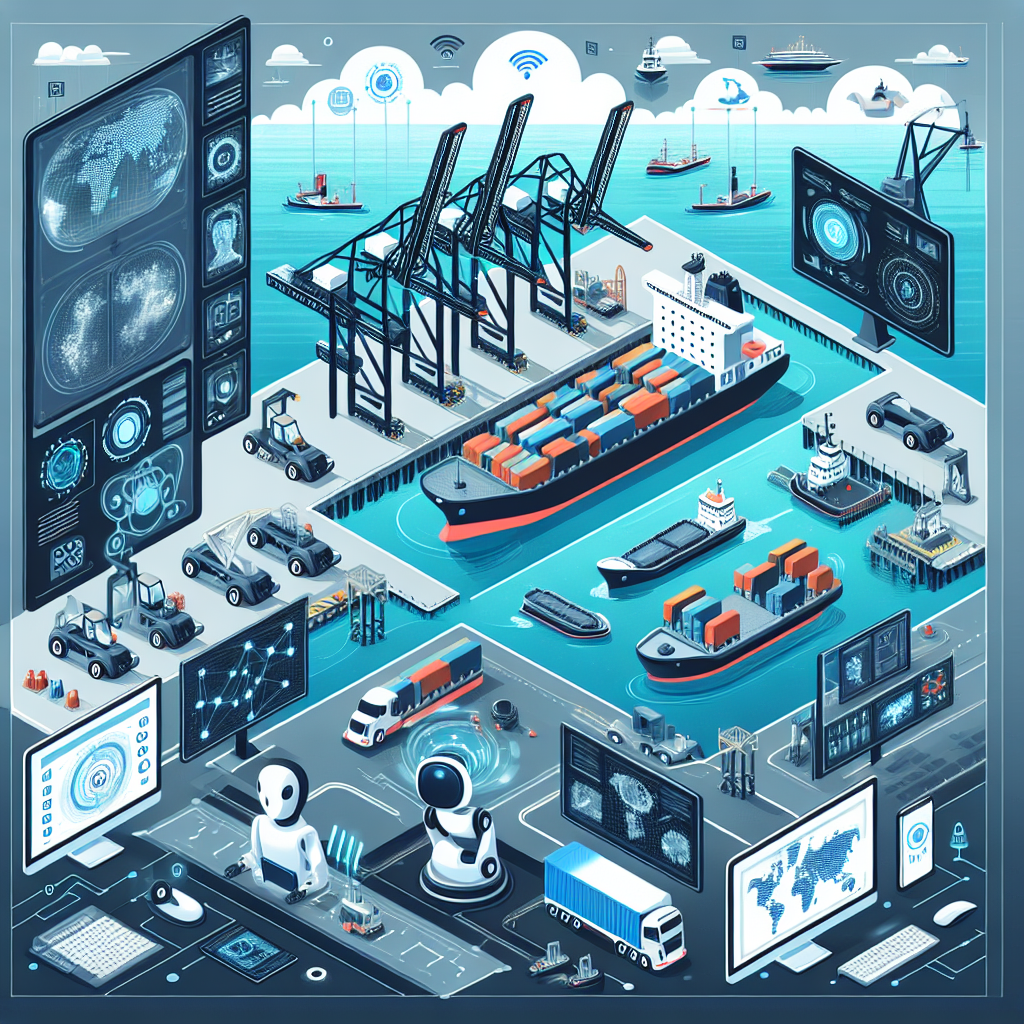
The Role of AI in Port Operations
Artificial Intelligence (AI) is revolutionizing various industries, and port operations are no exception. Ports play a crucial role in global trade, serving as gateways for goods to enter and leave different countries. The efficient and effective functioning of ports is essential for the smooth flow of goods and contributes significantly to the economic growth of a nation. AI technologies are being increasingly adopted in port operations to streamline processes, enhance efficiency, and improve overall performance.
AI in port operations encompasses a wide range of applications, from optimizing vessel traffic and cargo handling to predictive maintenance and security. These technologies enable ports to operate more efficiently, reduce operational costs, and enhance safety and security. Let’s delve deeper into the role of AI in port operations and how it is transforming the industry.
1. Optimization of Vessel Traffic
One of the key areas where AI is making a significant impact in port operations is the optimization of vessel traffic. AI-powered systems can analyze real-time data on vessel movements, weather conditions, and port activities to optimize ship scheduling, berth allocation, and cargo handling. This helps ports to reduce congestion, minimize waiting times, and improve overall efficiency.
AI algorithms can predict vessel arrivals, departures, and turnaround times with high accuracy, allowing port authorities to better plan and allocate resources. By optimizing vessel traffic, ports can increase throughput, reduce turnaround times, and improve the overall efficiency of operations.
2. Cargo Handling and Logistics
AI technologies are also being used to optimize cargo handling and logistics in ports. AI-powered systems can analyze data on cargo volumes, storage capacities, and transportation routes to optimize cargo flow and minimize delays. This helps ports to improve the speed and efficiency of cargo handling, reduce bottlenecks, and enhance overall operational performance.
AI algorithms can also be used to optimize container stacking and storage, automate inventory management, and streamline the process of loading and unloading cargo. This not only improves the efficiency of cargo handling but also reduces the risk of damage and loss.
3. Predictive Maintenance
Another important application of AI in port operations is predictive maintenance. AI-powered systems can analyze data from sensors and monitoring devices to predict equipment failures and maintenance needs before they occur. This enables ports to proactively address maintenance issues, reduce downtime, and extend the lifespan of critical infrastructure.
By implementing predictive maintenance solutions, ports can reduce maintenance costs, improve equipment reliability, and enhance overall operational efficiency. This also helps to prevent unexpected breakdowns and disruptions in port operations.
4. Security and Safety
AI technologies are also being used to enhance security and safety in port operations. AI-powered systems can analyze data from surveillance cameras, sensors, and other sources to detect potential security threats, such as unauthorized access, suspicious behavior, or cargo theft. This helps port authorities to quickly identify and respond to security incidents, ensuring the safety of personnel and assets.
AI algorithms can also be used to enhance cybersecurity in ports, protecting critical infrastructure and data from cyber threats. By leveraging AI technologies, ports can strengthen their security measures, improve situational awareness, and enhance overall safety and security.
FAQs
Q: What are the benefits of using AI in port operations?
A: AI technologies offer numerous benefits in port operations, including improved efficiency, reduced operational costs, enhanced safety and security, and optimized resource allocation. By leveraging AI, ports can streamline processes, increase throughput, and improve overall performance.
Q: How can AI optimize vessel traffic in ports?
A: AI-powered systems can analyze real-time data on vessel movements, weather conditions, and port activities to optimize ship scheduling, berth allocation, and cargo handling. This helps ports to reduce congestion, minimize waiting times, and improve overall efficiency.
Q: What role does AI play in cargo handling and logistics in ports?
A: AI technologies are used to optimize cargo handling and logistics in ports by analyzing data on cargo volumes, storage capacities, and transportation routes. This helps ports to improve the speed and efficiency of cargo handling, reduce bottlenecks, and enhance overall operational performance.
Q: How does AI contribute to predictive maintenance in port operations?
A: AI-powered systems analyze data from sensors and monitoring devices to predict equipment failures and maintenance needs before they occur. This enables ports to proactively address maintenance issues, reduce downtime, and extend the lifespan of critical infrastructure.
Q: How can AI enhance security and safety in port operations?
A: AI technologies can analyze data from surveillance cameras, sensors, and other sources to detect potential security threats and suspicious behavior. By leveraging AI, port authorities can quickly identify and respond to security incidents, ensuring the safety of personnel and assets.
In conclusion, AI is playing a crucial role in transforming port operations by optimizing vessel traffic, enhancing cargo handling and logistics, enabling predictive maintenance, and improving security and safety. As the adoption of AI technologies continues to grow, ports are poised to become more efficient, cost-effective, and secure, contributing to the smooth flow of goods and the economic growth of nations. The future of port operations is AI-driven, and the possibilities are endless.