
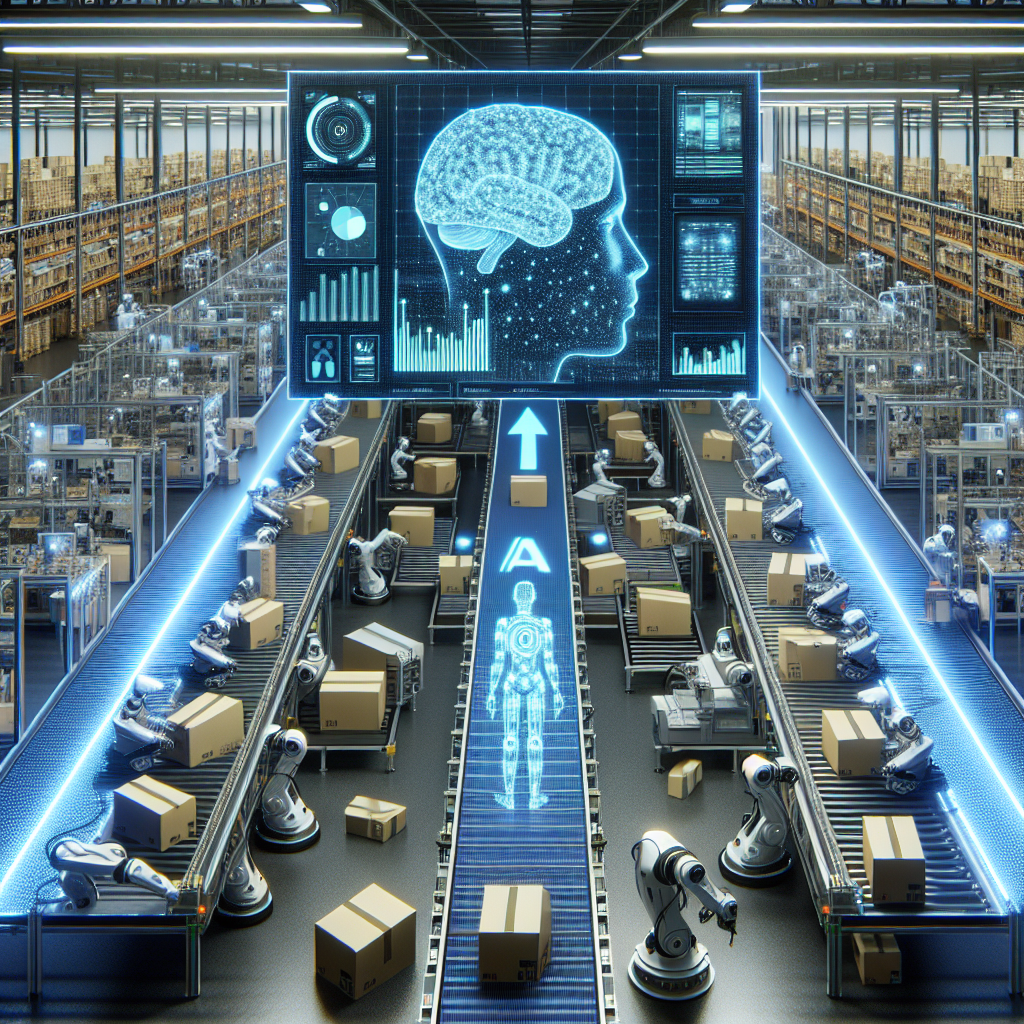
AI Automation in Logistics: Improving Efficiency and Accuracy
In recent years, the logistics industry has seen a significant shift towards automation and the use of artificial intelligence (AI) to improve efficiency, accuracy, and overall performance. AI technology has the potential to revolutionize the way logistics companies operate, allowing them to streamline processes, reduce costs, and improve customer service. In this article, we will explore the benefits of AI automation in logistics and how it can help businesses stay ahead in the rapidly evolving industry.
Benefits of AI Automation in Logistics
1. Improved Efficiency: One of the key benefits of AI automation in logistics is the ability to improve efficiency across the entire supply chain. AI algorithms can analyze large amounts of data in real-time to optimize routes, forecast demand, and allocate resources more effectively. This can help companies reduce lead times, minimize delays, and improve overall productivity.
2. Enhanced Accuracy: AI technology can also help logistics companies improve accuracy in a number of areas, such as inventory management, order processing, and shipment tracking. By automating these processes, businesses can reduce errors, eliminate manual data entry, and ensure that orders are fulfilled correctly and on time.
3. Cost Savings: By improving efficiency and accuracy, AI automation can help logistics companies reduce costs and increase profitability. By optimizing routes, reducing fuel consumption, and minimizing labor expenses, businesses can achieve significant cost savings over time.
4. Better Customer Service: AI automation can also help logistics companies provide better customer service by improving communication, tracking shipments in real-time, and resolving issues more quickly. This can lead to higher customer satisfaction levels, repeat business, and positive word-of-mouth referrals.
5. Scalability: AI automation in logistics can also help businesses scale their operations more easily as they grow. By automating repetitive tasks and streamlining processes, companies can handle larger volumes of orders and shipments without the need for additional resources or infrastructure.
Examples of AI Automation in Logistics
1. Predictive Analytics: AI algorithms can analyze historical data to predict future demand, optimize inventory levels, and improve forecasting accuracy. This can help logistics companies reduce stockouts, minimize excess inventory, and improve overall supply chain efficiency.
2. Autonomous Vehicles: AI-powered autonomous vehicles can help logistics companies streamline transportation operations, reduce fuel costs, and improve delivery times. By using sensors, cameras, and GPS technology, autonomous vehicles can navigate roads safely and efficiently, without the need for human intervention.
3. Warehouse Automation: AI-powered robots and drones can help logistics companies automate warehouse operations, such as picking, packing, and sorting. By using machine learning algorithms, these robots can learn to navigate warehouse environments, identify items, and perform tasks more quickly and accurately than human workers.
4. Chatbots: AI-powered chatbots can help logistics companies improve customer service by providing real-time support, answering questions, and resolving issues. By using natural language processing technology, chatbots can interact with customers in a more personalized and efficient manner, leading to higher satisfaction levels.
FAQs
Q: How can AI automation help logistics companies reduce costs?
A: AI automation can help logistics companies reduce costs by improving efficiency, accuracy, and overall productivity. By optimizing routes, streamlining processes, and minimizing errors, businesses can achieve significant cost savings over time.
Q: What are some examples of AI automation in logistics?
A: Some examples of AI automation in logistics include predictive analytics, autonomous vehicles, warehouse automation, and chatbots. These technologies can help logistics companies improve efficiency, accuracy, and customer service.
Q: How can AI automation help logistics companies improve customer service?
A: AI automation can help logistics companies improve customer service by providing real-time support, tracking shipments in real-time, and resolving issues more quickly. By using chatbots, predictive analytics, and other AI technologies, businesses can provide a more personalized and efficient customer experience.
Q: Is AI automation in logistics scalable?
A: Yes, AI automation in logistics is scalable and can help businesses handle larger volumes of orders and shipments as they grow. By automating repetitive tasks, optimizing routes, and improving forecasting accuracy, companies can scale their operations more easily without the need for additional resources or infrastructure.
In conclusion, AI automation in logistics has the potential to revolutionize the industry by improving efficiency, accuracy, and overall performance. By leveraging AI technology, logistics companies can streamline processes, reduce costs, and provide better customer service, ultimately staying ahead in the rapidly evolving industry. As the technology continues to advance, we can expect to see even more innovative solutions that will further transform the way logistics companies operate in the future.