
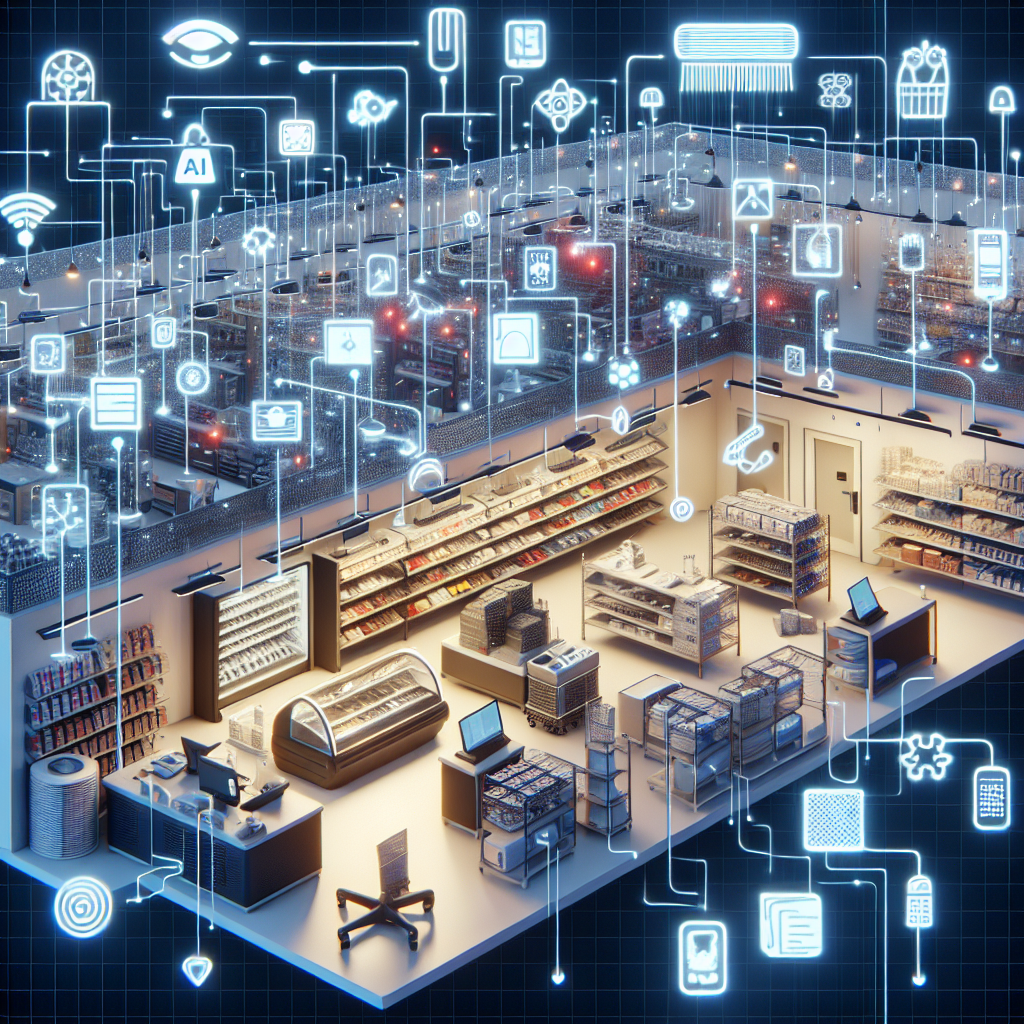
In recent years, the retail industry has seen a significant shift towards using artificial intelligence (AI) for predictive maintenance in stores. This innovative approach allows retailers to anticipate and prevent potential equipment failures before they happen, ultimately saving time and money while improving overall operational efficiency. In this article, we will explore how AI is being used for predictive maintenance in retail stores, the benefits it brings, and address some frequently asked questions about this technology.
How AI is used for predictive maintenance in retail stores
AI is being used in retail stores to analyze vast amounts of data collected from sensors and other sources to predict when equipment may fail. By monitoring factors such as temperature, humidity, vibrations, and energy consumption, AI algorithms can identify patterns and anomalies that indicate potential issues with equipment. This data is then used to schedule maintenance before a breakdown occurs, reducing the risk of costly downtime and disruptions to store operations.
One of the key advantages of using AI for predictive maintenance in retail stores is its ability to provide real-time insights into the health of equipment. Instead of relying on manual inspections or reactive maintenance practices, AI can continuously monitor equipment performance and alert store managers to potential issues before they escalate. This proactive approach not only minimizes the risk of equipment failures but also extends the lifespan of assets and reduces maintenance costs in the long run.
Another benefit of using AI for predictive maintenance in retail stores is its ability to optimize maintenance schedules. By analyzing historical data and equipment performance metrics, AI algorithms can identify patterns and trends that help retailers predict when maintenance is most likely to be needed. This allows stores to schedule maintenance during off-peak hours or when equipment is not in use, minimizing disruptions to store operations and maximizing efficiency.
Furthermore, AI can also help retailers prioritize maintenance tasks based on the criticality of equipment. By analyzing the impact of potential failures on store operations and customer experience, AI algorithms can recommend the most urgent maintenance tasks that need to be addressed. This ensures that resources are allocated efficiently and that critical equipment is maintained in a timely manner to prevent costly disruptions.
Overall, using AI for predictive maintenance in retail stores offers numerous benefits, including:
– Improved equipment reliability and uptime
– Reduced maintenance costs and downtime
– Optimized maintenance schedules and resource allocation
– Enhanced operational efficiency and customer experience
– Extended lifespan of assets and reduced risk of equipment failures
Frequently asked questions about using AI for predictive maintenance in retail stores
Q: How does AI collect and analyze data for predictive maintenance in retail stores?
A: AI collects data from sensors, equipment monitoring systems, and other sources to analyze equipment performance and identify patterns and anomalies that indicate potential issues. This data is then used to train AI algorithms to predict when maintenance is needed and recommend actions to prevent equipment failures.
Q: What types of equipment can AI monitor for predictive maintenance in retail stores?
A: AI can monitor a wide range of equipment in retail stores, including HVAC systems, refrigeration units, lighting systems, escalators, elevators, and security cameras. By analyzing data from these systems, AI can predict when maintenance is needed and help retailers prevent costly equipment failures.
Q: How can retailers implement AI for predictive maintenance in their stores?
A: Retailers can implement AI for predictive maintenance by investing in sensors and monitoring systems that collect data from equipment, partnering with AI technology providers to develop predictive maintenance algorithms, and training store staff to use AI tools to monitor equipment performance and schedule maintenance tasks.
Q: What are the costs associated with implementing AI for predictive maintenance in retail stores?
A: The costs of implementing AI for predictive maintenance in retail stores vary depending on the size of the store, the number of equipment to be monitored, and the complexity of the AI algorithms used. However, retailers can expect to incur initial costs for sensors, monitoring systems, and AI technology providers, as well as ongoing maintenance and training costs.
Q: What are the challenges of using AI for predictive maintenance in retail stores?
A: Some of the challenges of using AI for predictive maintenance in retail stores include data quality issues, integration with existing systems, and staff training. Retailers may also face resistance from employees who are not familiar with AI technology or who are concerned about job security.
In conclusion, using AI for predictive maintenance in retail stores offers numerous benefits, including improved equipment reliability, reduced maintenance costs, optimized maintenance schedules, and enhanced operational efficiency. By leveraging the power of AI to predict potential equipment failures and prevent downtime, retailers can stay ahead of maintenance issues and provide a seamless shopping experience for customers. With the right technology and processes in place, retailers can harness the full potential of AI for predictive maintenance and transform their store operations for the better.