
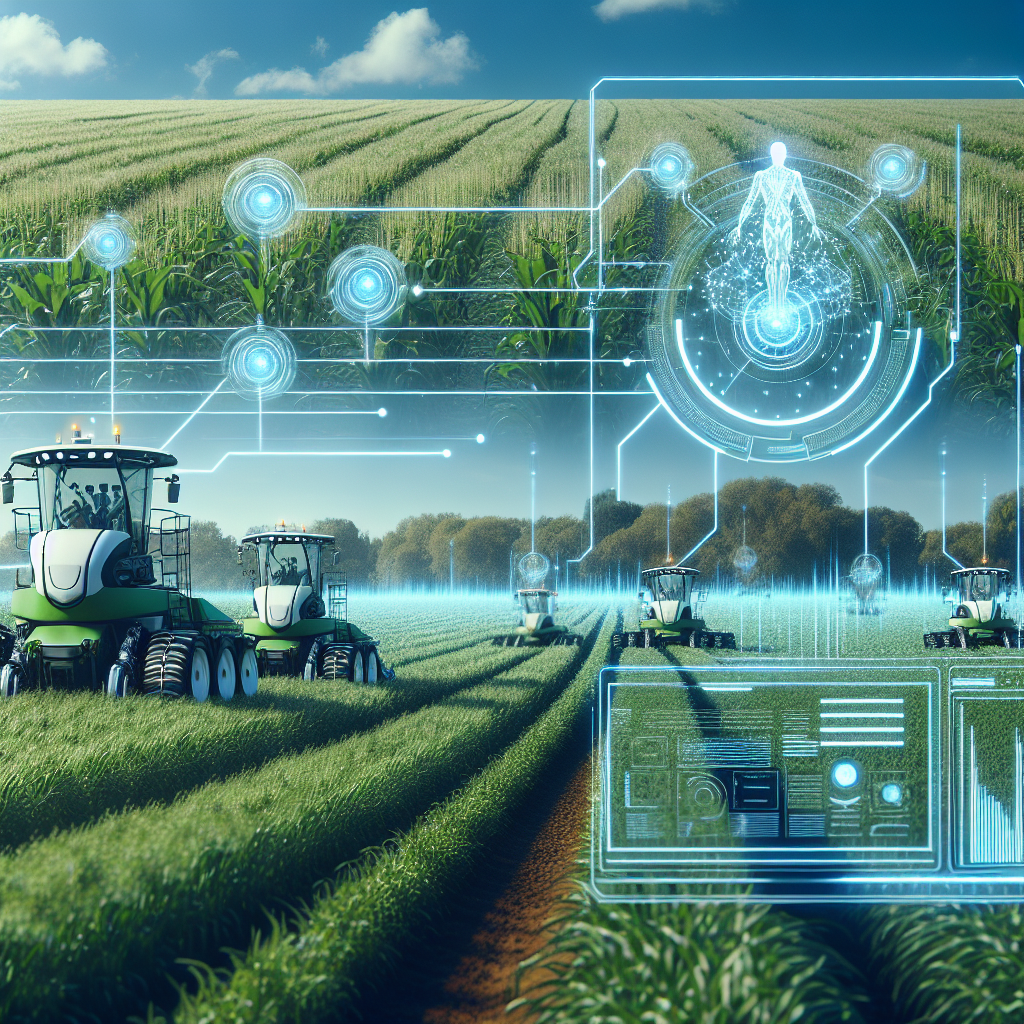
Artificial Intelligence (AI) has been revolutionizing various industries, and agriculture is no exception. AI platforms are now being utilized in agriculture to enhance productivity, efficiency, and sustainability. These platforms have the potential to transform the way farming is done, leading to a more sustainable and profitable future for the industry. In this article, we will explore the role of AI platforms in agriculture and their impact on the future of farming.
AI Platforms in Agriculture
AI platforms in agriculture are designed to analyze vast amounts of data collected from farms, such as weather conditions, soil quality, crop health, and machinery performance. By processing this data, AI platforms can provide farmers with valuable insights and recommendations to optimize their operations. Some of the key applications of AI platforms in agriculture include:
1. Precision Farming: AI platforms can analyze data from sensors, drones, and satellites to create detailed maps of farms. These maps can help farmers identify areas that require attention, such as nutrient deficiencies or pest infestations. By using this information, farmers can apply inputs such as fertilizers and pesticides more efficiently, leading to higher yields and reduced costs.
2. Crop Monitoring: AI platforms can analyze images of crops taken by drones or satellites to assess crop health and detect diseases early. This information can help farmers take timely action to prevent crop damage and ensure a healthy harvest.
3. Predictive Modeling: AI platforms can use historical data and machine learning algorithms to predict future trends in crop yields, market prices, and weather patterns. By having access to these predictions, farmers can make informed decisions about when to plant, harvest, and sell their crops.
4. Autonomous Machinery: AI platforms can enable the development of autonomous machinery that can perform tasks such as planting, weeding, and harvesting without human intervention. This technology can help farmers reduce labor costs and increase efficiency in their operations.
5. Supply Chain Optimization: AI platforms can optimize the supply chain by analyzing data on market demand, transportation costs, and inventory levels. By using this information, farmers can make better decisions about when and where to sell their crops, leading to higher profits.
The Future of Agriculture with AI Platforms
The use of AI platforms in agriculture is expected to have a significant impact on the future of farming. Some of the key benefits of AI platforms in agriculture include:
1. Increased Efficiency: AI platforms can help farmers optimize their operations by providing real-time insights and recommendations. By using AI platforms, farmers can make better decisions about resource allocation, leading to increased efficiency and productivity.
2. Sustainable Practices: AI platforms can help farmers adopt sustainable farming practices by reducing the use of inputs such as water, fertilizers, and pesticides. By using AI platforms to monitor crop health and soil quality, farmers can minimize waste and environmental impact.
3. Improved Yields: AI platforms can help farmers increase crop yields by optimizing planting schedules, managing pests and diseases, and improving soil health. By using AI platforms, farmers can achieve higher yields and maximize profits.
4. Cost Savings: AI platforms can help farmers reduce costs by optimizing resource use, reducing waste, and improving operational efficiency. By using AI platforms, farmers can lower their production costs and increase their bottom line.
5. Data-Driven Decision Making: AI platforms can provide farmers with valuable insights and recommendations based on data analysis. By using AI platforms, farmers can make informed decisions about when to plant, harvest, and sell their crops, leading to better outcomes.
FAQs
Q: How do AI platforms in agriculture benefit farmers?
A: AI platforms in agriculture benefit farmers by increasing efficiency, sustainability, yields, cost savings, and data-driven decision-making.
Q: What are some of the key applications of AI platforms in agriculture?
A: Some key applications of AI platforms in agriculture include precision farming, crop monitoring, predictive modeling, autonomous machinery, and supply chain optimization.
Q: How can AI platforms help farmers adopt sustainable farming practices?
A: AI platforms can help farmers adopt sustainable farming practices by reducing the use of inputs such as water, fertilizers, and pesticides, monitoring crop health and soil quality, and minimizing waste and environmental impact.
Q: What are some of the challenges of implementing AI platforms in agriculture?
A: Some challenges of implementing AI platforms in agriculture include the high cost of technology, the need for technical expertise, data privacy and security concerns, and resistance to change from traditional farming practices.
Q: What is the future of agriculture with AI platforms?
A: The future of agriculture with AI platforms is expected to be characterized by increased efficiency, sustainable practices, improved yields, cost savings, and data-driven decision-making.
In conclusion, AI platforms have the potential to revolutionize the agriculture industry by providing farmers with valuable insights and recommendations to optimize their operations. By using AI platforms, farmers can increase efficiency, sustainability, yields, and cost savings, leading to a more profitable and sustainable future for farming. As AI technology continues to advance, we can expect to see even greater innovation and transformation in the agriculture industry.