
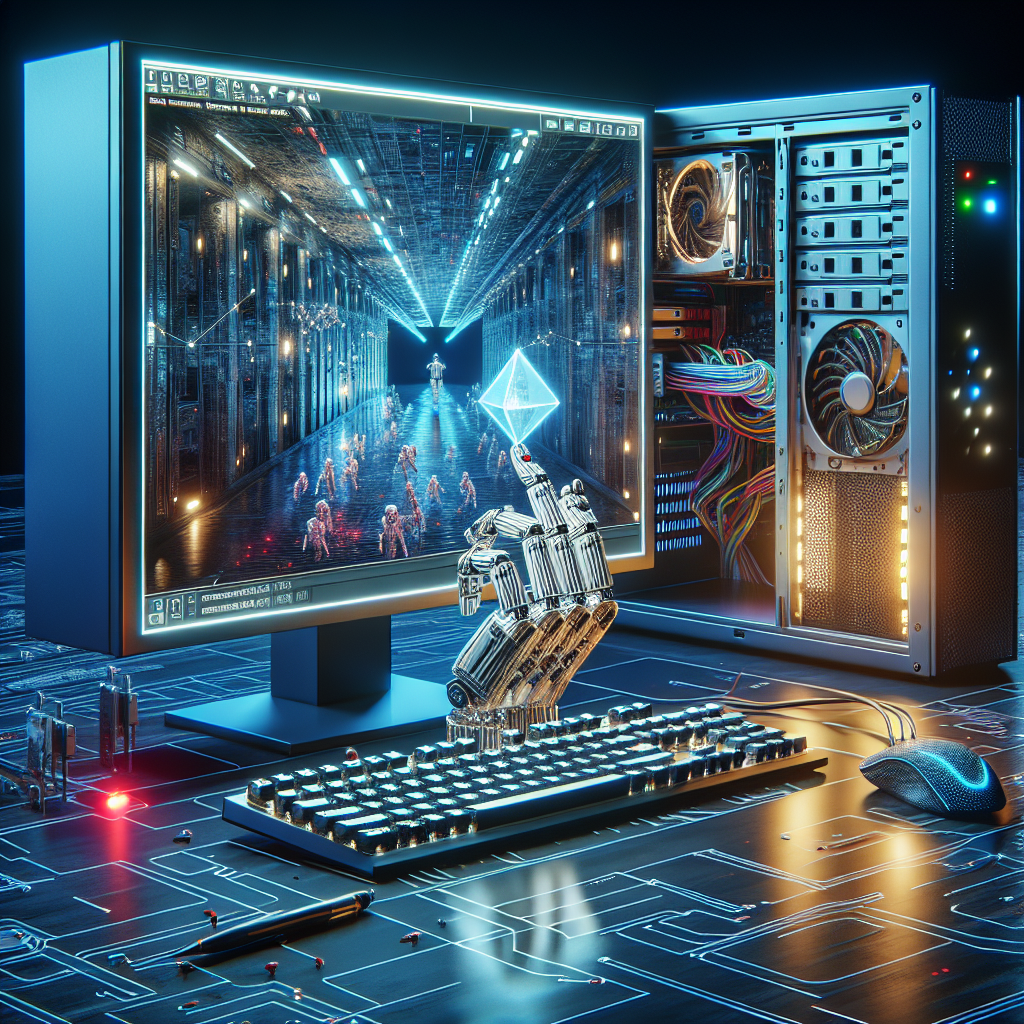
Artificial Intelligence (AI) and game rendering techniques have revolutionized the gaming industry in recent years, allowing for more realistic and immersive gameplay experiences. AI has been used in various aspects of game development, from character behaviors to environment rendering, enhancing the overall gaming experience for players. In this article, we will explore the role of AI in game rendering techniques and how it has transformed the way games are created and played.
AI in Game Rendering Techniques
AI has been integrated into game rendering techniques to improve the visual quality and realism of virtual environments. One of the key areas where AI has been leveraged is in real-time rendering, where AI algorithms are used to predict and generate high-quality graphics on the fly. This has led to more visually stunning games that are able to render complex scenes with greater detail and realism.
AI has also been used to enhance lighting and shadow effects in games, creating more realistic and dynamic environments. By using AI algorithms to simulate the behavior of light in real-time, game developers are able to create more immersive and atmospheric gaming experiences.
Another application of AI in game rendering techniques is in the creation of procedural content. Procedural generation techniques allow developers to create vast and diverse game worlds using algorithms, rather than manually designing each element. AI algorithms can be used to generate realistic landscapes, textures, and assets, allowing for endless possibilities and reducing the time and effort required for game development.
AI has also been used to improve the performance and efficiency of game rendering techniques. By using AI algorithms to optimize rendering processes, developers can achieve better frame rates and smoother gameplay experiences on a variety of platforms. This has enabled games to run more smoothly on a wider range of hardware, making them accessible to a larger audience.
Overall, AI has had a significant impact on game rendering techniques, allowing for more realistic graphics, dynamic environments, and efficient performance. As AI technology continues to advance, we can expect even more groundbreaking developments in the field of game rendering.
Frequently Asked Questions
Q: How is AI used in character animation in games?
A: AI algorithms can be used to simulate realistic character behaviors in games, such as movement, interactions, and emotions. By using AI techniques such as neural networks and machine learning, developers can create more lifelike and dynamic characters that respond to the player’s actions in real-time.
Q: What are some examples of AI-powered game rendering techniques?
A: Some examples of AI-powered game rendering techniques include real-time rendering algorithms, procedural content generation, and lighting optimization. These techniques allow for more realistic graphics, dynamic environments, and improved performance in games.
Q: How does AI improve the efficiency of game rendering techniques?
A: AI algorithms can be used to optimize rendering processes, such as reducing the number of calculations needed to render a scene or improving the distribution of resources across multiple cores. This results in better performance and smoother gameplay experiences for players.
Q: What are the challenges of integrating AI into game rendering techniques?
A: Some challenges of integrating AI into game rendering techniques include the complexity of AI algorithms, the need for specialized hardware, and the time and resources required to develop and implement AI-powered rendering solutions. However, as AI technology continues to advance, these challenges are becoming more manageable.
In conclusion, AI has played a crucial role in transforming game rendering techniques, allowing for more realistic graphics, dynamic environments, and efficient performance. As AI technology continues to advance, we can expect even more innovative developments in the field of game development, leading to more immersive and engaging gaming experiences for players.