
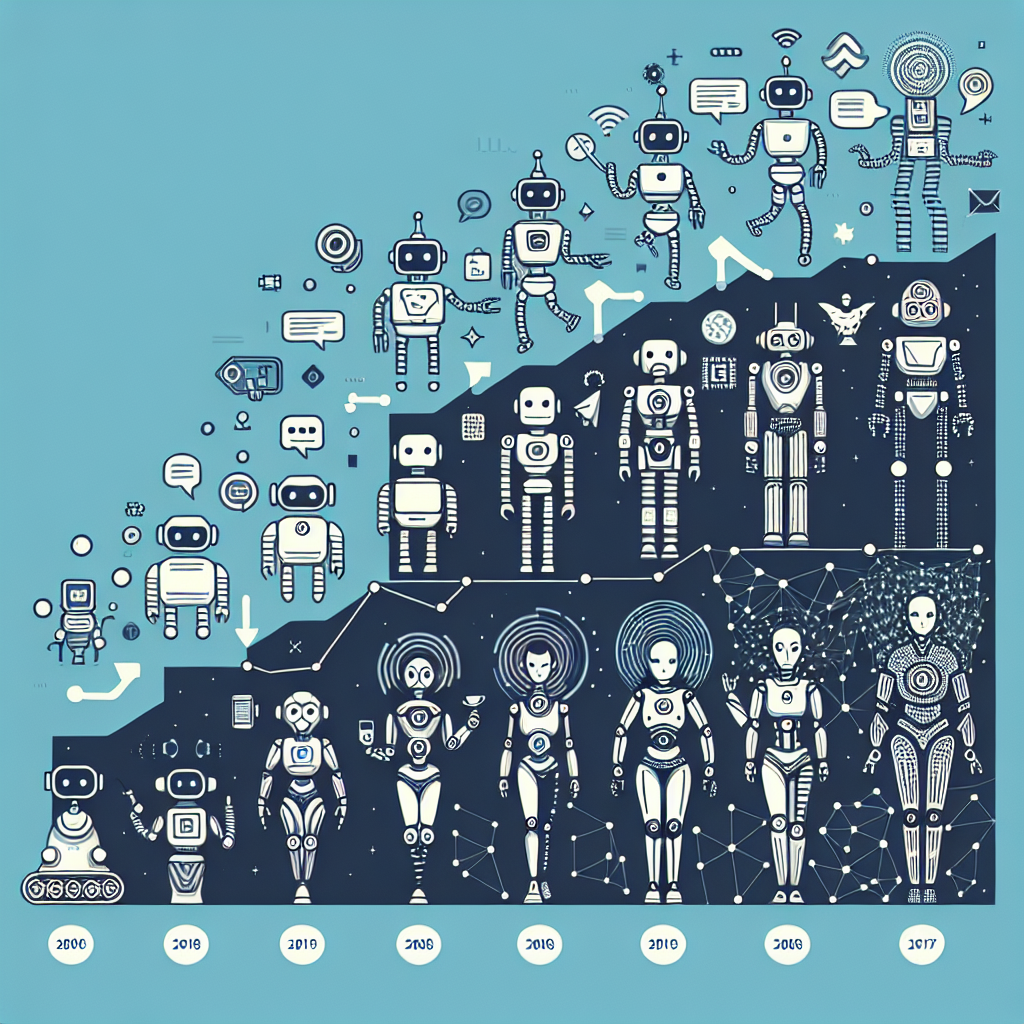
The Evolution of Conversational AI: From Chatbots to Virtual Assistants
Conversational AI has come a long way in the past few years, evolving from simple chatbots to sophisticated virtual assistants that can carry on complex conversations and perform a wide range of tasks. In this article, we will explore the evolution of conversational AI, from its humble beginnings to its current state, and discuss the key trends and technologies that have driven its growth.
Chatbots: The Early Days
Chatbots have been around for quite some time, with early examples dating back to the 1960s. These early chatbots were relatively simple programs that could respond to basic commands and questions, but lacked the ability to carry on truly conversational interactions.
In the early 2000s, chatbots began to gain popularity as companies started to use them for customer service and support. These chatbots were often used on websites to provide instant answers to common questions, freeing up human agents to handle more complex issues.
However, early chatbots were limited in their capabilities and often struggled to understand and respond to natural language. This led to frustration on the part of users, who often found themselves having to repeat their questions multiple times before getting a satisfactory answer.
The Rise of Virtual Assistants
In recent years, advancements in natural language processing (NLP) and machine learning have enabled the development of more sophisticated virtual assistants that can carry on more natural and complex conversations. Virtual assistants like Apple’s Siri, Amazon’s Alexa, and Google Assistant have become increasingly popular, offering users a wide range of functionalities, from setting reminders and alarms to controlling smart home devices.
Virtual assistants are capable of understanding and responding to natural language in a way that was previously not possible with traditional chatbots. They can also learn and adapt to users’ preferences and behaviors over time, making them more personalized and effective.
The Evolution of Conversational AI
The evolution of conversational AI has been driven by a number of key trends and technologies, including:
1. Natural Language Processing (NLP): NLP is a branch of artificial intelligence that focuses on enabling computers to understand, interpret, and generate human language. Advances in NLP have enabled virtual assistants to understand and respond to natural language in a more human-like way, making conversations with them more seamless and intuitive.
2. Machine Learning: Machine learning algorithms have played a key role in the development of conversational AI, allowing virtual assistants to learn and improve over time based on their interactions with users. This has enabled virtual assistants to become more personalized and effective, providing users with more relevant and timely information.
3. Contextual Understanding: Virtual assistants are now able to understand and maintain context across multiple interactions, allowing for more natural and coherent conversations. This contextual understanding enables virtual assistants to remember previous interactions and provide more relevant responses to users’ queries.
4. Multimodal Interfaces: Advances in multimodal interfaces, such as voice and visual interactions, have made virtual assistants more versatile and user-friendly. Users can now interact with virtual assistants using a combination of voice commands, text inputs, and visual cues, making the overall experience more intuitive and engaging.
5. Integration with Third-Party Apps and Services: Virtual assistants are increasingly being integrated with third-party apps and services, allowing users to perform a wide range of tasks, from ordering food and booking flights to checking the weather and controlling smart home devices, all through a single interface.
Frequently Asked Questions
Q: What is the difference between a chatbot and a virtual assistant?
A: Chatbots are typically designed to respond to specific commands and questions in a more scripted and limited way, while virtual assistants are more sophisticated and capable of carrying on complex and natural conversations. Virtual assistants also often have more functionalities and can perform a wider range of tasks.
Q: How do virtual assistants learn and improve over time?
A: Virtual assistants use machine learning algorithms to analyze and learn from their interactions with users. This allows them to adapt to users’ preferences and behaviors, providing more personalized and effective responses over time.
Q: What are some of the key challenges in the development of conversational AI?
A: Some of the key challenges in the development of conversational AI include understanding and processing natural language, maintaining context across multiple interactions, and ensuring the privacy and security of user data.
Q: How can businesses benefit from using conversational AI?
A: Businesses can benefit from using conversational AI in a number of ways, including improving customer service and support, automating repetitive tasks, and providing personalized and engaging experiences for users.
In conclusion, the evolution of conversational AI has been driven by advancements in natural language processing, machine learning, contextual understanding, multimodal interfaces, and integration with third-party apps and services. Virtual assistants have become increasingly sophisticated and capable of carrying on complex and natural conversations, offering users a wide range of functionalities and personalized experiences. As technology continues to advance, we can expect to see even more exciting developments in the field of conversational AI in the years to come.