
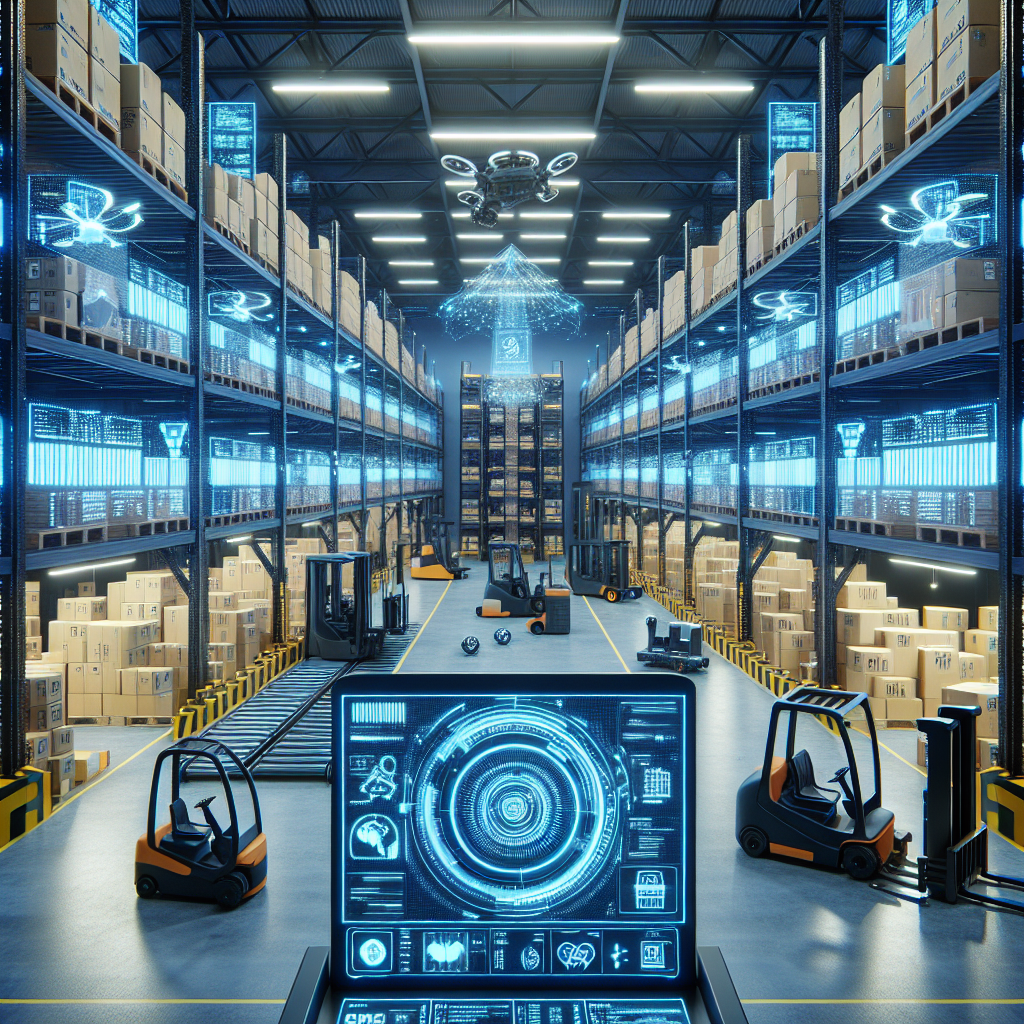
In recent years, the use of artificial intelligence (AI) in warehouse automation has been increasing rapidly. AI technologies such as machine learning, computer vision, and natural language processing are being used to optimize various aspects of warehouse operations, including inventory management, order picking, and logistics. These technologies have the potential to revolutionize the way warehouses are run, making them more efficient, accurate, and cost-effective.
One of the key ways in which AI is improving warehouse automation is through the use of predictive analytics. By analyzing large amounts of historical data, AI algorithms can predict future demand for products and optimize inventory levels accordingly. This can help warehouses reduce stockouts, minimize excess inventory, and improve overall inventory management.
AI-powered robots are also being used in warehouses to automate tasks such as picking, packing, and sorting. These robots are equipped with sensors and cameras that allow them to navigate through the warehouse, identify products, and perform tasks with a high level of accuracy and efficiency. By automating these tasks, warehouses can reduce labor costs, increase productivity, and improve order accuracy.
Another area where AI is making a big impact in warehouse automation is in logistics optimization. AI algorithms can analyze various factors such as order volume, traffic conditions, and delivery times to optimize the routing of goods within the warehouse and between different locations. This can help warehouses reduce transportation costs, improve delivery times, and enhance overall efficiency.
Overall, the use of AI in warehouse automation has the potential to transform the way warehouses operate, making them more efficient, accurate, and cost-effective. As AI technologies continue to advance, we can expect to see even more innovations in warehouse automation in the coming years.
FAQs:
Q: What are some of the benefits of using AI in warehouse automation?
A: Some of the benefits of using AI in warehouse automation include improved inventory management, increased productivity, reduced labor costs, faster order processing, and enhanced accuracy.
Q: How can AI help warehouses optimize inventory levels?
A: AI algorithms can analyze historical data to predict future demand for products and optimize inventory levels accordingly. This can help warehouses reduce stockouts, minimize excess inventory, and improve overall inventory management.
Q: How are AI-powered robots being used in warehouses?
A: AI-powered robots are being used in warehouses to automate tasks such as picking, packing, and sorting. These robots are equipped with sensors and cameras that allow them to navigate through the warehouse, identify products, and perform tasks with a high level of accuracy and efficiency.
Q: How can AI help warehouses optimize logistics?
A: AI algorithms can analyze factors such as order volume, traffic conditions, and delivery times to optimize the routing of goods within the warehouse and between different locations. This can help warehouses reduce transportation costs, improve delivery times, and enhance overall efficiency.
Q: What are some of the challenges of implementing AI in warehouse automation?
A: Some of the challenges of implementing AI in warehouse automation include the high cost of AI technologies, the need for specialized skills to develop and maintain AI systems, and potential resistance from employees to new technologies. However, the benefits of using AI in warehouse automation far outweigh these challenges.