
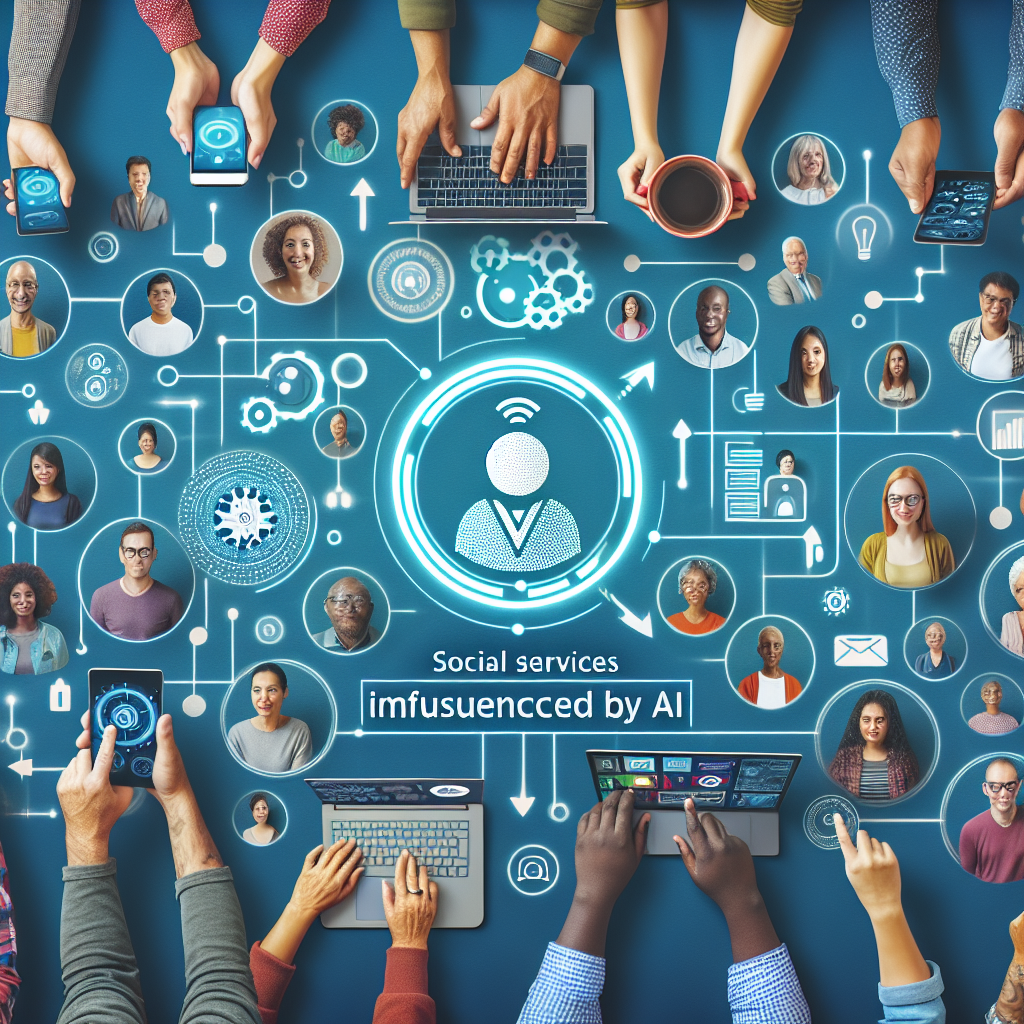
AI and the Future of Social Services: Democratizing Access to Resources
In recent years, there has been a growing interest in the application of artificial intelligence (AI) in the field of social services. AI has the potential to revolutionize the way social services are delivered, making access to resources more efficient, personalized, and equitable. By harnessing the power of AI, social services organizations can better meet the needs of their clients, improve outcomes, and reduce costs.
One of the key benefits of AI in social services is its ability to democratize access to resources. Historically, access to social services has been limited by factors such as location, language barriers, and administrative hurdles. AI can help overcome these barriers by providing personalized recommendations, automating processes, and expanding the reach of services to underserved populations.
For example, AI-powered chatbots can provide instant support to individuals in need, guiding them through the process of accessing services and answering their questions in real-time. This can reduce wait times, improve the user experience, and ensure that individuals get the help they need when they need it.
AI can also be used to analyze data and identify patterns that can help social services organizations better understand the needs of their clients and tailor their services accordingly. For example, AI algorithms can analyze demographic data, social media posts, and other sources of information to identify individuals who may be at risk of homelessness, domestic violence, or other challenges. This can help organizations intervene early, prevent crises, and provide targeted support to those who need it most.
In addition, AI can help social services organizations optimize their resources and improve efficiency. For example, AI algorithms can analyze data on service utilization, staffing levels, and other factors to identify opportunities for cost savings and process improvements. This can help organizations make better decisions, allocate resources more effectively, and deliver better outcomes for their clients.
Despite the potential benefits of AI in social services, there are also challenges and concerns that need to be addressed. One of the key concerns is the potential for bias in AI algorithms. Like any technology, AI is only as good as the data it is trained on. If the data used to train AI algorithms is biased or incomplete, the algorithms themselves may produce biased or inaccurate results. This can lead to unfair treatment of individuals, exacerbate existing inequalities, and undermine trust in the social services system.
To address this concern, social services organizations need to be mindful of the data they use to train AI algorithms and take steps to ensure that the algorithms are fair and transparent. This may involve auditing algorithms for bias, providing explanations for algorithmic decisions, and involving diverse stakeholders in the design and evaluation of AI systems.
Another concern is the potential for AI to replace human workers in social services. While AI has the potential to automate routine tasks and free up human workers to focus on more complex and meaningful work, there is also a risk that AI could lead to job displacement and reduce the quality of care provided to clients. To address this concern, social services organizations need to be thoughtful about how they integrate AI into their operations and ensure that human workers are supported and trained to work alongside AI systems.
In conclusion, AI has the potential to revolutionize the field of social services by democratizing access to resources, improving outcomes, and reducing costs. By harnessing the power of AI, social services organizations can better meet the needs of their clients, optimize their resources, and deliver more personalized and equitable services. However, to fully realize the potential of AI in social services, organizations need to address concerns around bias, job displacement, and ethical considerations. By taking a thoughtful and inclusive approach to the adoption of AI, social services organizations can ensure that AI enhances, rather than detracts from, the quality of care provided to individuals in need.
FAQs:
Q: How can AI help social services organizations better understand the needs of their clients?
A: AI can analyze data on demographics, social media posts, and other sources of information to identify patterns and trends that can help organizations better understand the needs of their clients. This can help organizations tailor their services to meet the specific needs of individuals and provide more targeted support.
Q: What are some potential challenges of using AI in social services?
A: Some potential challenges of using AI in social services include bias in AI algorithms, job displacement, and ethical concerns. Organizations need to be mindful of these challenges and take steps to address them in order to ensure that AI enhances, rather than detracts from, the quality of care provided to clients.
Q: How can social services organizations ensure that AI algorithms are fair and transparent?
A: Social services organizations can ensure that AI algorithms are fair and transparent by auditing algorithms for bias, providing explanations for algorithmic decisions, and involving diverse stakeholders in the design and evaluation of AI systems. By taking these steps, organizations can ensure that AI is used responsibly and ethically in the delivery of social services.