
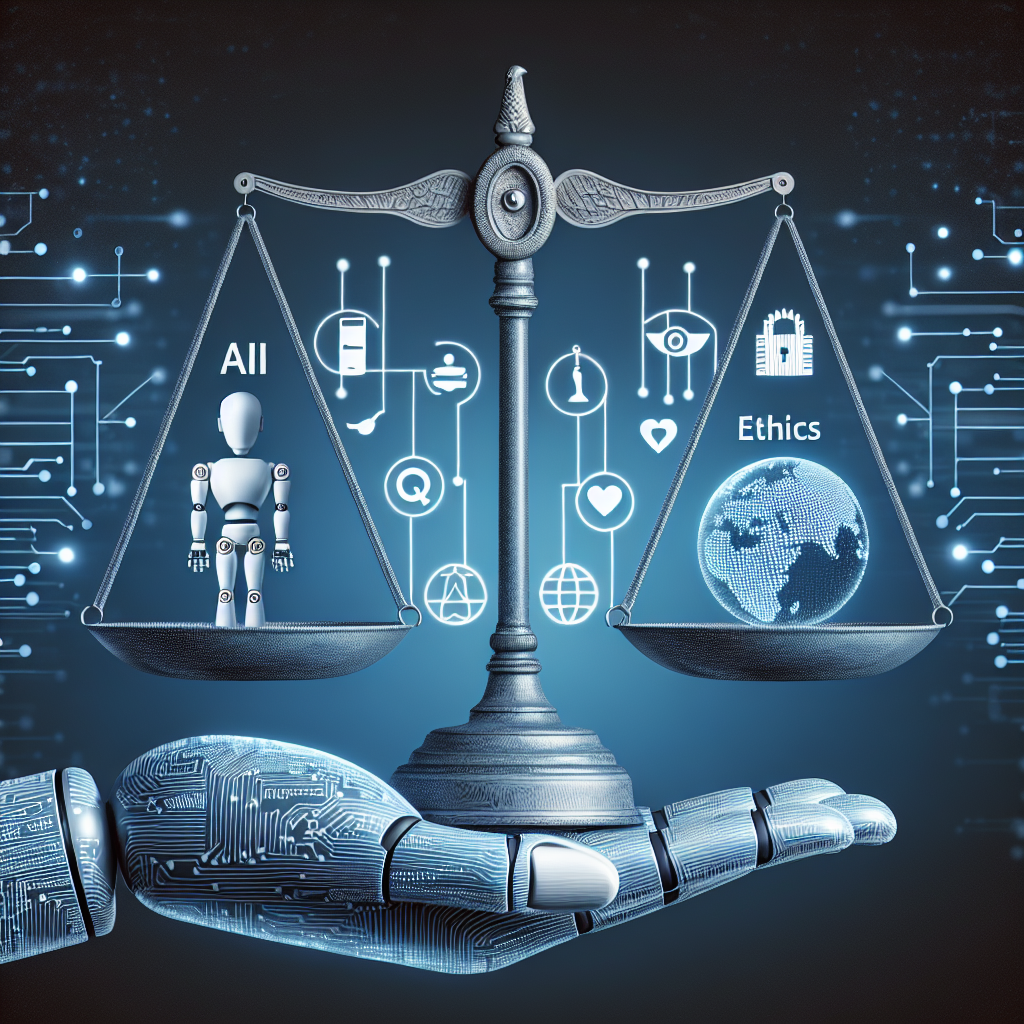
Artificial Intelligence (AI) is a rapidly growing field that has the potential to revolutionize the way we live and work. AI systems are being developed to assist in a wide range of tasks, from autonomous vehicles to medical diagnosis to customer service. However, as AI technology becomes more advanced and pervasive, it is important to consider the ethical implications of its development and deployment.
Ethical considerations in AI development are crucial to ensure that AI systems are designed and used in a way that is fair, transparent, and accountable. Issues such as bias, privacy, accountability, and transparency must be carefully considered to ensure that AI technology benefits society as a whole.
One of the key ethical considerations in AI development is bias. AI systems are trained on large datasets, which can contain biases that reflect societal inequalities and stereotypes. If these biases are not addressed, AI systems can perpetuate and even amplify existing biases in areas such as race, gender, and socioeconomic status. For example, a facial recognition system that is trained on a dataset that is predominantly composed of white faces may struggle to accurately recognize faces of people of color.
To address bias in AI systems, developers must carefully select and curate training data to ensure that it is representative and diverse. Additionally, developers can use techniques such as bias detection and mitigation algorithms to identify and correct biases in AI systems.
Privacy is another important ethical consideration in AI development. AI systems often collect and analyze large amounts of personal data, raising concerns about data security and privacy. Developers must ensure that AI systems comply with data protection regulations and that user data is securely stored and processed. Additionally, developers should be transparent about how user data is collected, used, and shared, and obtain informed consent from users before collecting their data.
Accountability is also a key ethical consideration in AI development. AI systems can make decisions that have significant consequences, such as determining who receives a loan or who is granted parole. Developers must ensure that AI systems are transparent and accountable for their decisions, so that they can be held responsible for any errors or biases that may arise. This may involve implementing mechanisms for auditing AI systems, providing explanations for their decisions, and establishing channels for redress if errors occur.
Transparency is essential for building trust in AI systems. Users must be able to understand how AI systems work and how they make decisions. Developers should provide clear explanations of how AI systems are trained, what data they use, and how they make predictions or recommendations. This transparency can help users understand and trust AI systems, and can also help identify and address potential biases or errors.
In addition to these ethical considerations, developers must also consider the broader societal impact of AI technology. AI systems have the potential to disrupt industries, change the nature of work, and alter social norms. Developers must consider how AI technology will affect jobs, income distribution, and social equality, and work to mitigate any negative impacts.
Frequently Asked Questions (FAQs):
Q: How can bias be addressed in AI systems?
A: Bias in AI systems can be addressed by carefully selecting and curating training data to ensure that it is representative and diverse. Developers can also use techniques such as bias detection and mitigation algorithms to identify and correct biases in AI systems.
Q: What are some ethical considerations in AI development?
A: Some ethical considerations in AI development include bias, privacy, accountability, and transparency. Developers must ensure that AI systems are designed and used in a way that is fair, transparent, and accountable.
Q: How can transparency be achieved in AI systems?
A: Transparency in AI systems can be achieved by providing clear explanations of how AI systems are trained, what data they use, and how they make decisions. This can help users understand and trust AI systems, and can also help identify and address potential biases or errors.
Q: What is the societal impact of AI technology?
A: AI technology has the potential to disrupt industries, change the nature of work, and alter social norms. Developers must consider how AI technology will affect jobs, income distribution, and social equality, and work to mitigate any negative impacts.