
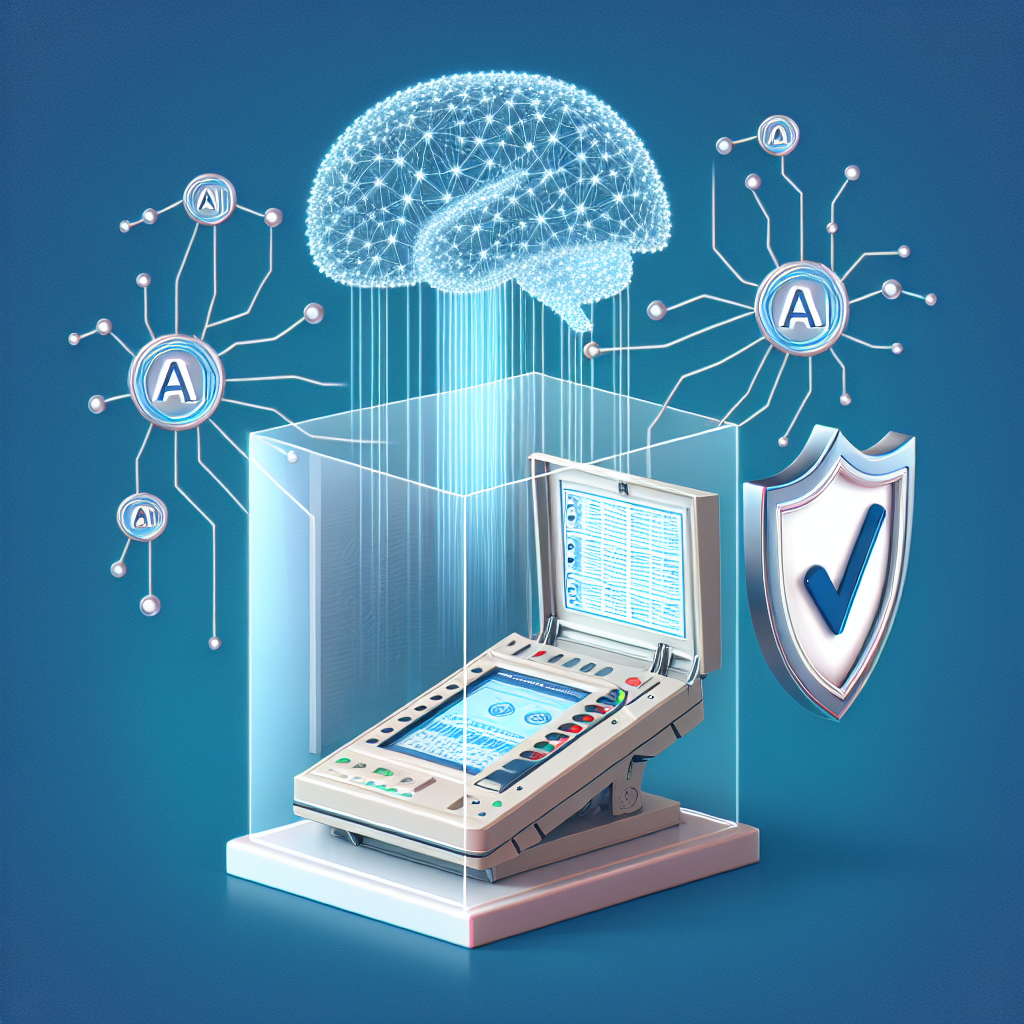
In recent years, the use of artificial intelligence (AI) in election systems has become increasingly prevalent. AI technology has the potential to greatly enhance the efficiency and accuracy of election processes, but it also raises concerns about fairness and security. In this article, we will explore the role of AI in election systems, the challenges and opportunities it presents, and how we can ensure that AI is used in a way that upholds democratic principles.
The Role of AI in Election Systems
AI technology can be used in a variety of ways to improve election systems. One of the most common applications of AI in elections is in voter registration and verification. AI algorithms can help to streamline the voter registration process by automatically verifying the eligibility of voters and flagging any potential issues. This can help to reduce errors and ensure that only eligible voters are able to cast their ballots.
AI can also be used to improve the accuracy of vote counting. By using machine learning algorithms to analyze and process election data, election officials can quickly and accurately tally votes, reducing the risk of errors and ensuring that election results are reported in a timely manner.
In addition to voter registration and vote counting, AI can also be used to detect and prevent election fraud. By analyzing patterns in voter behavior and identifying anomalies, AI algorithms can help to flag suspicious activity and alert election officials to potential fraud. This can help to ensure the integrity of the electoral process and maintain public trust in the outcome of elections.
Challenges and Opportunities
While AI has the potential to greatly enhance the efficiency and accuracy of election systems, it also presents a number of challenges. One of the biggest concerns surrounding the use of AI in elections is the potential for bias. AI algorithms are only as good as the data they are trained on, and if that data is biased, it can lead to discriminatory outcomes. For example, if an AI algorithm is trained on data that disproportionately represents one demographic group, it may produce results that favor that group at the expense of others.
Another challenge is the potential for AI to be hacked or manipulated. As with any technology, AI systems are vulnerable to cyber attacks and other forms of interference. If malicious actors are able to gain access to an AI system used in an election, they could potentially manipulate the outcome of the election or undermine public trust in the electoral process.
Despite these challenges, there are also many opportunities for AI to improve election systems. By automating routine tasks and streamlining processes, AI can help to reduce the burden on election officials and ensure that elections run smoothly and efficiently. AI can also help to increase voter turnout by making it easier for eligible voters to register and cast their ballots.
Ensuring Fairness and Security
In order to ensure that AI is used in election systems in a way that upholds democratic principles, it is essential to take steps to mitigate bias and enhance security. One way to address bias in AI algorithms is to carefully curate the training data to ensure that it is representative of the population as a whole. By including a diverse range of data points, election officials can help to ensure that AI algorithms produce fair and unbiased results.
In addition to addressing bias, it is also important to implement robust security measures to protect AI systems used in elections. This includes encrypting sensitive data, regularly updating software to patch vulnerabilities, and conducting regular security audits to identify and address potential weaknesses. By taking these steps, election officials can help to ensure that AI systems are secure and resistant to hacking and other forms of interference.
FAQs
Q: Can AI be used to predict election outcomes?
A: While AI can be used to analyze and process election data, it is important to remember that predicting election outcomes is inherently uncertain. There are many factors that can influence the outcome of an election, and while AI algorithms can help to analyze and interpret data, they cannot predict the future with certainty.
Q: How can AI help to increase voter turnout?
A: AI can help to increase voter turnout by making it easier for eligible voters to register and cast their ballots. By streamlining the voter registration process and providing voters with information about polling locations and voting times, AI can help to remove barriers to voting and encourage more people to participate in the electoral process.
Q: What steps can election officials take to ensure that AI is used in a fair and unbiased way?
A: Election officials can take a number of steps to ensure that AI is used in a fair and unbiased way. This includes carefully curating training data to ensure that it is representative of the population as a whole, implementing transparency and accountability measures to ensure that AI algorithms are used in a way that upholds democratic principles, and conducting regular audits to identify and address potential biases in AI systems.
In conclusion, AI has the potential to greatly enhance the efficiency and accuracy of election systems, but it also raises concerns about fairness and security. By taking steps to mitigate bias and enhance security, election officials can ensure that AI is used in a way that upholds democratic principles and maintains public trust in the electoral process.