
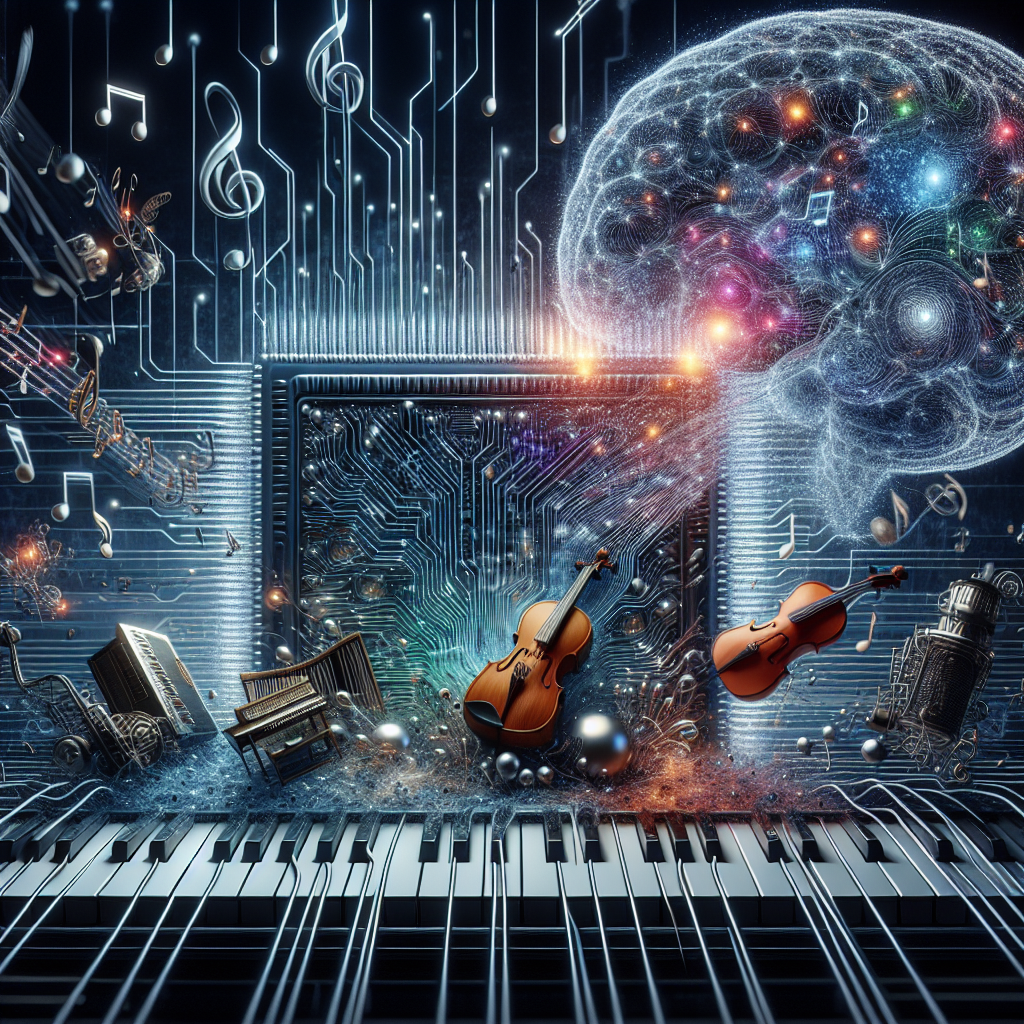
In the world of music, innovation has always been a driving force. From the invention of new instruments to the development of new genres, musicians and composers have constantly pushed boundaries and challenged norms. In recent years, artificial intelligence (AI) has emerged as a powerful tool for redefining the concept of musical innovation. By leveraging the capabilities of AI, musicians are able to explore new creative possibilities, push the limits of their art, and create music that was previously unimaginable.
One of the most exciting ways in which AI is redefining musical innovation is through the use of generative algorithms. These algorithms are able to analyze vast amounts of musical data and generate new compositions based on patterns and styles found within that data. This allows musicians to quickly generate new ideas and explore different musical possibilities, helping them to break out of creative ruts and discover new avenues for expression. Generative algorithms can also be used to create music that is tailored to specific moods or emotions, allowing musicians to experiment with different sonic landscapes and push the boundaries of traditional composition.
Another way in which AI is redefining musical innovation is through the use of machine learning algorithms. These algorithms are able to analyze and learn from large datasets of musical information, allowing them to identify patterns and trends that may not be immediately apparent to human musicians. By leveraging machine learning algorithms, musicians are able to gain new insights into their own creative processes and explore new ways of approaching composition and performance. Machine learning algorithms can also be used to analyze the work of other musicians, helping artists to better understand the techniques and styles of their peers and incorporate them into their own work.
AI is also redefining musical innovation through the development of new tools and technologies that are revolutionizing the way music is created and consumed. For example, AI-powered music production software is allowing musicians to quickly and easily create professional-quality recordings without the need for expensive equipment or extensive technical knowledge. AI is also being used to develop new instruments and controllers that are able to respond to the movements and gestures of the musician, allowing for more intuitive and expressive performances. Additionally, AI is being used to create personalized music recommendations and playlists, helping listeners to discover new music that is tailored to their tastes and preferences.
One of the most exciting applications of AI in the world of music is in the field of live performance. AI-powered systems are being developed that are able to analyze and respond to the movements and gestures of musicians in real-time, allowing for dynamic and interactive performances that blur the line between human and machine. These systems can also be used to create immersive audiovisual experiences that engage audiences in new and exciting ways, pushing the boundaries of what is possible in a live music setting.
Overall, AI is redefining the concept of musical innovation by providing musicians with new tools, technologies, and creative possibilities that were previously unimaginable. By leveraging the capabilities of AI, musicians are able to explore new artistic territories, break out of creative ruts, and push the boundaries of their art in ways that were previously thought impossible. As AI continues to evolve and expand its capabilities, the future of music is sure to be filled with exciting new possibilities and innovations.
FAQs:
Q: How is AI being used in music production?
A: AI is being used in music production to analyze and generate new compositions, identify patterns and trends in musical data, create personalized music recommendations, develop new instruments and controllers, and revolutionize the way music is created and consumed.
Q: Can AI replace human musicians?
A: While AI is capable of generating music and analyzing musical data, it is unlikely to completely replace human musicians. AI is best used as a tool to enhance and augment the creative process, rather than as a replacement for human creativity and expression.
Q: Are there any ethical concerns with the use of AI in music?
A: There are some ethical concerns surrounding the use of AI in music, such as issues of copyright infringement, data privacy, and the potential for AI to replicate and exploit the work of human musicians. It is important for musicians and developers to be mindful of these concerns and to use AI in a responsible and ethical manner.
Q: How is AI changing the way music is consumed?
A: AI is changing the way music is consumed by providing listeners with personalized music recommendations, curated playlists, and immersive audiovisual experiences. AI is helping listeners to discover new music that is tailored to their tastes and preferences, and to engage with music in new and exciting ways.