
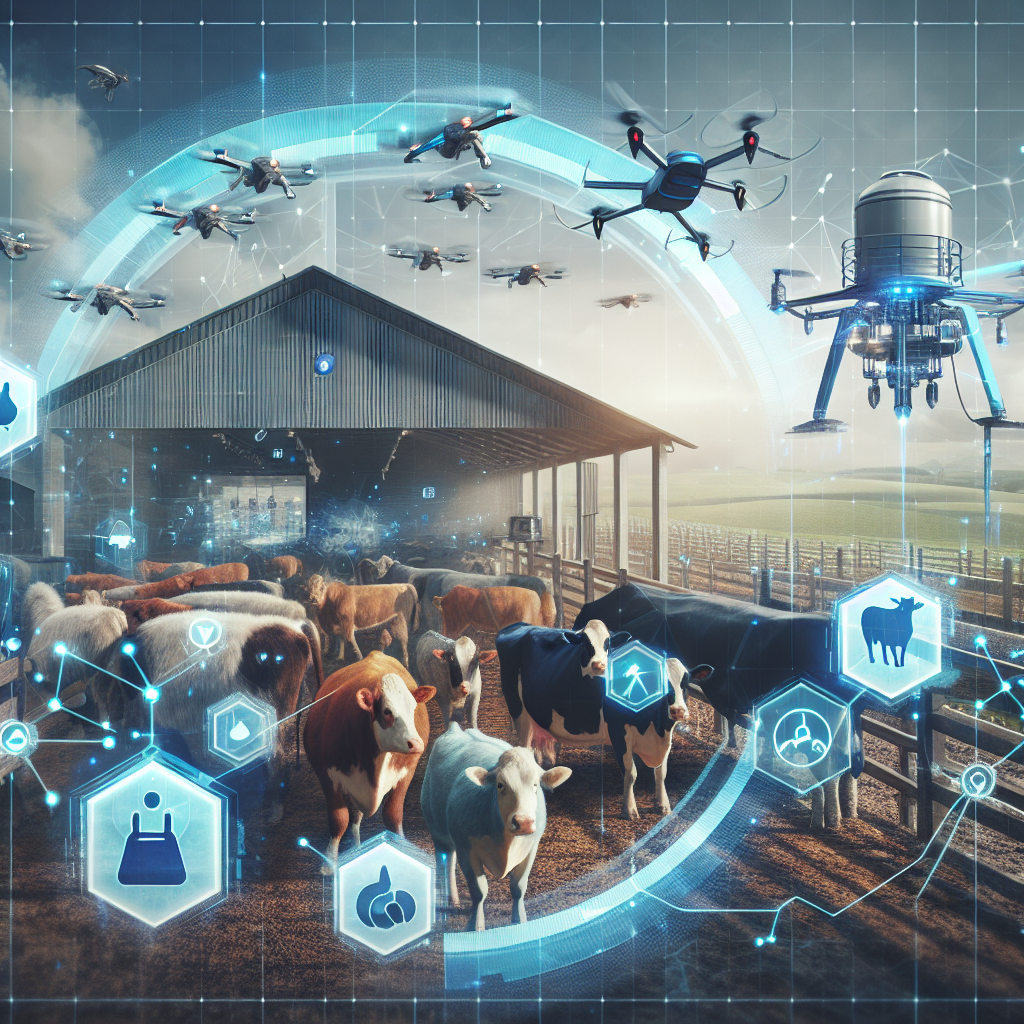
The Role of AI in Enhancing Livestock Breeding Practices
Livestock breeding practices have come a long way over the years, with advancements in technology playing a significant role in improving the efficiency and effectiveness of breeding programs. One such technology that is revolutionizing the field of livestock breeding is artificial intelligence (AI). AI is being used to enhance various aspects of livestock breeding, from selecting the best breeding pairs to predicting the performance of offspring. In this article, we will explore the role of AI in enhancing livestock breeding practices and the benefits it brings to farmers and the industry as a whole.
AI in Livestock Breeding: How Does it Work?
Artificial intelligence refers to the simulation of human intelligence processes by machines, particularly computer systems. In the context of livestock breeding, AI is used to analyze vast amounts of data to make predictions and recommendations that can help breeders make informed decisions. AI algorithms can process data from various sources, such as genetic information, performance records, and environmental factors, to identify patterns and trends that can inform breeding strategies.
One of the key applications of AI in livestock breeding is in the selection of breeding pairs. Traditional breeding methods rely on manual selection based on visual assessment and pedigree information. While these methods have been effective to some extent, they are limited in their ability to consider all relevant factors that can influence the performance of offspring. AI, on the other hand, can analyze a wide range of data points to identify the best breeding pairs based on genetic compatibility, performance records, and other relevant factors.
Another important application of AI in livestock breeding is in predicting the performance of offspring. By analyzing genetic and environmental data, AI algorithms can generate predictions of traits such as growth rate, disease resistance, and milk production potential. This information can help breeders make informed decisions about which animals to breed to achieve desired outcomes in their breeding programs.
Benefits of AI in Livestock Breeding
The use of AI in livestock breeding offers several key benefits to farmers and the industry as a whole. Some of the main benefits include:
1. Improved breeding outcomes: By using AI to select breeding pairs and predict the performance of offspring, farmers can improve the overall quality and productivity of their herds. AI can help identify animals with desirable traits and genetic potential, leading to better breeding outcomes and higher-quality livestock.
2. Increased efficiency: AI can process vast amounts of data much faster than humans, allowing breeders to make decisions more quickly and efficiently. This can help farmers streamline their breeding programs and achieve better results in less time.
3. Reduced costs: By using AI to optimize breeding strategies, farmers can reduce the costs associated with trial and error methods. AI can help minimize the risk of breeding failures and ensure that resources are used more efficiently.
4. Enhanced disease resistance: AI can help identify animals with genetic traits that confer resistance to common diseases, allowing farmers to breed livestock that are more resilient to health challenges. This can help reduce the need for costly veterinary treatments and improve overall herd health.
5. Sustainability: By breeding livestock with desirable traits such as high productivity and disease resistance, farmers can improve the sustainability of their operations. AI can help farmers breed animals that require fewer resources and have a lower environmental impact, contributing to a more sustainable livestock industry.
Frequently Asked Questions about AI in Livestock Breeding
Q: How accurate are AI predictions in livestock breeding?
A: AI predictions in livestock breeding can be highly accurate, especially when trained on large datasets with diverse information. However, it is important to note that AI predictions are not infallible and should be used in conjunction with other sources of information to make informed decisions.
Q: Can AI replace human expertise in livestock breeding?
A: AI is a powerful tool that can enhance human expertise in livestock breeding, but it cannot replace the knowledge and experience of breeders. Farmers should use AI as a complementary tool to inform their breeding decisions and improve the efficiency of their programs.
Q: Is AI accessible to small-scale farmers?
A: While AI technology is becoming more accessible and affordable, it may still be out of reach for some small-scale farmers. However, there are AI tools and services that cater to smaller operations, and farmers can explore these options to benefit from AI in their breeding programs.
Q: Are there ethical concerns associated with AI in livestock breeding?
A: As with any technology, there are ethical considerations to be taken into account when using AI in livestock breeding. Farmers should ensure that AI is used responsibly and ethically, taking into consideration factors such as animal welfare, data privacy, and genetic diversity.
Q: What is the future of AI in livestock breeding?
A: The future of AI in livestock breeding is bright, with continued advancements in technology and research driving innovation in the field. AI is expected to play an increasingly important role in improving breeding outcomes, enhancing sustainability, and shaping the future of the livestock industry.
In conclusion, AI is a powerful tool that is revolutionizing the field of livestock breeding. By leveraging the capabilities of AI to analyze data, make predictions, and inform breeding decisions, farmers can improve the efficiency and effectiveness of their breeding programs. AI offers a range of benefits, from improved breeding outcomes to increased efficiency and sustainability. As AI technology continues to evolve, its role in livestock breeding is expected to grow, shaping the future of the industry and helping farmers breed healthier, more productive livestock.