
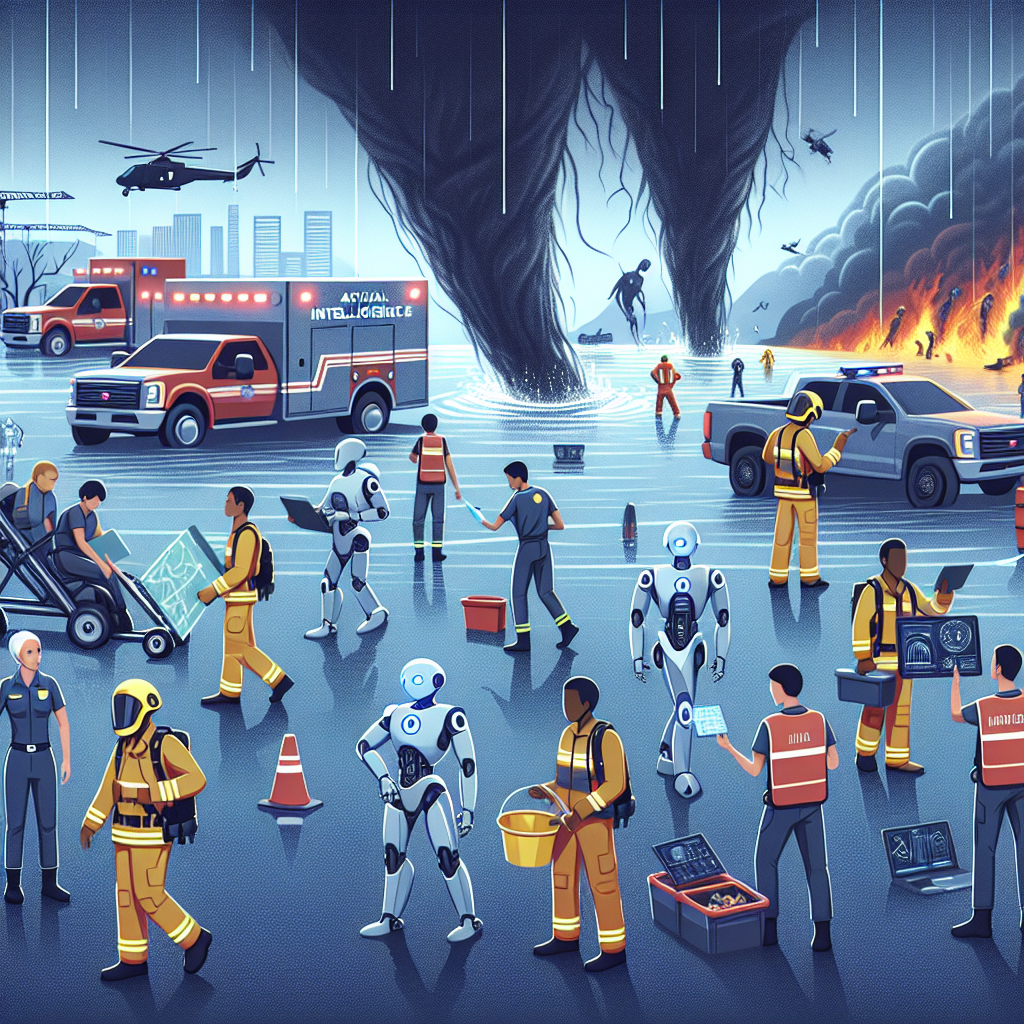
Artificial Intelligence (AI) has the potential to revolutionize many aspects of our lives, including natural disaster response. AI technologies can help predict disasters, coordinate response efforts, and aid in recovery efforts. However, there are also risks associated with the use of AI in natural disaster response. In this article, we will explore some of these risks and discuss how they can be mitigated.
One of the main risks of using AI in natural disaster response is the potential for bias in decision-making. AI algorithms are only as good as the data they are trained on, and if this data is biased or incomplete, it can lead to inaccurate or unfair decisions. For example, if an AI system is trained on data that disproportionately represents certain demographics, it may prioritize response efforts in those areas over others, leading to unequal outcomes for different communities.
To mitigate this risk, it is essential to ensure that the data used to train AI algorithms is representative of the population as a whole. This may require collecting data from a wide range of sources and carefully vetting it for biases. Additionally, it is important to regularly monitor and audit AI systems to identify and correct any biases that may arise over time.
Another risk of using AI in natural disaster response is the potential for errors or malfunctions in the technology. AI systems are complex and can be prone to unexpected behavior, especially in high-stress situations such as natural disasters. For example, an AI system that is designed to predict the path of a hurricane may make an incorrect prediction due to a software bug or hardware malfunction, leading to potentially disastrous consequences.
To mitigate this risk, it is essential to thoroughly test AI systems before deploying them in real-world situations. This may involve simulating a wide range of scenarios to identify and correct potential issues before they arise. Additionally, it is important to have human oversight of AI systems to catch any errors or malfunctions that may occur during operation.
In addition to bias and errors, another risk of using AI in natural disaster response is the potential for privacy violations. AI systems often require access to large amounts of data in order to make accurate predictions and decisions. This data may include sensitive information about individuals, such as their location, medical history, or financial status. If this data is not properly protected, it could be vulnerable to unauthorized access or misuse.
To mitigate this risk, it is essential to prioritize data privacy and security when designing and implementing AI systems for natural disaster response. This may involve using encryption and other security measures to protect sensitive data, as well as implementing strict access controls to ensure that only authorized personnel have access to it. Additionally, it is important to be transparent with the public about the types of data that are being collected and how it will be used in order to build trust and ensure compliance with privacy regulations.
Despite these risks, the potential benefits of using AI in natural disaster response are significant. AI technologies have the potential to improve the speed and accuracy of disaster prediction, response, and recovery efforts, ultimately saving lives and reducing the impact of disasters on communities. By carefully addressing the risks associated with AI in natural disaster response, we can harness the full potential of these technologies to build more resilient and effective disaster response systems.
FAQs:
Q: How can bias in AI algorithms be identified and corrected?
A: Bias in AI algorithms can be identified and corrected through careful monitoring and auditing of the data used to train the algorithms. This may involve analyzing the data for any patterns that may indicate bias, as well as testing the algorithms on a wide range of scenarios to identify and correct any potential issues.
Q: What measures can be taken to ensure the privacy and security of data used in AI systems for natural disaster response?
A: To ensure the privacy and security of data used in AI systems for natural disaster response, encryption and other security measures can be used to protect sensitive data, and strict access controls can be implemented to ensure that only authorized personnel have access to it. Additionally, transparency with the public about the types of data being collected and how it will be used can help build trust and ensure compliance with privacy regulations.
Q: How can errors and malfunctions in AI systems be prevented?
A: Errors and malfunctions in AI systems can be prevented through thorough testing and simulation of a wide range of scenarios before deployment. Additionally, human oversight of AI systems can help catch any errors or malfunctions that may arise during operation. Regular monitoring and maintenance of AI systems can also help prevent issues from occurring.
In conclusion, while there are risks associated with using AI in natural disaster response, these risks can be mitigated through careful planning, monitoring, and oversight. By addressing issues such as bias, errors, and privacy violations, we can harness the full potential of AI technologies to improve disaster response efforts and build more resilient communities.