
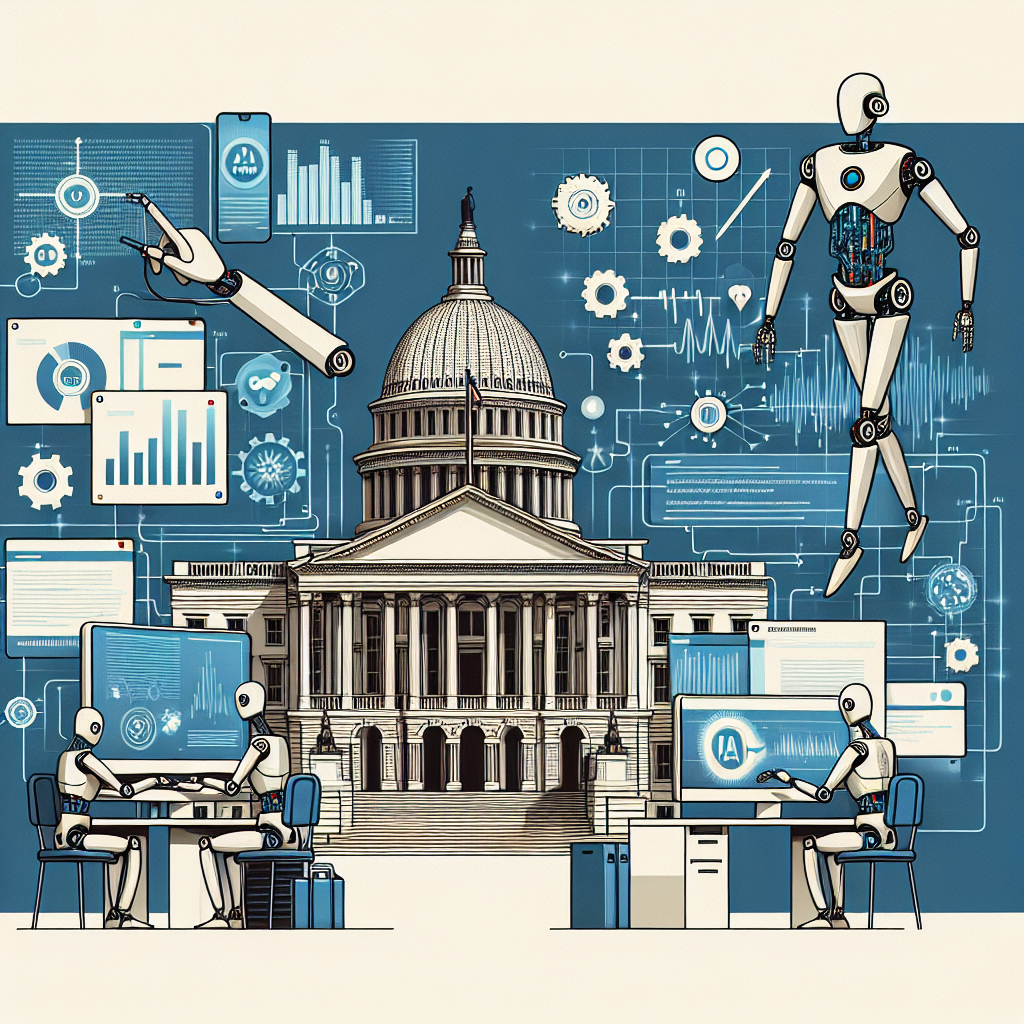
Artificial intelligence (AI) has been making significant strides in various industries, from healthcare to finance to transportation. One area where AI has the potential to revolutionize processes is in legislative processes. By harnessing the power of AI, lawmakers and government officials can improve efficiency, streamline operations, and make more informed decisions.
AI in legislative processes can help in several key areas, including drafting legislation, analyzing regulations, monitoring compliance, and predicting outcomes. By automating tasks that are time-consuming and labor-intensive, AI can free up lawmakers and their staff to focus on more strategic and high-level tasks. This can lead to faster decision-making, more effective policies, and a more responsive government.
One of the most promising applications of AI in legislative processes is in drafting legislation. Writing laws and regulations is a complex and time-consuming process, requiring a deep understanding of legal language, policy implications, and potential unintended consequences. AI can assist lawmakers in drafting legislation by analyzing vast amounts of data, identifying patterns and trends, and generating draft language based on predefined parameters.
For example, AI algorithms can scan existing laws and regulations to identify gaps or inconsistencies, suggest revisions or updates, and even predict the potential impact of proposed changes. This can help lawmakers craft more effective and comprehensive legislation, reducing the risk of unintended consequences and improving the overall quality of the laws passed.
AI can also be used to analyze regulations and assess their impact on businesses, individuals, and society as a whole. By processing large amounts of data and performing complex analyses, AI can help lawmakers understand the potential consequences of proposed regulations, identify areas of concern, and make informed decisions about whether to move forward with a particular policy.
In addition, AI can help monitor compliance with existing laws and regulations. By analyzing data from various sources, such as government databases, social media, and news reports, AI algorithms can identify trends and patterns that may indicate non-compliance or violations. This can help government agencies target their enforcement efforts more effectively, detect potential issues before they escalate, and ensure that laws are being followed.
Another key benefit of AI in legislative processes is its ability to predict outcomes and assess the potential impact of proposed policies. By analyzing historical data, conducting simulations, and running predictive models, AI can help lawmakers understand the likely consequences of different policy options, anticipate potential challenges, and make more informed decisions.
Overall, the use of AI in legislative processes has the potential to improve efficiency, transparency, and effectiveness in government operations. By automating routine tasks, analyzing vast amounts of data, and providing insights and recommendations, AI can help lawmakers make better decisions, craft more effective policies, and ensure that laws are implemented and enforced in a fair and consistent manner.
FAQs about AI in Legislative Processes:
Q: How can AI help lawmakers draft legislation?
A: AI can assist lawmakers in drafting legislation by analyzing data, identifying patterns and trends, and generating draft language based on predefined parameters. This can help lawmakers craft more effective and comprehensive legislation, reducing the risk of unintended consequences and improving the overall quality of the laws passed.
Q: How can AI be used to analyze regulations?
A: AI can be used to analyze regulations by processing large amounts of data, performing complex analyses, and assessing the potential impact of proposed regulations on businesses, individuals, and society. This can help lawmakers understand the consequences of proposed regulations, identify areas of concern, and make informed decisions about whether to move forward with a particular policy.
Q: How can AI help monitor compliance with laws and regulations?
A: AI can help monitor compliance with laws and regulations by analyzing data from various sources, such as government databases, social media, and news reports, to identify trends and patterns that may indicate non-compliance or violations. This can help government agencies target their enforcement efforts more effectively and ensure that laws are being followed.
Q: How can AI predict outcomes and assess the impact of proposed policies?
A: AI can predict outcomes and assess the impact of proposed policies by analyzing historical data, conducting simulations, and running predictive models. This can help lawmakers understand the likely consequences of different policy options, anticipate challenges, and make more informed decisions.
In conclusion, AI has the potential to revolutionize legislative processes by improving efficiency, transparency, and effectiveness in government operations. By automating tasks, analyzing data, and providing insights and recommendations, AI can help lawmakers make better decisions, craft more effective policies, and ensure that laws are implemented and enforced in a fair and consistent manner. As AI technology continues to advance, its impact on legislative processes is likely to grow, leading to a more responsive and data-driven government.