
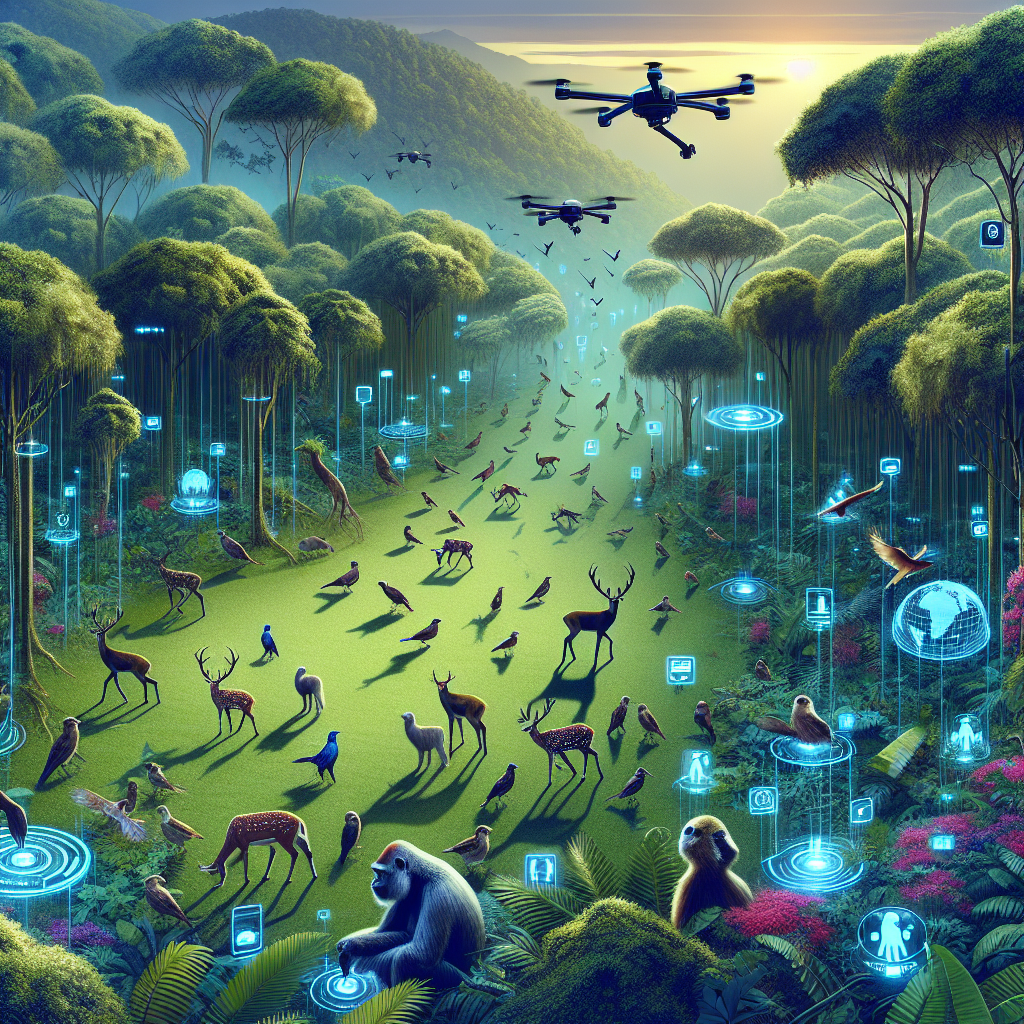
AI Deployment in Wildlife Conservation: Enhancing Monitoring and Protection Efforts
Wildlife conservation is a critical issue in today’s world, with many species facing threats from habitat loss, poaching, and climate change. In order to effectively protect and preserve these species, it is essential to monitor their populations and habitats, and to take action to address any threats they may face. Artificial intelligence (AI) is increasingly being used in wildlife conservation efforts to enhance monitoring and protection efforts, providing new tools and techniques to help researchers and conservationists better understand and combat the challenges facing wildlife around the world.
AI technologies such as machine learning and computer vision are being used to analyze vast amounts of data collected from remote sensing devices, cameras, and other sources to monitor wildlife populations, track their movements, and identify threats to their habitats. These technologies can help researchers process and analyze data more quickly and accurately than ever before, enabling them to make more informed decisions about how best to protect and conserve endangered species.
One of the key benefits of using AI in wildlife conservation is its ability to automate and streamline the process of monitoring and analyzing data. For example, AI algorithms can be trained to identify and classify different species of animals from camera trap images, reducing the time and effort required for researchers to manually review and categorize thousands of photos. This allows researchers to focus their time and resources on more important tasks, such as developing conservation strategies and implementing on-the-ground interventions to protect wildlife populations.
AI can also be used to predict and mitigate threats to wildlife populations, such as poaching and habitat destruction. By analyzing data on historical poaching incidents, environmental changes, and other factors, AI algorithms can help researchers identify high-risk areas and prioritize conservation efforts to protect vulnerable species. AI-powered predictive models can also help conservationists anticipate and respond to emerging threats, such as disease outbreaks or climate-related disasters, before they have a devastating impact on wildlife populations.
In addition to monitoring and protection efforts, AI can also be used to enhance conservation research and education initiatives. For example, AI-powered tools can help researchers analyze complex ecological data and identify patterns and trends that would be difficult or impossible to detect using traditional methods. This can lead to new insights and discoveries about wildlife behavior, population dynamics, and ecosystem interactions, helping to inform more effective conservation strategies and policies.
Furthermore, AI can also be used to engage and educate the public about wildlife conservation issues, raising awareness and support for conservation efforts. By developing interactive apps, games, and other educational tools powered by AI, conservation organizations can help people learn more about endangered species, their habitats, and the threats they face, inspiring them to take action to protect and preserve wildlife around the world.
Overall, AI deployment in wildlife conservation holds great potential to enhance monitoring and protection efforts, providing researchers and conservationists with new tools and techniques to better understand and address the challenges facing wildlife populations. By harnessing the power of AI technologies, we can work towards a more sustainable future for all species on our planet, ensuring that future generations can continue to enjoy and benefit from the incredible diversity of life that exists in our natural world.
FAQs:
Q: How is AI used in wildlife conservation?
A: AI is used in wildlife conservation to analyze data collected from remote sensing devices, cameras, and other sources to monitor wildlife populations, track their movements, and identify threats to their habitats. AI technologies such as machine learning and computer vision can help researchers process and analyze data more quickly and accurately, enabling them to make more informed decisions about how best to protect and conserve endangered species.
Q: What are the benefits of using AI in wildlife conservation?
A: The benefits of using AI in wildlife conservation include automation and streamlining of monitoring and analysis processes, prediction and mitigation of threats to wildlife populations, enhancement of conservation research and education initiatives, and engagement and education of the public about wildlife conservation issues.
Q: How can AI help protect wildlife populations from poaching?
A: AI can help protect wildlife populations from poaching by analyzing data on historical poaching incidents, environmental changes, and other factors to identify high-risk areas and prioritize conservation efforts. AI-powered predictive models can also help conservationists anticipate and respond to emerging threats, such as disease outbreaks or climate-related disasters, before they have a devastating impact on wildlife populations.
Q: How can AI be used to engage and educate the public about wildlife conservation?
A: AI can be used to engage and educate the public about wildlife conservation by developing interactive apps, games, and other educational tools powered by AI. These tools can help people learn more about endangered species, their habitats, and the threats they face, inspiring them to take action to protect and preserve wildlife around the world.