
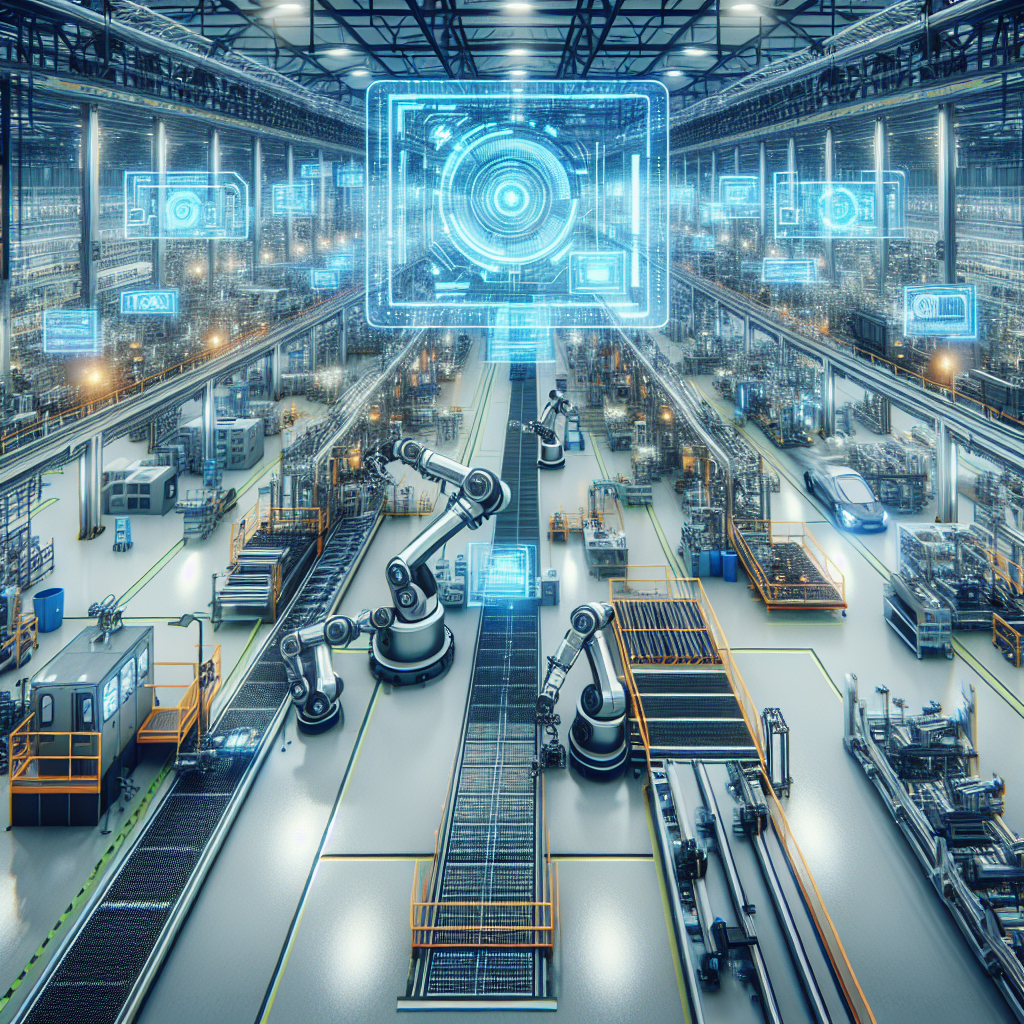
In recent years, the manufacturing industry has seen a significant shift towards automation and the adoption of AI-driven solutions. These technologies are transforming traditional manufacturing processes and enabling companies to improve efficiency, productivity, and quality. From predictive maintenance to supply chain optimization, AI is revolutionizing the way products are made.
One of the key benefits of AI-driven solutions in smart manufacturing is predictive maintenance. By using machine learning algorithms, manufacturers can predict when equipment is likely to fail and take proactive measures to prevent downtime. This not only saves money on costly repairs but also ensures that production lines are running smoothly and efficiently.
AI-driven solutions are also being used to optimize supply chains. By analyzing data from various sources, AI can help manufacturers identify inefficiencies in their supply chain and make recommendations for improvement. This can lead to cost savings, faster delivery times, and better overall performance.
Another area where AI is making a big impact is in quality control. By using computer vision and deep learning algorithms, manufacturers can quickly identify defects in products and take corrective action before they reach the customer. This not only improves product quality but also reduces waste and rework.
Overall, AI-driven solutions are helping manufacturers become more competitive in today’s fast-paced market. By leveraging the power of AI, companies can streamline their operations, reduce costs, and improve customer satisfaction.
FAQs:
Q: What are some examples of AI-driven solutions in smart manufacturing?
A: Some examples of AI-driven solutions in smart manufacturing include predictive maintenance, supply chain optimization, quality control, and production scheduling.
Q: How can AI help manufacturers improve efficiency?
A: AI can help manufacturers improve efficiency by optimizing production processes, identifying bottlenecks in the supply chain, and predicting equipment failures before they occur.
Q: Are AI-driven solutions expensive to implement?
A: While implementing AI-driven solutions can require an initial investment, the long-term benefits in terms of increased efficiency and cost savings often outweigh the upfront costs.
Q: What are the challenges of implementing AI in manufacturing?
A: Some of the challenges of implementing AI in manufacturing include data integration, employee training, and cybersecurity concerns. However, with proper planning and investment, these challenges can be overcome.
Q: What is the future of AI in smart manufacturing?
A: The future of AI in smart manufacturing is bright, with more companies embracing AI-driven solutions to improve efficiency, reduce costs, and stay competitive in the global marketplace. As technology continues to advance, we can expect to see even more innovative applications of AI in manufacturing.