
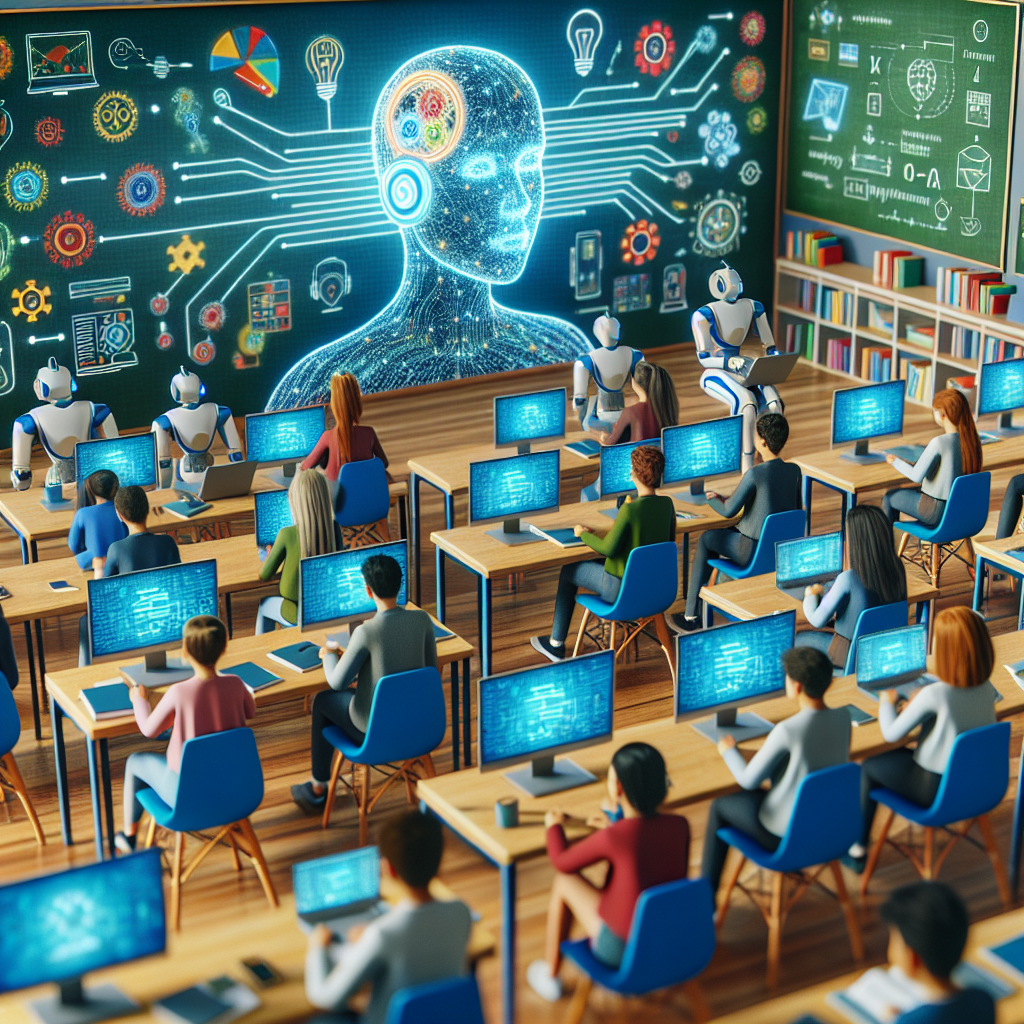
Artificial intelligence (AI) is rapidly transforming the way we live, work, and learn. In the field of education, AI has the potential to revolutionize the way students learn and teachers teach. One of the key areas where AI can have a significant impact is in developing critical thinking skills in students.
Critical thinking is an essential skill that allows individuals to analyze information, evaluate arguments, and make informed decisions. In today’s fast-paced and complex world, critical thinking skills are more important than ever. With the help of AI, educators can create personalized learning experiences that can help students develop these crucial skills.
AI-powered tools can provide students with personalized feedback and support, helping them to identify their strengths and weaknesses in critical thinking. These tools can also help students to develop their problem-solving skills by presenting them with challenging problems and guiding them through the problem-solving process.
Furthermore, AI can help teachers to better understand the learning needs of their students by analyzing data from their interactions with AI-powered tools. This data can help teachers to tailor their instruction to meet the specific needs of each student, ultimately improving learning outcomes.
In addition to helping students develop critical thinking skills, AI can also help educators to assess students’ critical thinking abilities more effectively. Traditional methods of assessment, such as multiple-choice tests, may not accurately measure students’ critical thinking skills. AI-powered assessment tools, on the other hand, can provide more nuanced and detailed assessments of students’ critical thinking abilities, allowing educators to better track students’ progress and tailor their instruction accordingly.
Despite the potential benefits of AI in developing critical thinking skills in education, there are also challenges and concerns that need to be addressed. Some critics argue that AI may not be able to fully replicate the complexities of human thought and reasoning, and that relying too heavily on AI for teaching critical thinking skills may hinder students’ ability to think critically on their own.
Furthermore, there are concerns about the ethical implications of using AI in education. For example, there may be concerns about data privacy and security, as well as concerns about bias in AI algorithms. Educators and policymakers will need to carefully consider these issues and ensure that AI is used in a responsible and ethical manner.
Despite these challenges, there is no doubt that AI has the potential to significantly enhance the development of critical thinking skills in education. By leveraging the power of AI, educators can create more personalized and engaging learning experiences that can help students to develop the critical thinking skills they need to succeed in the 21st century.
FAQs:
Q: How can AI help students develop critical thinking skills?
A: AI-powered tools can provide students with personalized feedback and support, helping them to identify their strengths and weaknesses in critical thinking. These tools can also help students to develop their problem-solving skills by presenting them with challenging problems and guiding them through the problem-solving process.
Q: What are some concerns about using AI in education to develop critical thinking skills?
A: Some concerns include the potential inability of AI to fully replicate human thought and reasoning, as well as ethical concerns about data privacy, security, and bias in AI algorithms.
Q: How can educators ensure that AI is used in a responsible and ethical manner in education?
A: Educators and policymakers can work together to establish guidelines and standards for the ethical use of AI in education. This may include ensuring data privacy and security, addressing bias in AI algorithms, and promoting transparency in the use of AI-powered tools.
Q: What are some examples of AI-powered tools that can help students develop critical thinking skills?
A: Examples include adaptive learning platforms that provide personalized feedback and support, as well as AI-powered assessment tools that can provide detailed assessments of students’ critical thinking abilities.