
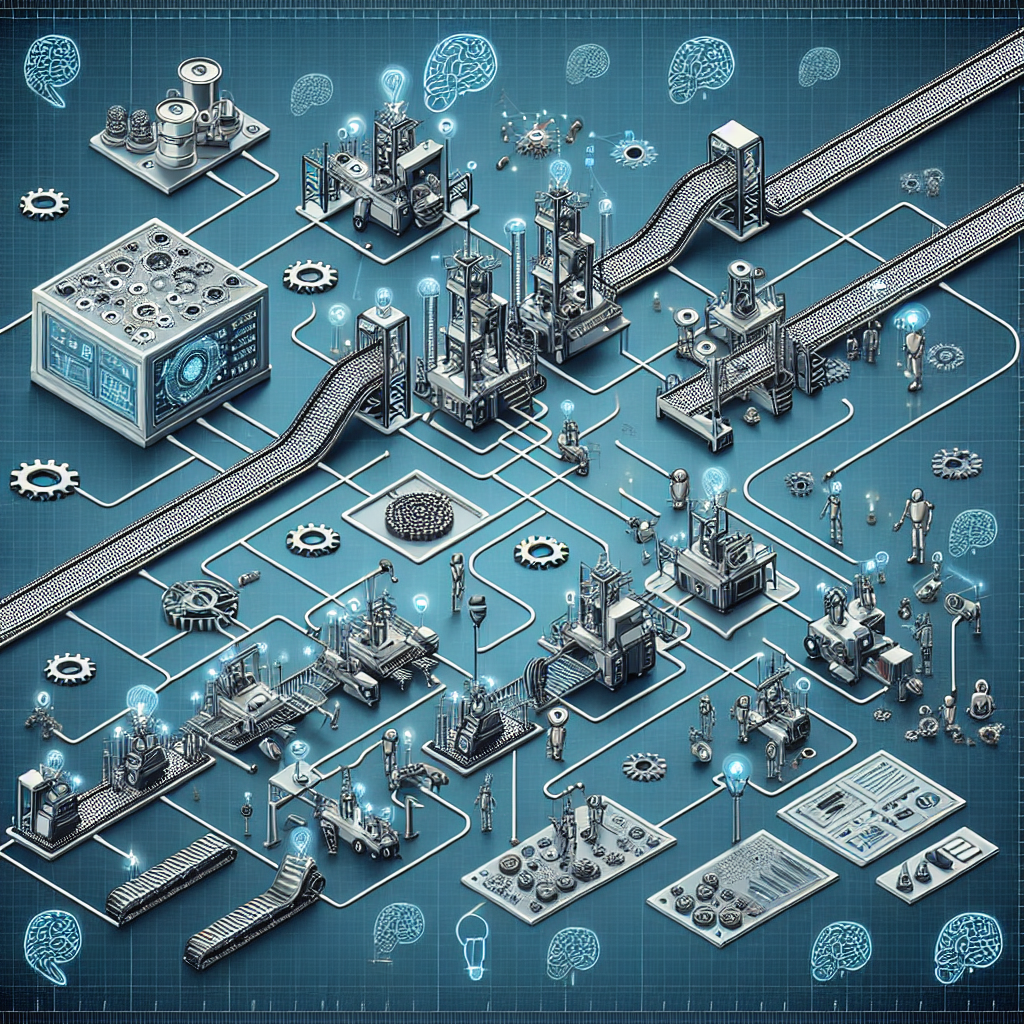
In today’s fast-paced manufacturing industry, the need for traceability has become increasingly important. Traceability refers to the ability to track and trace a product or component throughout the manufacturing process, from raw materials to the finished product. This is crucial for quality control, regulatory compliance, and supply chain management. With the rise of artificial intelligence (AI) technology, companies are now able to implement AI solutions to enhance traceability in their manufacturing processes.
Implementing AI for traceability in manufacturing processes involves using advanced algorithms and machine learning techniques to analyze and track data in real-time. This allows manufacturers to identify and address issues quickly, improve product quality, and streamline operations. By leveraging AI, companies can gain valuable insights into their manufacturing processes and make data-driven decisions to optimize production efficiency.
There are several ways in which AI can be used to enhance traceability in manufacturing processes:
1. Real-time monitoring: AI algorithms can analyze data from sensors and other sources in real-time to monitor the production process. This allows manufacturers to identify anomalies and deviations from the standard operating procedures, enabling them to take corrective action immediately.
2. Predictive maintenance: AI can predict when equipment is likely to fail based on historical data and performance metrics. By implementing predictive maintenance strategies, manufacturers can reduce downtime, improve equipment reliability, and optimize maintenance schedules.
3. Supply chain optimization: AI can analyze data from suppliers, logistics partners, and internal systems to optimize the supply chain. This can help manufacturers reduce lead times, minimize inventory levels, and improve overall efficiency.
4. Quality control: AI can analyze images, videos, and sensor data to detect defects and anomalies in the production process. By implementing AI-powered quality control systems, manufacturers can ensure that only high-quality products are shipped to customers.
5. Product tracking: AI can track products throughout the manufacturing process using RFID tags, barcodes, or other tracking technologies. This allows manufacturers to trace the origin of each component and ensure compliance with regulations and standards.
Implementing AI for traceability in manufacturing processes requires careful planning and integration with existing systems. Companies need to consider factors such as data security, scalability, and compatibility with existing infrastructure when implementing AI solutions. It is also important to train employees on how to use AI tools effectively and interpret the insights generated by AI algorithms.
FAQs:
Q: What are the benefits of implementing AI for traceability in manufacturing processes?
A: Implementing AI for traceability in manufacturing processes can improve quality control, reduce downtime, optimize supply chain operations, and enhance overall efficiency. AI can also help manufacturers identify issues quickly and make data-driven decisions to improve production processes.
Q: How can AI be used to track products throughout the manufacturing process?
A: AI can be used to track products throughout the manufacturing process by analyzing data from sensors, RFID tags, barcodes, and other tracking technologies. This allows manufacturers to trace the origin of each component and ensure compliance with regulations and standards.
Q: What are some challenges of implementing AI for traceability in manufacturing processes?
A: Some challenges of implementing AI for traceability in manufacturing processes include data security, scalability, and compatibility with existing systems. Companies also need to train employees on how to use AI tools effectively and interpret the insights generated by AI algorithms.
Q: How can manufacturers ensure the success of AI implementation for traceability?
A: To ensure the success of AI implementation for traceability, manufacturers need to carefully plan and integrate AI solutions with existing systems. They also need to consider factors such as data security, scalability, and compatibility with existing infrastructure. Training employees on how to use AI tools effectively is also crucial for success.