
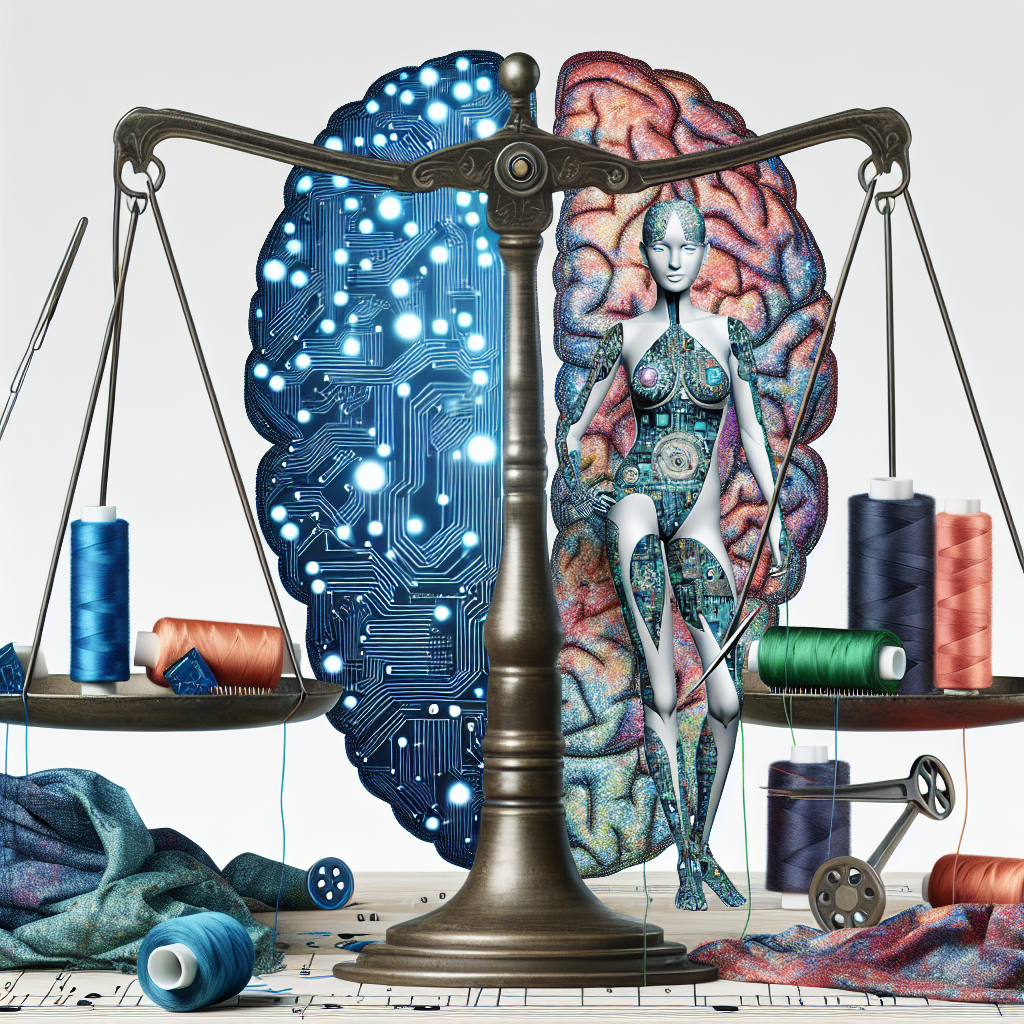
Artificial Intelligence (AI) has become an integral part of the fashion industry, revolutionizing the way brands design, produce, market, and sell their products. From virtual fitting rooms to personalized recommendations, AI technology has the potential to enhance the customer experience and drive business growth. However, with this great power comes great responsibility, as the ethical implications of AI in fashion are being increasingly scrutinized.
Challenges of AI in Fashion
One of the biggest challenges of AI in fashion is the potential for bias in algorithms. AI systems are only as good as the data they are trained on, and if that data is biased, it can lead to biased outcomes. For example, if a fashion brand’s AI system is trained on data that predominantly features white models, it may struggle to accurately recognize and cater to customers of diverse backgrounds. This can lead to exclusion and discrimination, which goes against the principles of inclusivity and diversity that many fashion brands strive to uphold.
Another challenge is the impact of AI on the environment. The fashion industry is already one of the most polluting industries in the world, and the increased use of AI technology in production processes could exacerbate this issue. AI-powered machines require large amounts of energy to operate, and if this energy comes from non-renewable sources, it can have a negative impact on the environment. Additionally, the rapid pace of innovation in AI can lead to shorter product cycles and increased consumption, further contributing to waste and pollution.
Opportunities of AI in Fashion
Despite these challenges, AI also presents numerous opportunities for the fashion industry. One of the key benefits of AI is its ability to personalize the shopping experience for customers. By analyzing data on customer preferences, behavior, and demographics, AI systems can offer personalized product recommendations, styling advice, and sizing suggestions. This not only enhances the customer experience but also increases customer loyalty and sales.
AI can also help fashion brands improve their sustainability practices. By optimizing production processes, reducing waste, and minimizing energy consumption, AI technology can help brands reduce their environmental footprint. For example, AI-powered algorithms can optimize supply chains to reduce transportation emissions, or predict trends to minimize overproduction.
Furthermore, AI can help fashion brands streamline their operations and improve efficiency. From inventory management to customer service, AI technology can automate repetitive tasks, freeing up employees to focus on more strategic initiatives. This can lead to cost savings, increased productivity, and a competitive edge in the market.
FAQs
Q: How can fashion brands ensure that their AI systems are unbiased?
A: To ensure that AI systems are unbiased, fashion brands should prioritize diversity and inclusion in their data collection and training processes. This means collecting data from a diverse range of sources, including customers of different backgrounds, ages, sizes, and genders. Brands should also regularly audit their AI systems for bias and take proactive steps to address any issues that arise.
Q: How can AI help fashion brands improve sustainability?
A: AI can help fashion brands improve sustainability by optimizing production processes, reducing waste, and minimizing energy consumption. For example, AI-powered algorithms can analyze data on customer demand and trends to optimize inventory levels and reduce overproduction. AI can also help brands identify areas of inefficiency in their supply chain and suggest ways to reduce waste and emissions.
Q: What are some examples of AI applications in the fashion industry?
A: Some examples of AI applications in the fashion industry include virtual fitting rooms, personalized product recommendations, trend forecasting, and supply chain optimization. Virtual fitting rooms use AI-powered algorithms to analyze a customer’s body measurements and suggest the best size and fit for a garment. Personalized product recommendations use data on customer preferences to suggest products that are likely to appeal to them. Trend forecasting uses AI to analyze social media data, search trends, and other data sources to predict upcoming fashion trends. Supply chain optimization uses AI to optimize production processes, reduce waste, and minimize energy consumption.
In conclusion, the use of AI in fashion presents both challenges and opportunities for brands. While AI has the potential to enhance the customer experience, improve sustainability practices, and streamline operations, it also raises important ethical considerations around bias, inclusivity, and environmental impact. By prioritizing diversity, sustainability, and ethical practices, fashion brands can harness the power of AI to drive innovation and growth in a responsible and sustainable way.