
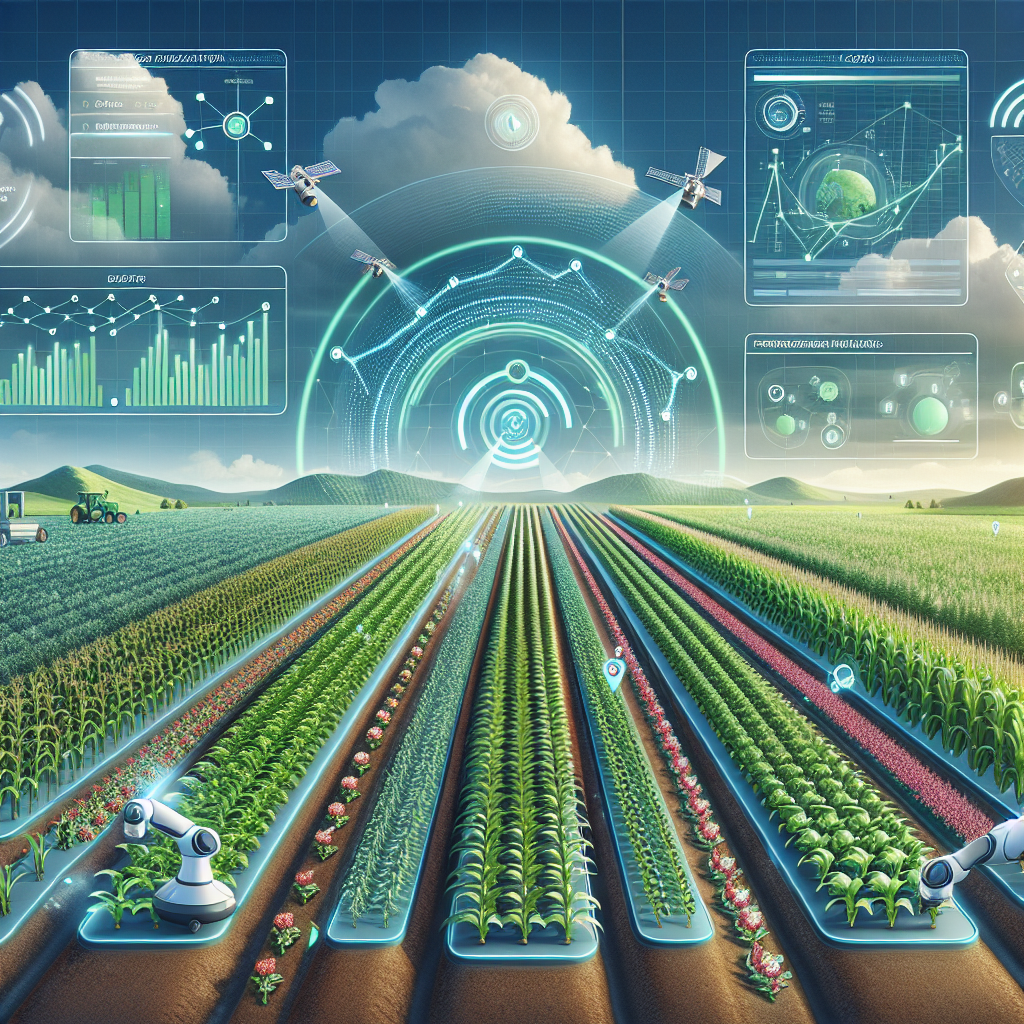
Utilizing AI for Crop Rotation and Diversification in Agriculture
In recent years, the agriculture industry has seen significant advancements in technology, with artificial intelligence (AI) playing a crucial role in transforming the way farmers manage their crops. One area where AI is making a big impact is in crop rotation and diversification, which are essential practices for maintaining soil health, improving yields, and reducing the reliance on chemical inputs. In this article, we will explore how AI is being used to optimize crop rotation and diversification in agriculture, and the benefits it can bring to farmers.
What is Crop Rotation and Diversification?
Crop rotation is the practice of alternating the types of crops grown in a particular field over different seasons. This helps to break the cycle of pests and diseases that can build up when the same crop is grown continuously in the same soil. Crop rotation also helps to maintain soil fertility by replenishing nutrients and organic matter that are depleted by different crops.
Crop diversification, on the other hand, involves growing a variety of different crops on a farm to spread risk and maximize productivity. Diversification can help farmers adapt to changing environmental conditions, market demands, and other factors that can impact crop yields.
How AI is being Used for Crop Rotation and Diversification
AI is revolutionizing the agriculture industry by providing farmers with powerful tools to optimize crop rotation and diversification. One of the key ways AI is being used in this area is through the development of predictive models that analyze data on soil health, weather patterns, crop yields, and other factors to recommend the best crop rotation and diversification strategies for a particular farm.
These predictive models use machine learning algorithms to analyze large amounts of data and identify patterns that can help farmers make more informed decisions about which crops to plant, when to plant them, and how to manage them throughout the growing season. By taking into account factors such as soil type, climate conditions, and market trends, AI-powered tools can help farmers maximize yields, reduce input costs, and improve soil health over time.
Benefits of Utilizing AI for Crop Rotation and Diversification
There are several benefits to utilizing AI for crop rotation and diversification in agriculture. Some of the key advantages include:
– Improved soil health: By optimizing crop rotation and diversification, farmers can maintain soil fertility and reduce the need for chemical inputs, leading to healthier soils and more sustainable farming practices.
– Increased yields: AI can help farmers identify the best crop rotation and diversification strategies to maximize yields and minimize the risk of crop failures.
– Reduced input costs: By using AI to optimize crop rotation and diversification, farmers can reduce the amount of fertilizers, pesticides, and other inputs needed to grow crops, leading to cost savings and improved profitability.
– Better risk management: Diversifying crops can help farmers spread risk and protect against uncertainties such as extreme weather events, market fluctuations, and pest outbreaks.
– Sustainable farming practices: AI-powered tools can help farmers adopt more sustainable farming practices by promoting crop diversity, reducing soil erosion, and conserving natural resources.
FAQs
Q: How does AI analyze data for crop rotation and diversification?
A: AI uses machine learning algorithms to analyze data on soil health, weather patterns, crop yields, and other factors to recommend the best crop rotation and diversification strategies for a particular farm.
Q: Can AI predict which crops will perform best in a particular field?
A: Yes, AI-powered tools can analyze historical data and identify patterns that can help farmers predict which crops will perform best in a particular field based on factors such as soil type, climate conditions, and market trends.
Q: How can farmers access AI-powered tools for crop rotation and diversification?
A: There are several companies and research institutions that offer AI-powered tools for crop rotation and diversification, which can be accessed through online platforms or mobile apps.
Q: What are some challenges to implementing AI for crop rotation and diversification?
A: Some challenges to implementing AI for crop rotation and diversification include the cost of acquiring and maintaining AI-powered tools, the need for reliable data on soil health and weather patterns, and the need for training and technical support for farmers.
Q: Are there any success stories of farmers using AI for crop rotation and diversification?
A: Yes, there are many success stories of farmers who have used AI-powered tools to optimize crop rotation and diversification, leading to increased yields, improved soil health, and reduced input costs.
In conclusion, AI is revolutionizing the agriculture industry by providing farmers with powerful tools to optimize crop rotation and diversification. By leveraging AI-powered predictive models, farmers can make more informed decisions about which crops to plant, when to plant them, and how to manage them throughout the growing season. The benefits of utilizing AI for crop rotation and diversification include improved soil health, increased yields, reduced input costs, better risk management, and more sustainable farming practices. As AI continues to advance, it is likely to play an even greater role in helping farmers maximize productivity and profitability while promoting environmental sustainability in agriculture.