
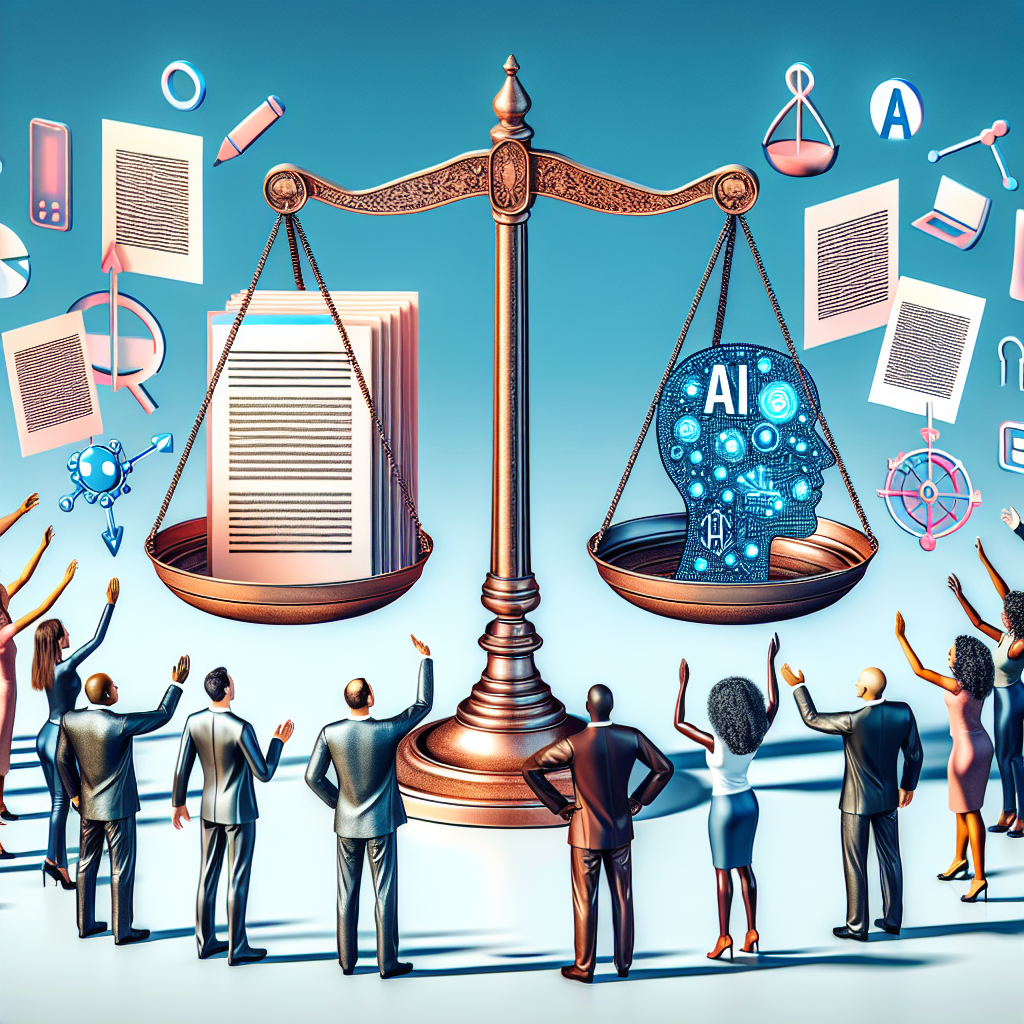
In recent years, artificial intelligence (AI) has been increasingly utilized in public policy and governance to improve decision-making processes, enhance efficiency, and drive innovation. The democratization of AI in this context refers to the broader access and use of AI technologies by governments, organizations, and individuals to address complex societal challenges and promote public welfare. This democratization has the potential to transform the way public policies are formulated and implemented, as well as how government services are delivered to citizens.
AI technologies have the capacity to analyze large volumes of data, identify patterns and trends, and make predictions and recommendations based on this analysis. This can be particularly valuable in the field of public policy and governance, where decision-makers often have to grapple with complex issues that involve multiple stakeholders, diverse perspectives, and uncertain outcomes. By leveraging AI tools, governments can make more informed decisions, allocate resources more effectively, and design policies that are tailored to the needs of their citizens.
One area where AI is making a significant impact in public policy and governance is in the field of predictive analytics. Predictive analytics involves using AI algorithms to analyze historical data and predict future outcomes. This can be particularly useful in areas such as crime prevention, healthcare, and transportation planning, where policymakers need to anticipate and respond to emerging trends and challenges. For example, police departments can use predictive analytics to identify areas with high crime rates and deploy resources accordingly, while healthcare providers can use AI to forecast patient demand and optimize staffing levels.
Another area where AI is being increasingly used in public policy and governance is in the field of natural language processing (NLP). NLP involves the use of AI algorithms to analyze and interpret human language, enabling governments to better understand and respond to citizen feedback, complaints, and requests. For example, chatbots powered by NLP can help citizens navigate government websites, answer frequently asked questions, and provide personalized assistance. This can improve the overall user experience and increase citizen engagement with government services.
The democratization of AI in public policy and governance is also leading to the development of new tools and platforms that enable citizens to participate more actively in the decision-making process. For example, crowdsourcing platforms powered by AI can help governments gather input from a diverse range of stakeholders, identify emerging issues, and generate innovative solutions. This can help to democratize the policymaking process and ensure that decisions are based on a broader range of perspectives and expertise.
However, the democratization of AI in public policy and governance also raises several important ethical and regulatory considerations. For example, there is a risk that AI algorithms may inadvertently perpetuate bias and discrimination if they are trained on biased data or if they are not designed to account for the diverse needs and perspectives of different populations. There is also a concern that the use of AI in public policy and governance may lead to a loss of human agency and accountability, as decisions are increasingly made by algorithms rather than by elected officials or civil servants.
To address these challenges, governments and organizations need to develop robust ethical frameworks and regulatory mechanisms to govern the use of AI in public policy and governance. This may involve conducting regular audits of AI systems to ensure that they are fair, transparent, and accountable, as well as engaging with stakeholders to solicit feedback and address concerns. It is also important to invest in AI literacy and education programs to ensure that policymakers and citizens are equipped to understand and engage with AI technologies effectively.
In conclusion, the democratization of AI in public policy and governance has the potential to revolutionize the way governments operate and deliver services to citizens. By harnessing the power of AI technologies, governments can make more informed decisions, improve efficiency, and promote public welfare. However, this transformation also raises important ethical and regulatory considerations that need to be addressed to ensure that AI is used responsibly and transparently. By developing robust ethical frameworks and engaging with stakeholders, governments can harness the full potential of AI while safeguarding the rights and interests of their citizens.
FAQs:
Q: What are some examples of AI applications in public policy and governance?
A: Some examples of AI applications in public policy and governance include predictive analytics for crime prevention, natural language processing for citizen engagement, and crowdsourcing platforms for policymaking.
Q: How can governments ensure the responsible use of AI in public policy and governance?
A: Governments can ensure the responsible use of AI by developing ethical frameworks, conducting regular audits of AI systems, engaging with stakeholders, and investing in AI literacy and education programs.
Q: What are some of the challenges associated with the democratization of AI in public policy and governance?
A: Some of the challenges associated with the democratization of AI include bias and discrimination, loss of human agency and accountability, and the need for robust ethical and regulatory frameworks.
Q: How can citizens participate more actively in the decision-making process through the use of AI?
A: Citizens can participate more actively in the decision-making process through the use of AI by engaging with crowdsourcing platforms, providing feedback on government services, and collaborating with policymakers to generate innovative solutions.