
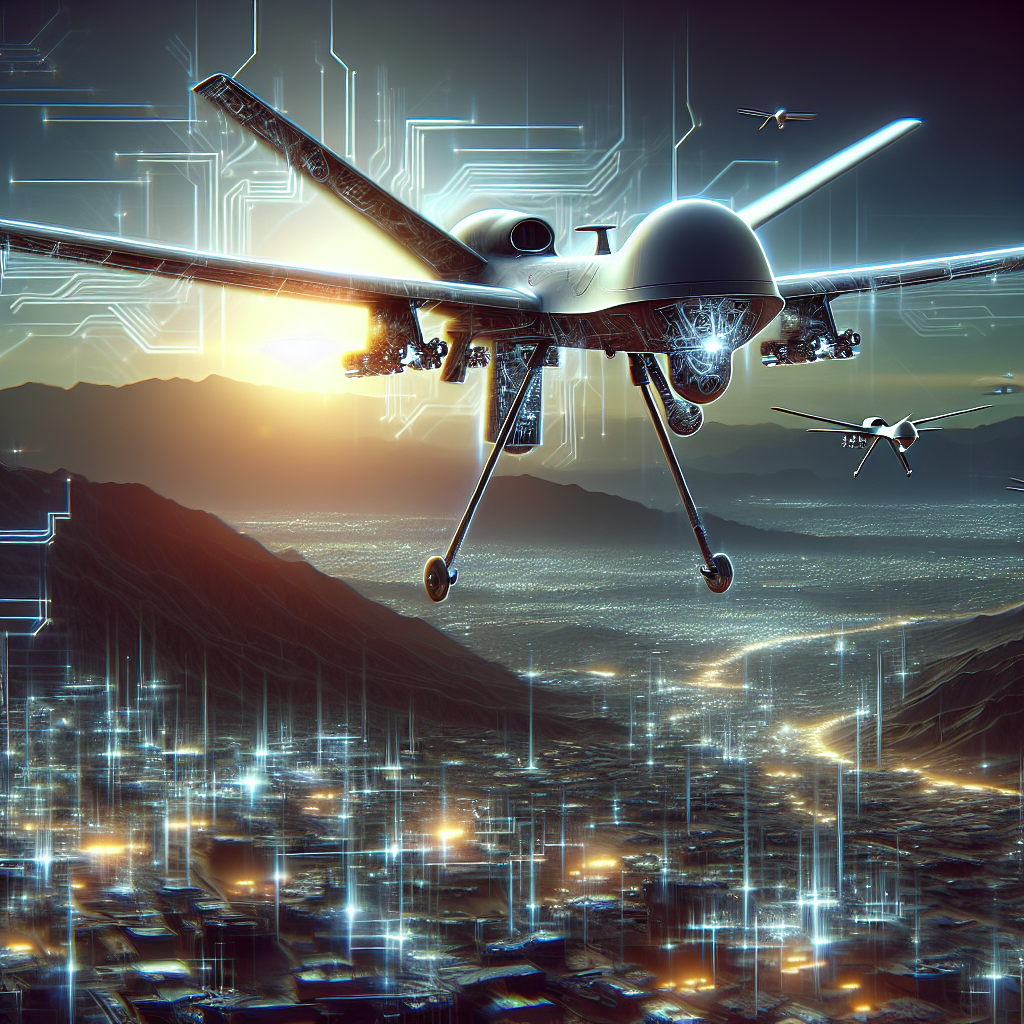
Autonomous drones have become an increasingly popular tool in modern warfare, with countries around the world investing heavily in developing this technology for military use. While autonomous drones offer many advantages in terms of efficiency and precision, there are also significant risks associated with their use, particularly when it comes to artificial intelligence (AI) technology.
One of the main risks of AI in autonomous drone warfare is the potential for unintended consequences. AI systems are designed to learn and adapt over time, which means that they can sometimes make decisions that are not in line with human intentions. This can lead to situations where autonomous drones act in ways that are unpredictable or even dangerous, putting both military personnel and civilians at risk.
Another risk of AI in autonomous drone warfare is the potential for hacking or cyberattacks. AI systems rely on complex algorithms to make decisions, and these algorithms can be vulnerable to manipulation by malicious actors. If an autonomous drone is hacked, it could be used to carry out attacks on targets that were not intended by its operators, leading to potentially catastrophic consequences.
There is also a risk of AI bias in autonomous drone warfare. AI systems are trained on large amounts of data, which can sometimes contain biases that are not immediately apparent. If an autonomous drone is operating based on biased data, it could make decisions that are discriminatory or unfair, leading to human rights violations or other ethical concerns.
Furthermore, there is a risk of escalation in conflicts involving autonomous drones. Because these drones are capable of making decisions independently, there is a potential for misunderstandings or miscommunications that could lead to unintended escalation of hostilities. This could result in a more intense and prolonged conflict than would have occurred with human-controlled drones.
Additionally, there is a risk of accountability in autonomous drone warfare. When drones are operated autonomously, it can be difficult to determine who is ultimately responsible for their actions. This lack of accountability can make it challenging to hold individuals or organizations responsible for any harm caused by autonomous drones, leading to potential legal and ethical challenges.
Despite these risks, the use of AI in autonomous drone warfare continues to grow, with many countries investing heavily in developing this technology for military use. To address these risks, it is essential for policymakers, military leaders, and technologists to work together to ensure that autonomous drones are used responsibly and ethically.
FAQs:
Q: Are autonomous drones currently being used in warfare?
A: Yes, autonomous drones are being used in warfare by several countries around the world. These drones are capable of operating independently, making decisions based on AI algorithms.
Q: What are some of the advantages of using autonomous drones in warfare?
A: Some of the advantages of using autonomous drones in warfare include increased efficiency, precision, and the ability to operate in dangerous or hard-to-reach areas.
Q: How can the risks of AI in autonomous drone warfare be mitigated?
A: The risks of AI in autonomous drone warfare can be mitigated through careful oversight, regulation, and the development of ethical guidelines for the use of this technology.
Q: What are some ethical concerns associated with the use of autonomous drones in warfare?
A: Some ethical concerns associated with the use of autonomous drones in warfare include the potential for unintended consequences, hacking, bias, escalation of conflicts, and lack of accountability.
Q: What role do policymakers and military leaders play in addressing the risks of AI in autonomous drone warfare?
A: Policymakers and military leaders play a crucial role in addressing the risks of AI in autonomous drone warfare by developing regulations, guidelines, and standards for the responsible use of this technology. They must also work to ensure that autonomous drones are used in ways that are consistent with international law and human rights principles.
In conclusion, while the use of AI in autonomous drone warfare offers many advantages, there are significant risks associated with this technology that must be carefully considered and addressed. By working together to develop ethical guidelines and regulations, policymakers, military leaders, and technologists can help to ensure that autonomous drones are used responsibly and ethically in warfare.