
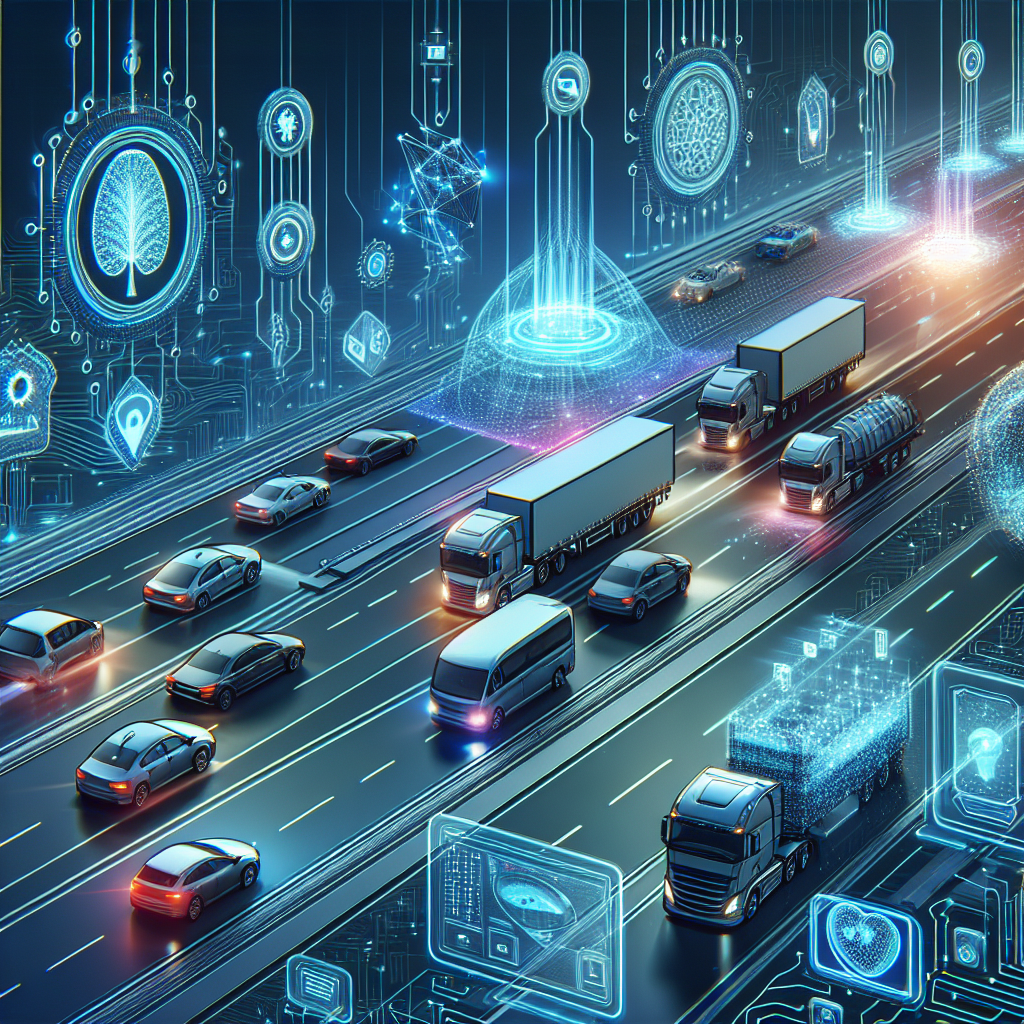
Fleet safety is a critical concern for companies that rely on a fleet of vehicles to conduct their business operations. Ensuring the safety of drivers, vehicles, and the public is essential to reducing the risk of accidents, injuries, and costly damages. With the advancements in technology, artificial intelligence (AI) is playing a significant role in enhancing fleet safety and reducing the likelihood of accidents.
AI is a branch of computer science that focuses on creating intelligent machines that can perform tasks that typically require human intelligence, such as visual perception, speech recognition, decision-making, and language translation. In the context of fleet safety, AI can be used to analyze data from various sources, such as vehicle sensors, GPS systems, and driver behavior, to identify potential risks and provide real-time insights to help prevent accidents.
One of the key ways AI enhances fleet safety is through predictive analytics. By analyzing historical data on driver behavior, vehicle maintenance, and road conditions, AI algorithms can predict potential risks and provide recommendations to help prevent accidents. For example, AI can analyze data on driver fatigue, distraction, and aggressive driving behaviors to identify high-risk drivers and provide targeted training or interventions to improve their safety.
AI can also be used to optimize route planning and scheduling to reduce the risk of accidents. By analyzing traffic patterns, weather conditions, and road hazards, AI algorithms can recommend the safest and most efficient routes for drivers to take. This can help reduce the likelihood of accidents caused by traffic congestion, adverse weather conditions, or road closures.
Furthermore, AI can be used to monitor driver behavior in real-time and provide immediate feedback to help prevent accidents. For example, AI-powered dashcams can analyze driver behavior, such as speeding, harsh braking, and lane drifting, and provide alerts to drivers when they engage in risky behaviors. This can help improve driver awareness and encourage safer driving habits.
In addition to predictive analytics and real-time monitoring, AI can also be used to automate vehicle maintenance and inspections to ensure that vehicles are in optimal condition. AI-powered systems can analyze data from vehicle sensors to detect potential mechanical issues and recommend maintenance or repairs before they lead to accidents. This can help reduce the risk of accidents caused by mechanical failures or equipment malfunctions.
Overall, AI has the potential to revolutionize fleet safety by providing real-time insights, predictive analytics, and automated monitoring to help prevent accidents and improve driver behavior. By leveraging AI technology, companies can enhance the safety of their fleet, reduce the risk of accidents, and protect their drivers, vehicles, and the public.
FAQs:
1. How does AI improve fleet safety?
AI improves fleet safety by analyzing data from various sources, such as vehicle sensors, GPS systems, and driver behavior, to identify potential risks and provide real-time insights to help prevent accidents. AI can also be used to optimize route planning, monitor driver behavior, and automate vehicle maintenance to enhance fleet safety.
2. What are the benefits of using AI for fleet safety?
Some of the benefits of using AI for fleet safety include reducing the risk of accidents, improving driver behavior, optimizing route planning, and automating vehicle maintenance. By leveraging AI technology, companies can enhance the safety of their fleet, reduce accidents, and protect their drivers, vehicles, and the public.
3. How can companies implement AI for fleet safety?
Companies can implement AI for fleet safety by investing in AI-powered systems, such as predictive analytics, real-time monitoring, and automated maintenance solutions. By leveraging AI technology, companies can improve fleet safety, reduce accidents, and protect their drivers and vehicles.
4. What are some of the challenges of implementing AI for fleet safety?
Some of the challenges of implementing AI for fleet safety include data privacy concerns, regulatory compliance, and the cost of implementing AI-powered systems. Companies need to address these challenges to successfully leverage AI technology for fleet safety and achieve the desired safety outcomes.